Get Full Government Meeting Transcripts, Videos, & Alerts Forever!
Get email alerts on the Behavioral Health topic
No spam. Unsubscribe anytime.
Sawyer County staff outline plan to bring transitions facility staff in-house, cite potential savings and placement challenges
Summary
County staff told the Health and Human Services Committee they are moving some transitions community facility staff to county employment to improve continuity of care and may bring back two to four residents from out-of-county placements, a change expected to generate near-term savings but with some placement and billing limitations.
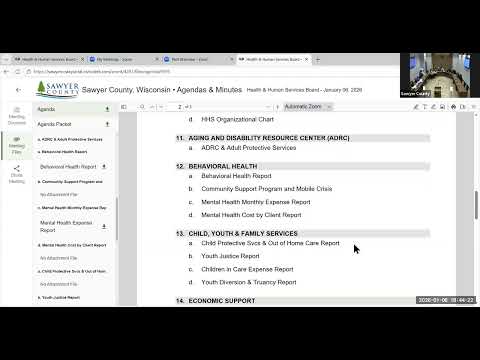
At the Sawyer County Health and Human Services meeting on Jan. 6, county staff outlined operational changes at the county's transitions community facility designed to increase in-county capacity and reduce reliance on out-of-county residential placements.
Julia, the department presenter, said the county is "in the process of making those changes right now" and that several staff members at the transitions facility "are in the process of becoming county employees," which will let the department deliver more services directly and better manage transitions back to lower levels of care.
She said the department expects to immediately bring back two residents and is assessing whether it can support as many as four residents at a time in the facility. "If we can we'll start to recap savings fairly quickly, especially when we bring... the one back, we'll make a big difference," Julia said. Committee members asked whether the county can bill for services provided in a CBRF (community-based residential facility); staff said current billing and program eligibility limit the ability to bill Medicaid-like programs for some residents.
Staff also discussed recent unbudgeted long-term placements under Chapter 55 (guardianship-based placements) that created unexpected expense. Julia said the county can ultimately recoup those costs from an estate or through guardianship processes but that recoveries are not likely during the current fiscal year.
On child welfare, staff reported completion of state training on "active efforts" for cases involving Indian children to strengthen tribal engagement and documentation. Julia said a tribal attorney praised one case as "one of the best, documented cases of active efforts that she's ever seen." Staff provided caseload numbers for 2025: 55 referrals to the juvenile program and 43 active cases at the moment.
Next steps: Staff will continue to implement staffing changes at the transitions facility, monitor cost and placement outcomes, and return with updates, including any budget implications for long-term care placements.