
Board begins FY27 budget direction; considers lodging tax, land‑use enforcement and debt options for courthouse and school capital needs
Get AI-powered insights, summaries, and transcripts
Subscribe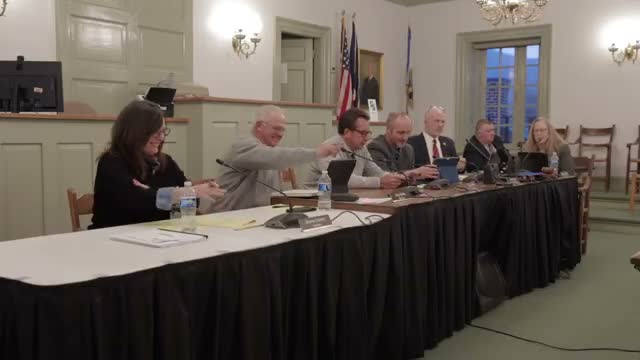
Summary
Supervisors asked staff to prepare budget scenarios that hold recurring school transfers level while identifying capital options (use of fund balance, bonds, sales‑tax referendum, lodging‑tax adjustments), requested analysis of land‑use enforcement and twice‑annual tax collection, and set a March schedule for capital improvement planning.
The Rappahannock County Board of Supervisors used its Jan. 5 meeting to set initial priorities for the FY27 budget development process, flagging urgent capital projects and asking staff for revenue sensitivities and enforcement reviews.
Several supervisors expressed support for planning on a level recurring transfer to the school division as a conservative baseline, while acknowledging that the district has urgent capital needs (in particular an elementary school roof and HVAC work) that will require funding beyond recurring operating dollars. Members discussed options to address capital shortfalls, including:
- evaluating land‑use taxation administration and enforcement to ensure participants meet program requirements and to identify any lost revenue opportunities; - modeling an increase in the lodging portion of the meals and lodging tax (examples discussed included raising the lodging component up to 10%), with required set‑asides for tourism promotion and the possibility that those funds be applied to courthouse‑row or tourism‑related capital projects; and - examining whether splitting property tax collections into two annual installments would increase interest income for the county (several board members asked staff and the treasurer to model the net benefits after administrative costs).
Staff noted an available fund balance (committed/assigned components summarized in the treasurer’s report) of approximately $3.1 million and explained that addressing large capital projects could require a mix of fund‑balance advances and borrowing. Board members discussed a new state bill (under consideration in the General Assembly) that, if enacted and adopted locally via referendum, would permit a one‑cent local sales‑tax increase dedicated to schools; the possibility of advancing projects now and repaying from future referendum proceeds was outlined.
The county’s contracted architect on the courthouse project previewed an amended study scope to explore a two‑story reconfiguration and a lower‑massed option with cost comparisons; the consultant expects to present refined concepts and cost estimates in early February.
What’s next: staff will prepare sensitivity analyses and revenue options for the board (including land‑use enforcement capacity, lodging‑tax modeling and bond vs. pay‑go scenarios) and will present a detailed CIP and financing options at the next meetings leading into the FY27 budget work sessions.