
Sen. Phil Berger previews short session, flags DMV backlog and local transportation funding
Get AI-powered insights, summaries, and transcripts
Subscribe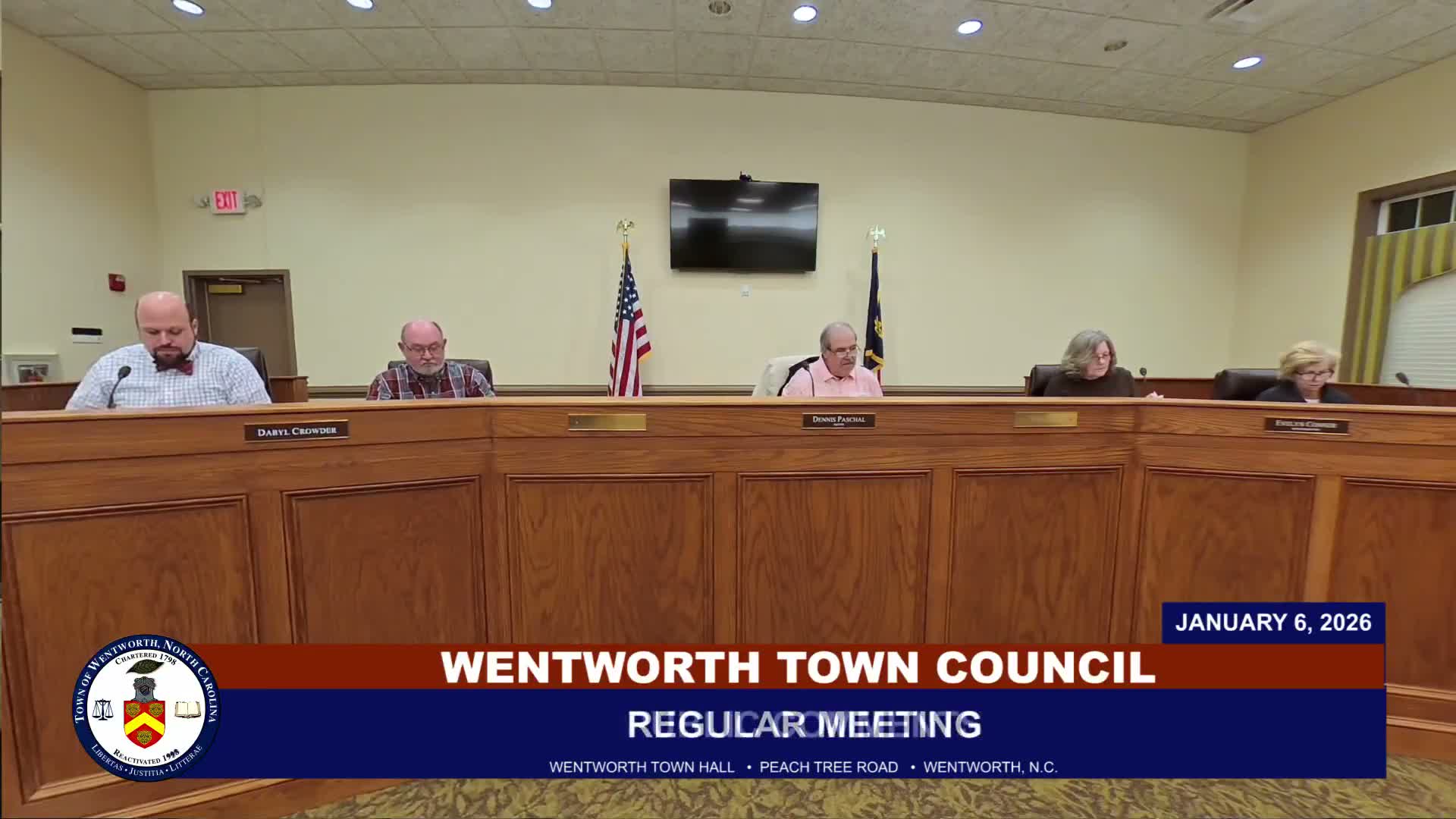
Summary
Sen. Phil Berger told the Wentworth Town Council that the legislature is in an interim period with a short session expected in April or May; he urged towns to submit local-bill requests, described ongoing DMV backlogs and audits, and said he secured $2,000,000 for an engineering study to address US 220 congestion in Rockingham County.
Sen. Phil Berger, president pro tem of the North Carolina Senate and Wentworth’s state senator, gave the Wentworth Town Council a legislative update on Jan. 6, saying a short session is expected in April or May and urging the town to submit any local-bill requests to his office.
Berger told the council the legislature remains in an interim period but will take up specific legislation in the short session. He outlined several items of local interest: persistent DMV backlogs that prompted a state auditor review and the governor’s appointment of a new DMV commissioner, ongoing work to upgrade bridges on U.S. 29 to interstate standards, and a $2,000,000 engineering study he said he helped secure to investigate congestion and potential upgrades on U.S. 220.
Why it matters: the short session is the primary window for towns to request state changes that require local bills, and Berger’s update signaled available state-level pathways for funding or technical assistance. The $2,000,000 study is intended to produce the engineering documents needed to pursue larger road upgrades.
Berger also described a budget and tax dispute at the General Assembly. He said North Carolina’s individual income tax rate dropped from a 2025 rate of 4.25% to 3.99% and that a further reduction to 3.49% depends on meeting a revenue trigger. He said House leadership has pushed to change the trigger and the Senate has refused, a standoff he characterized as effectively risking a canceled tax cut unless leaders reach an agreement. "We see that as canceling a tax cut," Berger said.
Council members asked about deadlines and timelines; Berger said the filing deadline for local bills had not been formally set but was likely in early May and offered his office as the point of contact for towns and residents. He provided his Raleigh office number and said his staff sends a weekly legislative update email for constituents interested in receiving information.
Next steps: Berger encouraged Wentworth officials to contact his office for help drafting or filing local-bill requests and to raise specific DOT or DMV issues for constituent assistance.