
Board attorney gives School Ethics Act orientation; emphasizes conflicts, confidentiality and social-media cautions
Get AI-powered insights, summaries, and transcripts
Subscribe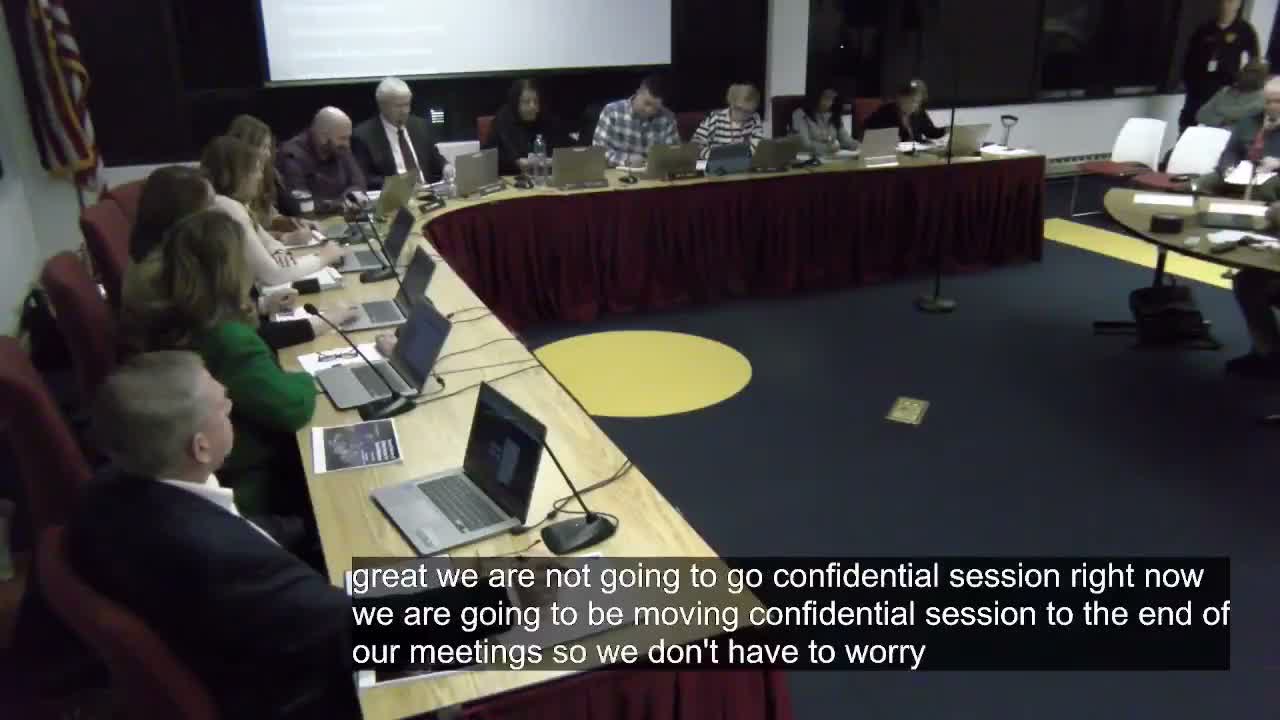
Summary
John Gippert, the board attorney, delivered the board’s annual School Ethics Act training, reviewing conflict-of-interest rules, confidentiality provisions, prohibited acts, and social-media guidance tied to board policy 169.02.
Board Attorney John Gippert led the board through the School Ethics Act orientation, reviewing statutory provisions, penalties, examples and practical guidance for board members.
Gippert summarized the core obligations under the School Ethics Act, noting possible penalties including reprimand, censure, suspension or removal for serious violations. He walked the board through conflict-of-interest rules — including rules that prohibit a board member from having an interest in contracts with the district or using the office for personal gain — and emphasized the need to recuse when a personal or family interest could reasonably be expected to impair objectivity.
On confidentiality, Gippert highlighted the duty to hold matters confidential when disclosure would needlessly injure individuals or the schools, while providing accurate information in other matters. He illustrated potential violations using prior advisory cases and court examples presented in the handout.
Gippert also reviewed the district’s social-media policy (Board policy 169.02), advising board members to avoid posting defamatory or confidential information, not to use their board title when soliciting for a business, and to consider prominent disclaimers when posting as private citizens. He cautioned that even a disclaimer may not be sufficient if the content reveals board deliberations or creates the impression of speaking for the board.
The attorney closed by offering to discuss specific situations privately with individual members and reminded board members to sign the required certification acknowledging they had reviewed the ten School Ethics Act statements included in the packet.