Princeton council hears plan for Business Development District that could add up to 1% sales tax
Loading...
Summary
City consultants and the mayor outlined a proposal to create a Business Development District (BDD) that would allow a 0.25%–1% dedicated local sales tax to fund downtown redevelopment, property rehabilitation and streetscape projects; a public meeting is set for Jan. 27 to gather community input.
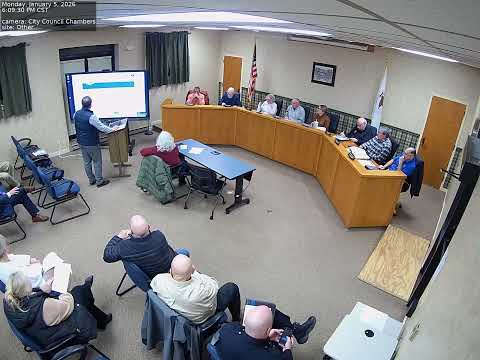
City officials and outside consultants on Tuesday presented an initial plan to create a Business Development District, or BDD, that would impose an additional local sales tax inside a mapped district to support downtown redevelopment and business assistance.
"I don't know if everyone in the audience might be aware that we are looking to establish what's called the business development district, BDD for short," said Michael Ziering, who opened the presentation. Consultants said the rate could be set in quarter‑percent increments up to 1 percent and that revenues would be deposited into a legally restricted fund used only for authorized activities inside the district.
Attorney Herb Cline described the statutory steps and timeline, saying the law authorizes municipalities to impose "up to an additional 1% sales and or hotel motel tax" inside a certified district and outlining the schedule for filing with the Illinois Department of Revenue. Cline said the city could seek Department of Revenue certification in mid‑March to begin collections for July 1 if the council and staff meet statutory deadlines.
Consultants from Hometown Consulting described technical work under way: merging county and city GIS parcel data, mapping a proposed boundary that targets commercial corridors, and building a public‑facing inventory of available properties with photos, zoning and listing links. The mapping is intended to help investors and staff visualize vacancies and building uses and to support grant and redevelopment decisions.
Cline and consultants listed common exemptions and practical limits: titled sales (vehicle and trailer sales), many grocery items, prescription drugs and certain medical devices are generally excluded from the extra BDD charge, while takeout food and most retail purchases inside the district would typically be subject to it.
Council members and residents raised practical questions about administration, retail inclusion and resident impact. Consultants said cities often use either consultant administration or staff oversight for grants and reimbursements, and that incentives can be structured (for example, partial reimbursement or forgivable grants) and targeted by project type.
The consultants asked residents and council members to attend a community meeting on Jan. 27, 5–7 p.m. at the Metro Center, where live survey questions will be used to collect input. Mayor (unnamed) spoke in favor of the approach, saying he "support[s] this 100%." The city has already invested in the work: the mayor reported a first‑year Hometown Consulting contract of $55,000 and an estimated $20,000 in legal work so far.
Next steps identified by staff and consultants include refining the district boundary in coordination with staff, finalizing the qualification study and plan, holding the formal public hearing required by statute, and filing the plan with the Illinois Department of Revenue.