
State Water Board hears multi‑agency hydrologic update as reservoirs run above average
Get AI-powered insights, summaries, and transcripts
Subscribe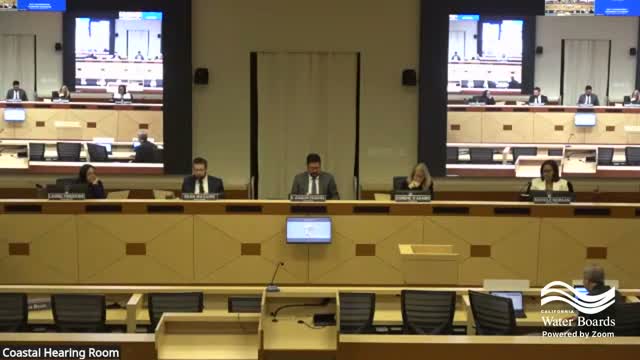
Summary
Department of Water Resources and Bureau of Reclamation officials told the State Water Resources Control Board that statewide precipitation is running well above average with uneven snowpack and dynamic reservoir operations; panelists warned of forecast uncertainty for January–March and described Delta export management under OMR constraints.
The State Water Resources Control Board heard a multi‑agency briefing on Jan. 6 about water‑year 2026 conditions, with officials from the Department of Water Resources and the Bureau of Reclamation presenting updated precipitation, snowpack and reservoir data.
Michael Anderson of the Department of Water Resources told the board the state is "running 154% of average for the state" in precipitation so far and has seen a mixed snowpack: Northern Sierra snow accumulation lags while the Southern Sierra and higher elevations are tracking above average. Anderson cautioned that January through March remain uncertain and that a single large storm could materially change monthly totals.
Levi Johnson and Adam Nichols of the Bureau of Reclamation outlined Central Valley Project reservoir conditions, noting above‑average storage at Trinity, Shasta, New Melones and other CVP reservoirs and describing the coordination required to manage inflows and releases. Johnson said the bureau has been "operating to what's called a first flush condition" since Dec. 25 and that Old and Middle River (OMR) management has been central to export decisions.
On operational limits, a board member questioned how negative OMR flows had been managed; Johnson said the program strives to "target that minus 5,000" and that there have been days with more conservative values depending on daily conditions and coordination with the Department of Water Resources.
Jessica Bean (Division of Water Rights) summarized related outreach: the new Cal Waters reporting portal has recorded more than 3,000 submitted reports and about 4,500 user accounts. Bean said staff will host virtual office hours on Jan. 14 and an in‑person assistance event in Sacramento on Jan. 23 to help water‑right holders meet the Jan. 31 reporting deadline.
Why it matters: reservoir storage and timing of releases affect Delta operations, water supply reliability and ecosystem protections under NEPA and ESA constraints. Panelists emphasized daily coordination among agencies and the need to monitor snowpack, inflows and facility outages as the remainder of the wet season unfolds.
The board thanked the panelists for the update and asked for follow‑up materials that clarify outflows and project operations in the Delta. The public meeting then moved to a closed session on site applications; no formal regulatory actions on hydrology were taken at this hearing.