
Public hearing in Dawsonville spotlights traffic, safety concerns over proposal to rezone 35.31 acres for 91 homes
Get AI-powered insights, summaries, and transcripts
Subscribe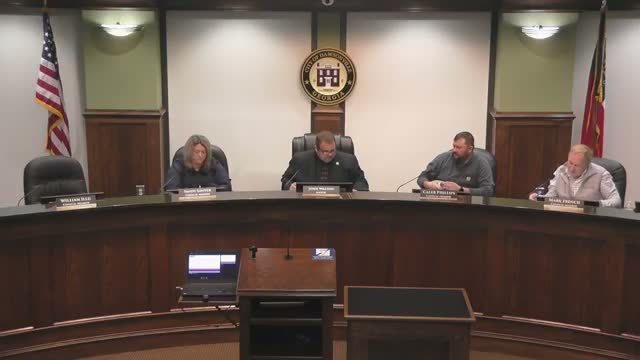
Summary
At a Jan. 5 Dawsonville City Council meeting, developers sought rezoning (ZAC2600057) of a 35.31-acre annexed parcel to R‑3 for up to 91 single‑family homes. Residents from Thunder Ridge and nearby neighborhoods opposed connections that could increase traffic on State Route 9 and raised child‑safety concerns; staff recommended stipulations and a broader traffic study.
Developers asked the Dawsonville City Council on Jan. 5 to rezone a 35.31‑acre annexed parcel (case ZAC2600057) from AP (Annex Property District) to R‑3 single‑family residential, proposing up to 91 homes across the site.
Planning staff (CPO Dana) told the council the parcel was annexed into the city on Aug. 21, 2023, and currently carries AP status. The applicant proposes a 2.58 units‑per‑acre layout with varying home footprints and front‑loaded two‑car garages. Staff noted the site lacks road frontage and described proposed connections to the adjacent Cornerstone development and a possible future tie to Thunder Ridge; overhead power easements and an internal stream were also described. Staff said the applicant submitted a traffic impact study that assumed a connection to Thunder Ridge and recommended several zoning stipulations, including a traffic study for the greater Thunder Ridge area, no more than 91 principal dwelling units, a minimum 20‑foot buffer platted outside private yards, a 5‑foot unpaved trail of at least 2,000 feet, and masonry or stone base features on home facades.
Residents who live in or near Thunder Ridge and Birch Crossing used the public hearing to press concerns about traffic and safety on State Route 9. Richard Herman of Birch Crossing said congestion at Highway 9 already makes it difficult to exit his neighborhood and urged that a planned roundabout be prioritized before any additional development proceeds. James Parker (Maple Street) and others worried about increased traffic, stormwater impacts from two creek channels running through the property, effects on property values, and whether emergency services capacity will be adequate. Bill Hamilton and Daryl Hogan, both from Thunder Ridge, said the neighborhood did not sign up to be connected to another subdivision and warned that a steep hill and bus‑stop locations could create hazards for children if additional traffic were routed through existing streets.
Representatives for the developer, including Corey Guthrie (design engineer) and Michael Turner (property owner), described the proposal as effectively a phase of the Cornerstone development and said they had contingency plans for secondary access. Guthrie noted that Cornerstone was designed with a stub street to provide access and that Georgia DOT prefers limiting access points on State Route 9; he offered gating, a gated emergency access, or foregoing the tie‑in if residents and the city prefer. Turner said conveyance of land for connections depends on the city's zoning decision and pledged that any property conveyances would be completed and recorded prior to issuance of a land‑disturbance permit (LDP) if the council approves rezoning.
Staff and the Planning Commission recommended approval with conditions, including requiring a traffic‑impact study that considers Cornerstone, Thunder Ridge (phases 1–3), and the subject site, and implementing any access recommendations prior to issuance of the subject site's land‑disturbance permit. Councilmembers asked clarifying questions about whether the parcel is landlocked now (staff and developer said it will have legal access once Cornerstone is platted in future phases, likely two to three years) and about the sequencing and mechanics of connectivity.
No final rezoning vote appears in the transcript. Councilmembers discussed options, and several suggested gating or requiring additional traffic analysis; the council agreed to take up formal actions on upcoming agendas. The record shows strong resident opposition focused on traffic flow and child safety, and staff emphasized implementation requirements tied to the development review process as conditions of approval.