Get Full Government Meeting Transcripts, Videos, & Alerts Forever!
Get email alerts on the Capital Budget topic
No spam. Unsubscribe anytime.
Southborough capital planning panel previews $18.9 million package, weighs bonding, school security and road priorities
Summary
The Capital Improvement and Planning Committee reviewed a proposed $18.9 million capital package with roughly $3.0–$3.2 million in FY27 expenses, debated bonding versus pay-as-you-go, discussed bundling school security projects into a single bond and pressed DPW for prioritized road and sidewalk plans ahead of a Jan. 13 select board presentation.
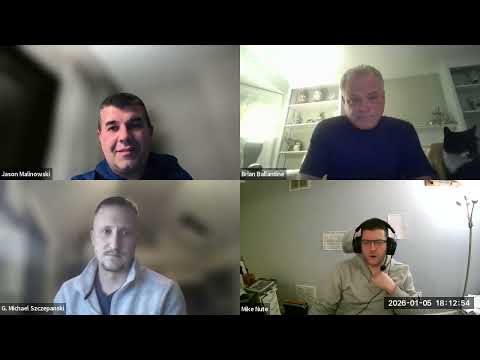
The Town of Southborough’s Capital Improvement and Planning Committee met on Jan. 5 to review a draft capital plan that lists $18,900,000 in total proposed project costs, with about $3,000,000–$3,200,000 flagged as FY27 cash needs and the remainder expected to be bonded.
Committee members agreed the meeting’s purpose was to identify items that need more information and to set priorities before taking recommendations to the select board. Speaker 1, who led the meeting, emphasized that approving large projects affects future debt capacity and that the committee’s recommendation typically forms the basis of what ends up on the town warrant.
The committee discussed a suggested target of about $1.8 million in capital spending for FY27 as a budgetary guideline; members reiterated that the $18.9 million figure represents total project costs rather than the single-year cash requirement. The group heard that first-year bond payments are often a fraction of the total (frequently interest-only), making the total-dollar figure important for long-range planning.
School projects and security upgrades drew significant attention. Committee members were told that the Trottier roof timing depends on Massachusetts School Building Authority reimbursement and may not be ready for spring. Speaker 1 proposed bundling security upgrades for Woodward, Trottier and Finn into a single bond so the schools could present a consolidated figure without exposing sensitive security details in public sessions. Members agreed bundling could reduce costs and simplify presentation, but several cautioned that site uncertainty for the Neary property (a March decision point) could delay or alter related work.
Committee members also discussed bundling technology infrastructure with security work to capture vendor efficiencies. The group flagged the potential for obsolescence—Speaker 1 estimated much security technology could be serviceable for roughly five to seven years—so timing and scope would be important in any bonded package.
Public safety and police capital requests were debated. The police department requested four cruisers for next year (two frontline, two administrative), more than the two-per-year pattern the committee typically approves. Members noted prior practice of approving two cruisers annually and said they would weigh personnel changes and long-term operating costs when deciding whether to support four. The committee also discussed a drone program and confirmed that the taser lease’s final payment is near and will require reauthorization next year.
DPW emerged as the department with the largest new capital burden. Committee members described a recent multi-year “catch up” that produced higher-than-normal requests: trucks, equipment and a multi-year roads and sidewalks program. The DPW proposal included a road plan and a separate sidewalk program; one member estimated roughly $5 million in sidewalk work over five years and asked whether the town should bond the entire scope or phase it. Discussions focused on debt capacity, timing, potential interest-cost differences for a single large bond versus phased bonding, and the need for DPW to prioritize work so the committee could recommend which items are essential for year one.
A finance-focused exchange clarified interest-rate assumptions for bonding. Brian (asked to explain) described the basis used in the draft: “3 and a half is the short-term interest rate, and 4 and a half is a long-term [rate],” and explained short-term bridge financing versus 15–25 year permanent bonds.
Next steps: the committee agreed to circulate the roll-up sheet back to department heads to confirm numbers, ask DPW to prioritize its list, and request written clarifications where personnel cannot attend. The committee requested the draft presentation to the select board be circulated in advance and set the select board presentation for Jan. 13 at 6:30 p.m.; a follow-up committee meeting was scheduled for the following Monday to finalize recommendations.
Votes at a glance: The committee approved the Nov. 3, 2025 meeting minutes with one spelling edit by a 3–0 roll call vote. The committee adjourned by unanimous roll call at the end of the session.
The committee did not take final votes on specific bond amounts or individual projects; it directed staff and department heads to provide prioritized clarifications and returned materials for the next meeting and the Jan. 13 select board presentation.