Planning Commission denies Crown Castle conditional‑use permit for 299‑foot tower after public safety and fall‑zone concerns
Loading...
Summary
After denying the applicant’s request for a deferral to obtain a third‑party fall‑zone review, the commission held a public hearing and voted to deny Case 25‑22 CUP for a 299‑foot Crown Castle telecommunications tower, citing fall‑zone setbacks, adjacent residential/agricultural impacts and public‑safety and equipment relocation concerns.
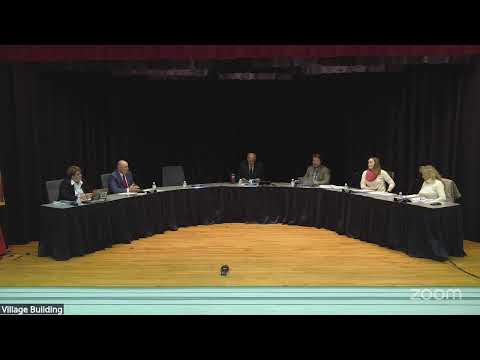
The Powhatan Planning Commission voted Jan. 6 to deny Case 25‑22 CUP, a conditional‑use permit application from Crown Castle for a proposed 299‑foot telecommunications tower on a 13.1‑acre parcel at 2410 Handcroft Drive.
Planning staff described the request and explained the applicant had asked for a deferral to March 3, 2026, to allow an independent third‑party review of the fall‑zone analysis. Several commissioners said the application already included an engineer’s fall‑zone certification and that a second report would not likely change the substantive facts; the commission voted to deny the deferral and proceeded to a public hearing.
Drew De Stanislow, Virginia counsel for Crown Castle, said the proposal is a replacement tower intended to cover the same service area as an existing tower at 655 Huguenot Trail that the applicant plans to decommission. He described the proposed self‑support tower as 299 feet (including lightning rod) with enhanced structural reinforcement at the base to reduce the effective fall radius in an unlikely catastrophic failure.
During public comment, Thomas Nolan, Powhatan County director, and Floyd Green, former county communications manager, told the commission the county relies on coverage in the area and that relocating county communication equipment from the existing tower would be costly and could create gaps in radio coverage used by emergency services. Adjacent resident Larry Ojibwe raised electromagnetic‑field concerns for livestock and residents and urged moving the tower farther from homes; other residents raised fall‑zone and setback concerns.
Staff presented fall‑zone calculations in the packet showing required distances under county ordinance; several commissioners said the proposed tower does not meet the ordinance’s fall‑zone setback (the greater of 500 feet or 200% of tower height) to all adjacent dwellings and property lines. The applicant’s engineer certified a smaller effective fall radius due to enhanced base design, but commissioners emphasized the ordinance standard and the presence of nearby residences and agricultural uses.
After deliberation, the commission moved and seconded to deny the planning commission resolution recommending approval of Case 25‑22 CUP; roll call recorded ayes by Commissioners Hall, Boland, Winnall and Hatcher and the motion to deny passed. The commission’s action is a recommendation; the Board of Supervisors will receive the case on Jan. 26 for final consideration.
Next steps: The applicant may revise the proposal, provide additional technical documentation, or present at the Board of Supervisors; county staff noted the lease status of the existing tower and the need to coordinate equipment relocation and public‑safety planning if a new site is required.