Get Full Government Meeting Transcripts, Videos, & Alerts Forever!
Get email alerts on the Closed Session Auditor Exclusion topic
No spam. Unsubscribe anytime.
Madison County supervisors vote to enter closed session amid dispute over auditor’s attendance
Summary
The Madison County Board of Supervisors voted to go into closed session after a heated exchange about whether the county auditor should be excluded; the motion passed with one recorded dissent and multiple speakers cited Iowa Code requirements for recording and minutes.
Madison County supervisors voted to enter a closed session after a contested exchange over whether the county auditor should be excluded from the meeting, with one supervisor recording a dissent.
The dispute unfolded after Supervisor (Speaker 1) moved to take the board into closed session to meet with the board’s attorney and staff. An unidentified participant who later identified themselves as county attorney objected, asking, “Excluding the auditor from this closed session?” and arguing that an attorney-general opinion and state law limit removing the auditor from sessions that must be recorded.
Supervisor (Speaker 2) responded by citing state law and telling the board that "the session must be recorded by the auditor or the auditor's designee," saying the statute grants the auditor authority to record minutes for both open and closed sessions. That speaker also argued an attempt to dismiss the clerk or the auditor’s designee would violate the statute governing removal authority.
An attorney present (Speaker 4) told the board that the removal statute does not explicitly contemplate removing someone from a meeting and emphasized that chapter 23 of the open meetings law requires the body to ensure audio recording and detailed minutes; staff could serve as the recorder if the board deems a conflict present.
After further debate over conflicts, recording, and who would take minutes, the board proceeded to vote to enter closed session. During the roll-call sequence a supervisor noted there was "1 nay," and the motion to move into closed session was carried. Those not participating in the closed session were asked to leave the room, and the board discussed locking the door and logistics for recording while in closed session. A meeting time of 09:50 was recorded as the point of adjournment into closed session.
The record shows multiple remedies and options were offered on the floor — for example, that an individual named Mr. Boles could meet separately with Supervisor Fitch or that matters not involving the auditor could be discussed in closed session. The transcript also records warnings that minutes and other records of proceedings may be requested and that alleged violations of open-meetings law could be raised after the fact.
No formal motion text naming a mover or seconder for the closed-session motion was recorded in the transcript, and the transcript does not include a complete, named roll-call tally. The meeting record contains repeated references to Iowa Code provisions and to an attorney-general opinion but does not provide an official statutory citation beyond the phrasing recorded in the meeting.
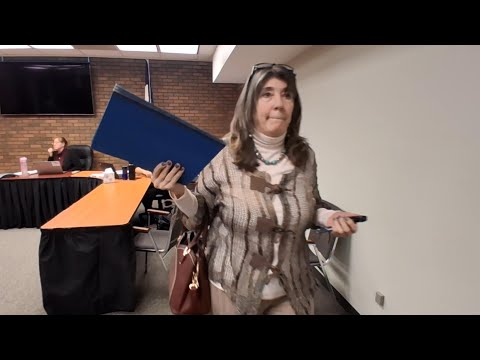
The board moved into closed session after the vote; the transcript records participants leaving the room and notes that at least one person left before the closed-session discussion began. The public record in the transcript ends with the board noting adjournment into closed session at 09:50. The transcript does not record any subsequent public-action outcomes from the closed session.