
Public division on SORL renewal: commenters propose muck reuse and accuse county of sewage mismanagement
Get AI-powered insights, summaries, and transcripts
Subscribe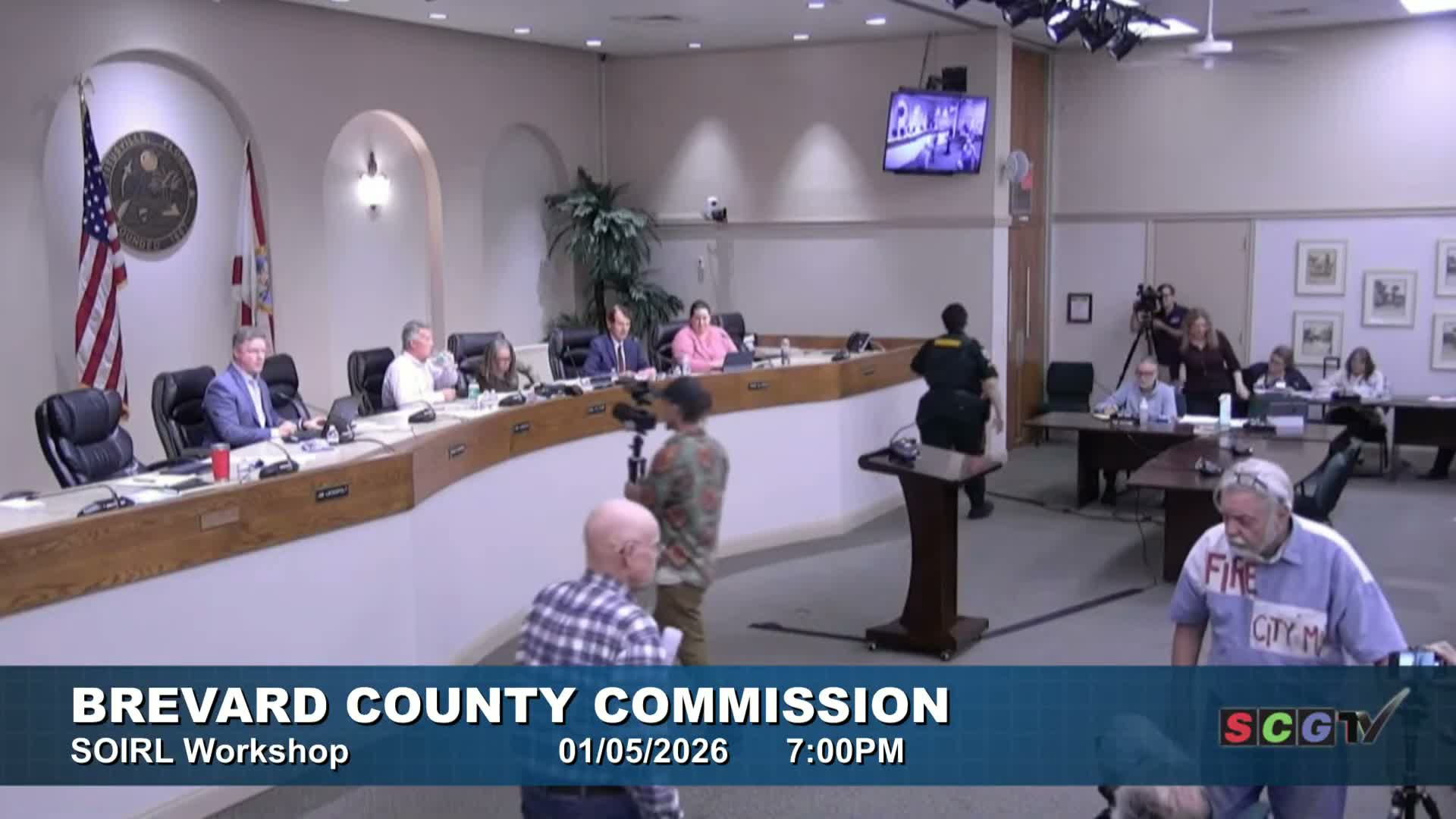
Summary
At a Titusville workshop, dozens of residents voiced strong support for continuing the Save Our Indian River Lagoon tax, while others opposed renewal and raised allegations about sewage discharges; a citizen proposed turning dredged muck into commercial biochar fertilizer as a revenue stream.
Speakers at a Brevard County workshop voiced strong but not unanimous support for renewing the Save Our Indian River Lagoon (SORL) half‑cent sales tax and offered proposals and criticisms that the board said it would consider as it weighs ballot language.
Several community leaders and nonprofit representatives — including Laura Wilson of the Marine Resources Council and Elizabeth Neville of Save the Manatee Club — urged renewal, citing hundreds of completed projects, recent seagrass recovery in places, and the program’s oversight structure. "This level of public engagement and oversight should remain a cornerstone of the program moving forward," Wilson said.
Public commenters also offered new ideas. Robert Picker proposed a pilot to pelletize dewatered muck mixed with biochar to create a slow‑release fertilizer that could be sold, generating revenue to support lagoon work. Picker said county muck samples showed potential and that UF/IFAS extension specialist Sally Scalera called the idea “fantastic” (a statement Picker attributed to the extension specialist). Picker suggested a scaled pilot could generate tens of millions in net proceeds if marketable.
Not all speakers supported renewal. Sandra Sullivan, an environmental advocate with Waves Action, urged the board to pause and rethink the tax, alleging the county had dumped substantial volumes of sewage (she cited 21 million gallons across 2022–23) and questioned whether the program was being matched as promised by state grants. Her claim was not rebutted with a numeric response during the workshop; staff and commissioners noted ongoing DEP processes and public meetings but did not provide on‑the‑record data to confirm or refute the volume cited.
Other commenters raised related concerns and suggestions: more transparency on herbicide use and project choices, stronger low‑impact development requirements for new construction, routine public water‑quality postings (one resident recommended adopting an EPA recreational‑water testing program), and increased public education about project types and timelines.
The board heard these comments without taking action and asked staff to incorporate public feedback while drafting ballot language and updating the program plan. Several commissioners emphasized the voters should decide but said staff must return with clear, transparent language and additional outreach prior to any referendum decision.
The transcript records numerous community voices with both technical recommendations and allegations that will require follow‑up fact checks (for example, the cited sewage volumes and specific grant‑matching figures).