
Brevard officials and scientists say Save Our Indian River Lagoon program shows measurable progress, urge voters to consider renewal
Get AI-powered insights, summaries, and transcripts
Subscribe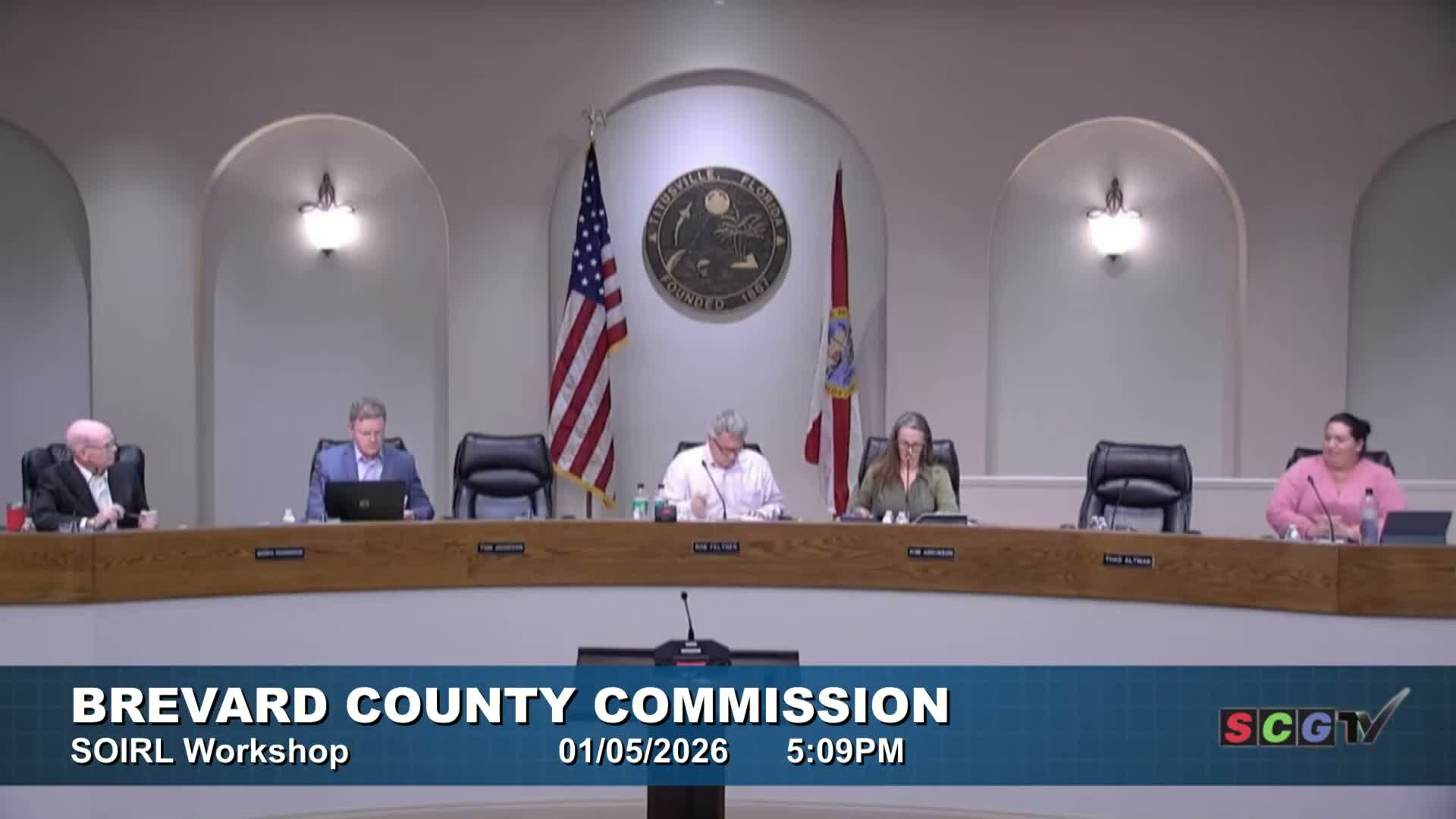
Summary
County staff and independent experts told a Titusville workshop that projects funded by Brevard County’s 2016 half‑cent sales tax have reduced nutrient loads, restored seagrass in places and leveraged state and federal grants; commissioners directed staff to draft ballot language for a possible 2026 renewal.
Virginia Barker, director of Brevard County’s Natural Resources Management Department, told a Titusville workshop the Save Our Indian River Lagoon (SORL) program has moved from planning and permitting into widescale project delivery, reporting that the county is managing over $330 million in projects in design, permitting or construction and has a combined $431 million in funds spent or in progress under the program. Barker described the program’s “four R’s” — reduce, remove, restore and respond — and said the program prioritizes projects by measured pollution load and cost‑effectiveness.
“The dollars are roughly for the 4 R’s…over half of the money is going to reducing the pollution that’s coming into the lagoon,” Barker said, adding that more than 119 projects have been completed and roughly 400 projects remain in the program plan. She reported the program has acquired about $111 million in grant funding and has spent roughly $100 million of locally controlled dollars to date.
A separate presentation from Dr. Duane DeFries of the National Estuary Program highlighted how recurring local revenue makes Brevard’s work competitive for state and federal cost‑share programs. “You have the right amount of revenue and you have recurring revenues for tough projects,” DeFries said, noting that the IRL (Indian River Lagoon) program’s structure helps secure matching funds and larger state investments.
Presenters detailed the types of projects funded: septic‑to‑sewer conversions, smoke testing and lateral repairs, stormwater treatment upgrades, muck removal (dredging), and oyster and living‑shoreline restorations. Barker said targeted smoke‑testing of private laterals and subsequent repairs reduced pump run times at lift stations in tested areas and that the county has worked with more than 2,000 homeowners on septic and sewer projects. She said recent oyster projects moved from an earlier ~80% success rate to 100% success last year after changing permit and design approaches.
Speakers stressed that restoration is long term. Barker and others cautioned that while blooms have declined and seagrass transect measures are improving, project benefits accrue over years and the lagoon will require ongoing work beyond the initial 10‑year package. The National Estuary Program presentation underscored the same point: recurring funds and a prioritized project list enable long‑term infrastructure and ecological work.
Brevard County commissioners used the workshop to gather public input and to set next steps rather than to vote on any change. Staff told the board they will work with municipalities and the oversight committee, update the project plan where needed, and draft ballot language for the board to consider; a timeline was discussed to submit language to the Supervisor of Elections if the board chooses to place renewal before voters.
The workshop also surfaced technical questions about shifting priorities — several commissioners and presenters noted that as septic loads decline in some areas, attention will increasingly turn to wastewater treatment plant upgrades and stormwater projects that can also provide flood control benefits.
The meeting concluded with commissioners directing staff to return with proposed ballot wording and additional outreach; no final decision on a referendum was made at the workshop.