
Sunnyvale commission reviews CDBG and HOME RFPs as nonprofits, residents call for expanded weather response and safe parking
Get AI-powered insights, summaries, and transcripts
Subscribe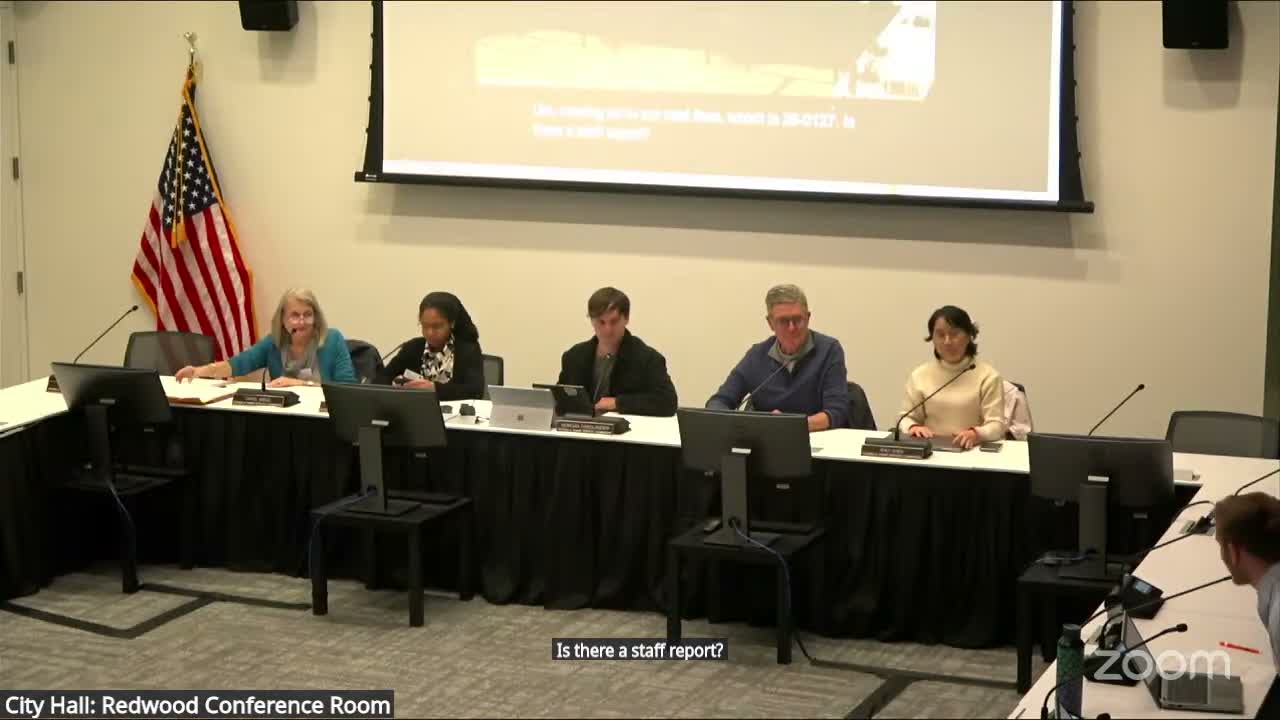
Summary
The Housing & Human Services Commission reviewed draft RFPs for FY2026 CDBG capital/economic development and HOME-funded tenant-based rental assistance, heard public testimony urging more inclement-weather rooms, safe parking, and a congregate shelter, and approved the consent calendar.
The Sunnyvale Housing and Human Services Commission reviewed two draft requests for proposals on Jan. 6, 2026, asking the public and nonprofit partners to apply for Community Development Block Grant (CDBG) capital/economic development funds and a HOME-funded tenant-based rental assistance (TBRA) program, while community speakers urged the city to expand its inclement-weather response, safe parking options and a congregate shelter for single adults.
The staff report, presented by Matt Hazel, Sunnyvale’s housing programs analyst, said the city expects about $1,000,000 in CDBG entitlement and roughly $350,000 in HOME funding for the coming program year. Hazel said the city estimates approximately $700,000 of CDBG funds will be available for capital projects and economic development activities and that the city plans to release both RFPs on Jan. 7, 2026; final awards are proposed for March 2026.
Hazel described the HOME-funded TBRA as a program that provides rental assistance to households at risk of or experiencing homelessness so that a participant’s rent share equals 30% of income, plus security deposit and utility assistance; participants may receive assistance for up to two years along with case management. "The TBRA program assists households at risk of or experiencing homelessness by providing rental assistance so that their share of rent equals 30% of their income," Hazel said during the presentation.
Public testimony emphasized service gaps. "Short stays of 5 to 7 days during these periods are a proven way to prevent weather related harm and medical emergencies," said Alpana Agarwal, cofounder of Helping Hands Silicon Valley, who urged a rotating shelter model with faith partners and expanded safe parking. Agarwal said Helping Hands provided motel safety stays to 23 unique individuals in 2025 for a total of about 94 nights; she also said Sunnyvale’s inclement-weather plan provides 10 motel rooms and that that supply covers under 3% of the need.
City staff later explained the city operates a small non-congregate hotel program and separately maintains inclement-weather shelter beds. Staff said the city has five ongoing hotel rooms it operates year-round and also deploys inclement-weather rooms or beds for severe weather; staff described bringing 10 rooms online during a recent holiday storm. Because speakers and staff used different phrasings about hotel/room counts, the record shows both statements: the public comment that the plan provides "10 motel rooms" and staff statements explaining an operational structure of five year-round hotel rooms plus additional inclement-weather rooms when storms require them.
Sunnyvale Community Services, the city’s longtime local partner, testified in support of continuing TBRA and described program outcomes. "We see hundreds of families coming to us and about 1,400 families coming every week for food," Marie Bernard of Sunnyvale Community Services said, noting the agency helped roughly 400 families with housing assistance last year and that most clients served are low or extremely low income. Bernard said TBRA couples intensive case management and employment supports and reported high short-term retention: "With the TBRA program, we've been even more successful...we've gotten a 90 percentile rate of people staying housed," she said.
Commissioners asked staff and nonprofit speakers how small organizations can compete for grants, and staff said the RFP scoring will value service approach and experience as well as capacity, and that smaller agencies may apply for any portion of the $700,000 capital/economic development pool. Hazel said the CDBG RFP is intended to list allowable activities per HUD guidance, and the attachments to the staff report emphasize a focus on serving low- and moderate-income (LMI) households to satisfy HUD requirements that 70% of grant activity benefit LMI households at scale.
On procedural items, the commission approved the consent calendar (minutes from Nov. 24, 2025) by roll call: four votes in favor, one abstention (Commissioner Weiss), and two commissioners absent. Staff announced upcoming items including a family shelter study to be presented to city council on Jan. 27 and a Feb. 25 commission update on tenant protections, and said the city will release a biannual NOFA for affordable housing next week.
The commission’s review of these draft RFPs is advisory and administrative; staff told the commission a formal vote on changes was not required but invited commission feedback before the documents go live. The public hearing on the RFPs was closed and the meeting adjourned at 8:07 p.m.