
Gallatin council approves plan map change, delays Myers Hill rezoning over road and density concerns
Get AI-powered insights, summaries, and transcripts
Subscribe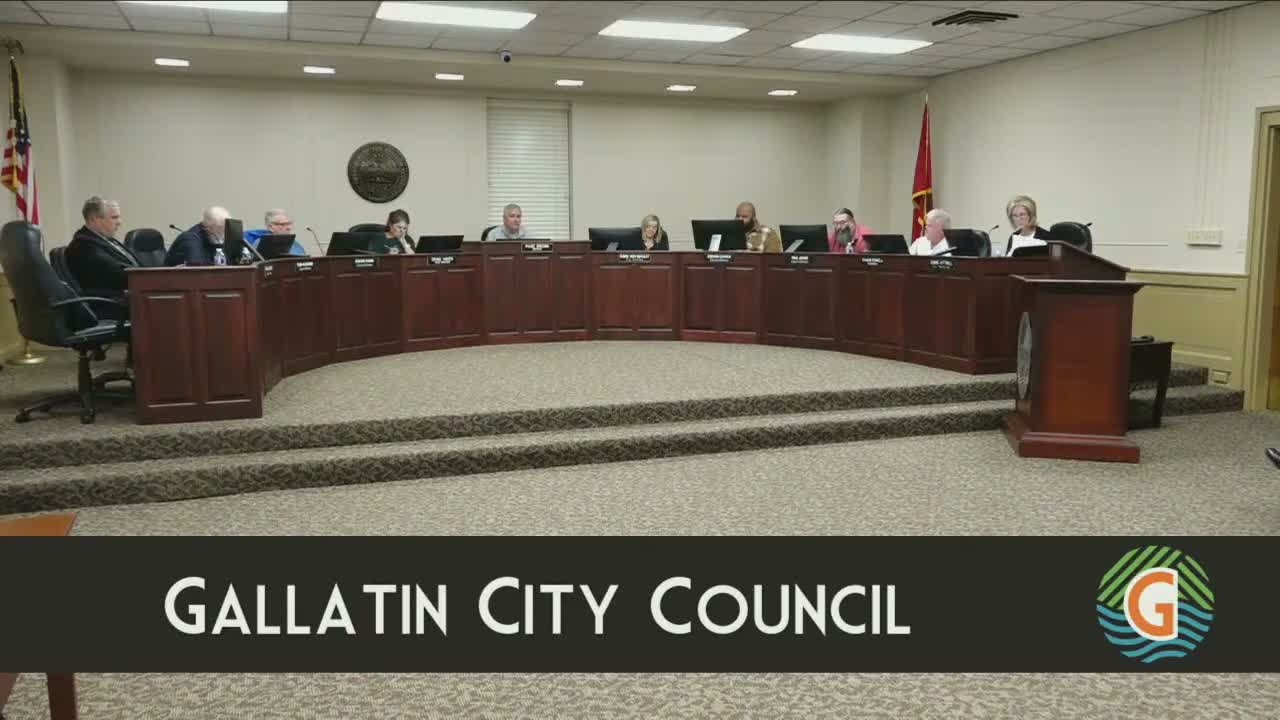
Summary
The Gallatin City Council approved a Plan Gallatin map amendment expanding the Gallatin Gateway industrial subarea but postponed a separate Myers Hill rezoning request for three months to allow the developer to secure county road-widening approvals and related agreements.
The Gallatin City Council on Jan. 6 approved a change to the city’s comprehensive-plan map that expands the Gallatin Gateway industrial subarea and redesignates roughly 325.48 acres near Highway 31 as General Urban, but postponed a separate rezoning proposal for Myers Hill so staff and the developer can resolve transportation and density concerns.
Councilman Jones introduced the plan amendment, and the council voted to approve it after discussion. Councilman Gervontz urged the council to create an explicit industrial character area instead of a broad General Urban designation, saying that a character-area label would better protect neighbors if future plan changes are proposed. “If we change that to general urban character, that means if plan change, we open all that area to high density,” Gervontz said, urging staff to prepare an industrial character area the council could adopt.
City planning staff replied that a city-initiated comprehensive-plan amendment or a new character-area designation would require additional staff work and public input. Planning staff said that process typically takes three to four months and involves public engagement similar to the ZOCO process.
Separately, council considered a rezoning request for the Myers Hill project, a proposed medium-density planned residential development on about 77.55 acres with roughly 190 lots (about 2.46 units per acre). Council members including Councilman Alexander and Councilman Joannes raised concerns that the proposed density and layout conflict with surrounding development patterns and that Higgs/Hicks Lane would need to be widened to meet emergency-access and safety standards.
Councilman Gervontz moved to deny the Myers Hill rezoning, citing safety and infrastructure worries and questioning the project’s effective density. After debate, the council voted unanimously to postpone action for three months so the developer can provide county approvals and an agreement addressing road improvements and related permits.
The postponement leaves the rezoning unresolved while the developer seeks county engineering and planning approvals, and gives staff time to return to council with any agreements or new documentation.
What happens next: The council directed staff to work with the developer and return with county permitting evidence and a road‑widening plan or agreement before the rezoning returns to a future agenda.