
Goshen ZBA grants two variances and partial interpretation for Healy Ford expansion
Get AI-powered insights, summaries, and transcripts
Subscribe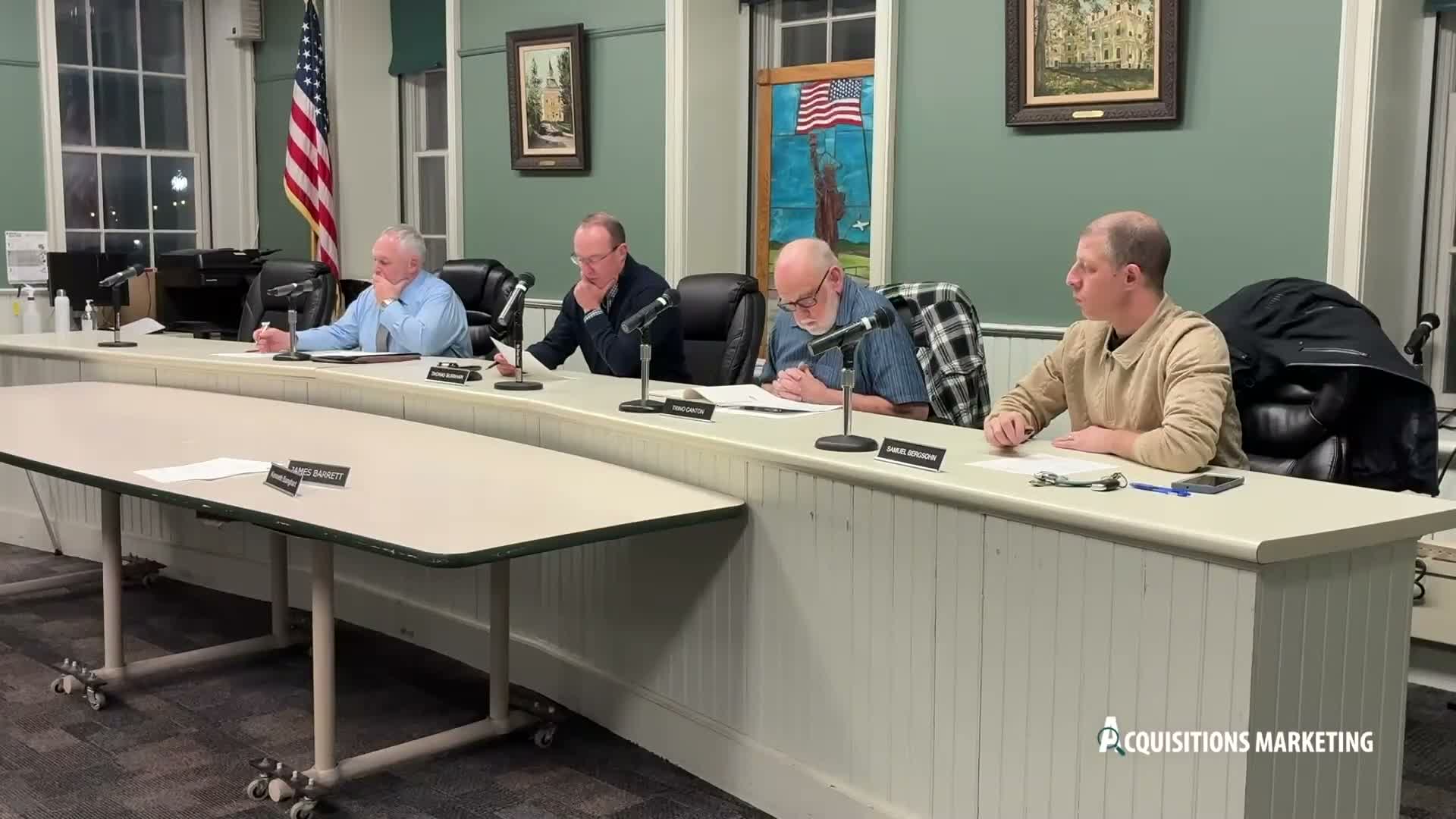
Summary
The Goshen Zoning Board of Appeals granted two area variances — a reduction of the 100-foot stream setback to roughly 47.8 feet and an impervious-surface variance raising coverage to about 78.5% — and a limited code interpretation for long-term vehicle storage, subject to planning-board site-plan review and conditions.
Goshen — At a regular meeting, the Goshen Zoning Board of Appeals granted two area variances and a partial interpretation for a proposed expansion of the Healy Ford truck repair facility, concluding the additions would not increase impervious coverage and preserving the planning board’s authority to require site-plan screening.
The board approved a reduction of the town’s 100-foot stream-corridor setback to approximately 47.8 feet for the proposed building addition, granted an impervious-surface variance raising allowed coverage from 70% to roughly 78.5% on the existing, largely paved site, and issued an interpretation finding the inventory vehicle storage area is not subject to the strict landscape-island spacing requirements of section 97-48a(4)(c) while leaving planning-board buffering and site-plan review authority intact. The decisions were entered on the record and counsel will prepare a written decision for adoption at the next meeting.
Why it matters: The parcel’s watercourse bisects the site and the board concluded that site constraints and existing development make reconfiguration impractical; the board balanced statutory factors including neighborhood character, feasible alternatives, environmental impact and whether the hardship was self-created before voting to grant relief.
“Because the addition is proposed in an area already disturbed, no increase in impervious surface is proposed, the watercourse itself will not be disturbed, and the floodplain compliance requirements will continue to apply,” the chair read when framing the board’s environmental finding. Jay Samuelson, an engineer for the applicant, told the board they would be replacing existing pavement with the building and could better control runoff than the current pavement. “We would be ripping up pavement to put in a building…there’s no difference in runoff between those two,” Samuelson said, arguing the post-construction condition would not worsen watercourse impacts.
Board member Chris Haley, a newly seated member who also serves on the town’s Environmental Review Board, said the impervious-surface question was straightforward given the existing condition: “You’re allowed up to 70%. You’re at 78.5%, but it’s already there there and this addition adds nothing to the impervious surface,” Haley said, noting the addition would not expand the total paved area.
Several members expressed concern about repeated or segmented variance applications from the same applicant and the difficulty of evaluating cumulative impacts. One member pressed whether other projects were planned; the applicant’s counsel said prior variances were for unrelated projects and denied any coordinated plan to file piecemeal requests.
The board explicitly considered the five statutory variance factors. It found the proposed setback reduction to be substantial but balanced that against the lack of feasible alternatives, that the work area is already disturbed, and that no evidence of increased drainage or runoff impacts had been presented. The board also concluded the hardship was partially self-created because the proposed expansion gives rise to the need for relief, but that the existing building predates the applicant’s ownership and the self-created aspect did not control the outcome.
On the interpretation, board members debated whether the vehicle area functioned as a traditional customer parking lot or as long-term inventory storage — which would affect landscaping requirements. The board determined the area is used primarily for long-term storage of inventory vehicles and therefore is not strictly subject to the spacing requirements of 97-48a(4)(c), but left to the planning board the authority to require reasonable screening or buffering during site-plan review.
The variances and interpretation were granted subject to the general conditions read into the record and subject to planning-board site-plan approval. Counsel will prepare a formal written decision consistent with the findings and present it at the next meeting for adoption and signature.
Administrative notes: Board members discussed scheduling and notice for upcoming matters, including a separate Millburn solar project that required renoticing, and confirmed the board’s expectation that applicants supply materials at least a week in advance when feasible. The meeting concluded after the board addressed member eligibility to vote on applications when members had been in the audience at prior hearings.
What’s next: The board’s written decision will be prepared by counsel and brought to the next meeting for review and signature; site-plan review and any planning-board buffering conditions remain outstanding.