
Blue Mountain Clinic unveils stained‑glass window, highlights fundraising and plans to expand services amid threats to abortion access
Get AI-powered insights, summaries, and transcripts
Sign Up Free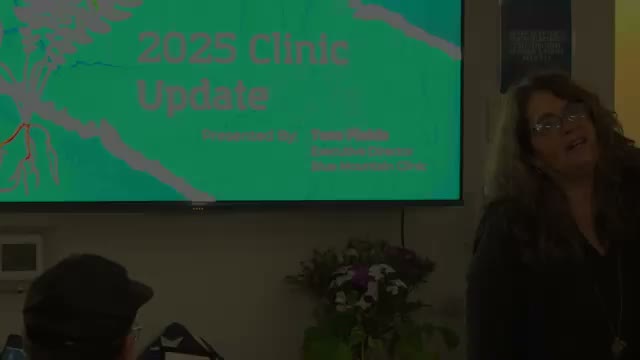
Summary
At a Missoula event, Blue Mountain Clinic leaders unveiled a donated stained‑glass window meant to shield patients and staff from protesters, announced a $450,000 matching campaign (about $272,634 raised so far), and outlined hiring and telehealth plans to bolster care amid ongoing state‑level restrictions.
Tess Fields, executive director of Blue Mountain Clinic, told a crowd in Missoula that the clinic — founded in 1977 and rebuilt after a 1993 bombing — must both preserve its legacy and deepen services as state policies restrict abortion access across the country.
Fields opened the evening by recounting the clinic’s origins and the role its founders played in early legal fights over abortion, and she said the facility remains a crucial access point for patients across the Rocky Mountain region. “The entire building is fireproof, bombproof, and bulletproof,” she said, invoking the clinic’s history of threats and the need to protect patients and staff.
The clinic’s leaders used the gala to announce operational and fundraising milestones. Fields said Blue Mountain has hired a medical director who will lead a cross‑training model to provide care five days per week with a goal of expanding to six. The clinic also plans to expand telehealth and patient navigation services and to support access to medication abortion through mail where appropriate. “We’re gonna expand telehealth and patient navigation support,” Fields said, emphasizing the convenience and reach that telemedicine can provide to rural patients.
Fundraising was central to the night’s message. Fields said four donors produced a $450,000 matching gift; the clinic had raised $272,633.69 toward that match at the time of the event and had attracted two New York donors who contributed $250,000 and $50,000. Fields said those funds are earmarked for staffing and daily operations as the clinic builds capacity.
The program also featured the unveiling of a stained‑glass installation commissioned to shield the clinic’s lobby from protesters while preserving light and visibility. Artist Kiki Renander described making the panels and said the work was intended to “shield their hate and ignorance with a beautiful piece of art,” allowing staff and patients to work and wait without constant harassment.
Fields framed the local work in a national context: she said many states have enacted strict abortion restrictions and that Montana’s ballot measure CI‑128 helped secure constitutional protection for abortion in the state; she warned, however, that legislators still introduced anti‑abortion bills after that vote. Fields described the practical consequences for patients in states with bans and limits, including delays, travel burdens and constrained medical options.
Fields and other speakers stressed that the Blue Mountain Clinic is more than an abortion provider: it now offers family medicine services, has upgraded medical equipment and laboratory capacity, and seeks to expand prenatal and OB‑GYN care in coming years. She also noted that independent clinics provide a substantial share of abortion care nationally and that small clinics face financial and visibility challenges compared with larger brands.
The unveiling concluded with thanks to donors, volunteers and staff and an invitation for attendees to tour the clinic. No formal policy action or vote occurred at the event; organizers said fundraising and operational expansion will continue in the weeks ahead.