
Middlesex supervisors approve new rules for water hookups after heated public comment
Get AI-powered insights, summaries, and transcripts
Sign Up Free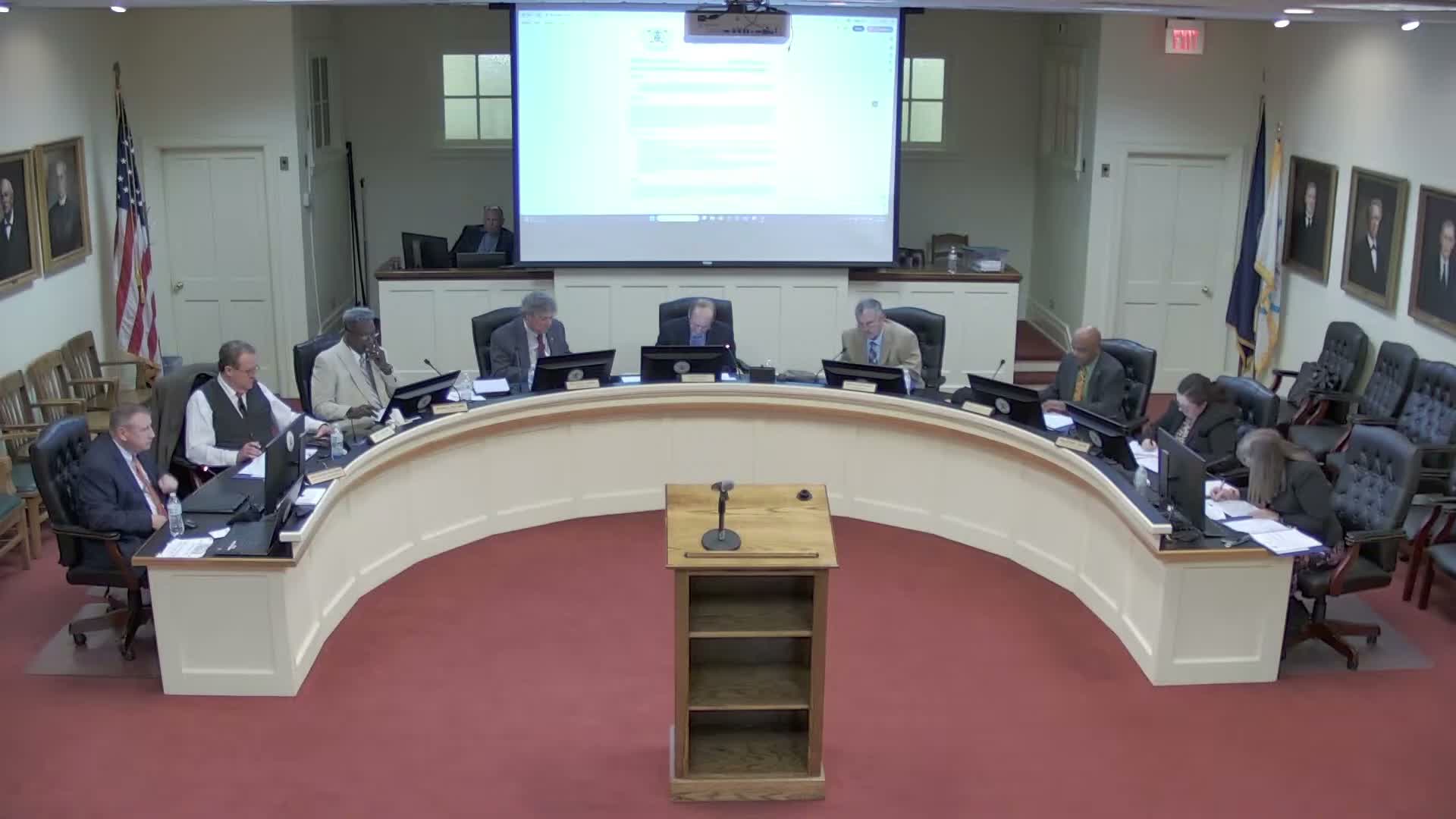
Summary
The Board of Supervisors approved amendments requiring central water for large subdivisions and initiated a zoning change to require new construction within the Middlesex Water Authority service area to connect, after hours of public testimony raising cost and fairness concerns.
The Middlesex County Board of Supervisors on Jan. 5 approved changes to subdivision rules that require central water for developments of 25 lots or more in the Middlesex Water Authority service area and voted to initiate a zoning amendment to require new construction adjacent to water lines to connect to the system.
The measures were presented by county planning staff as part of two linked amendments: a subdivision-code update and a zoning amendment to add a section (15-30) requiring connections for new occupied buildings within the Water Authority’s service area, with enumerated exemptions for existing wells and properties beyond specified distances. Staff said the changes were aimed at new development and were not a county rate-setting action; hookup costs and rates remain under the authority of the Water Authority.
Why it matters: Board members and staff said expanding hookups for new construction will help the water system reach a customer base that can reduce the county subsidy over time and provide community benefits such as fire hydrants and improved public-safety infrastructure. Opponents at the meeting argued the timing and public outreach were insufficient and warned of unintended consequences and unfair costs for long-time residents.
Residents lined up to oppose immediate approval. Doug McMinn of Deltaville urged delay, saying, “The public perception is not gonna be what you’re hoping for” and that the county needs a clearer accounting of who will pay for hookups. Hal Muller told the board the water authority was “sold to the public as something that would never cost the taxpayers a dime. Wrong.” Davis Wilson, a retired law-enforcement officer, warned the ordinance is a “landmine” that could saddle inland taxpayers with costs for water infrastructure they do not use.
Board members acknowledged those concerns while defending the policy. Matt, identified as the Water Authority’s account administrator, gave the system’s backstory and said the authority built a system sized for both drinking-water needs and fire protection. “We put in the right system that’s gonna last this community for 40 years,” he said, and noted hydrants and distribution lines produce countywide safety benefits not easily quantified otherwise.
Policy details and constraints: The subdivision amendment places a 25-lot threshold for requiring a central water system that must be constructed to Water Authority specifications and, when within the service area, dedicated to the Water Authority. The zoning amendment under consideration would require new occupied buildings that are adjacent to a public water main to connect, with exemptions (existing wells, greater-than-specified distance). County officials emphasized these rules apply to new development and do not force existing homeowners with functioning wells to connect.
What the board did: The board approved the subdivision ordinance amendment (recorded in the minutes as item C, 20 24-05) by roll call (Williams voted no; the motion carried). For the zoning amendment (referred to in the record as ordinance amendment 20 25-06 / 0 1), the board voted to initiate the planning-commission review and to begin the amendment process.
Next steps: The Middlesex Water Authority is scheduled to present additional information to the county on Jan. 8 at 9 a.m.; county staff said that presentation may answer technical and financial questions raised by residents. The zoning amendment will move to the planning commission for a formal review and public hearings before any final change to the zoning ordinance is adopted.