Casper council postpones decision on Eagle Valley replat amid flood and legal concerns
Loading...
Summary
After more than two hours of public comment and technical questioning, Casper City Council voted unanimously to postpone a decision on the Eagle Valley No. 3 subdivision replat to Feb. 3, 2026, citing outstanding drainage, geotechnical and legal questions that staff and the applicant will address.
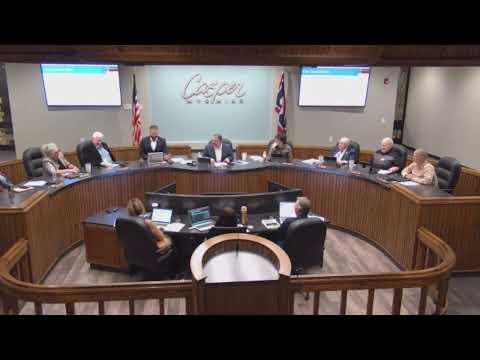
Casper City Council voted Jan. 6 to postpone action on a proposed vacation and replat of the Eagle Valley No. 3 subdivision after residents, engineers and attorneys raised concerns about stormwater, groundwater and the legal authority to vacate portions of the plat.
The proposal would create two residential lots from roughly a 5-acre tract, reducing adjoining open space to about 4.19 acres. Opponents repeatedly cited the city’s 2013 stormwater management master plan, which identifies the tract as part of a regional detention system and a priority detention pond (EE27). “This is not a simple question of a couple of acres in one neighborhood. It’s a meaningful component of Casper’s broader flood risk management strategy,” resident Maureen Young told the council.
Attorney and resident Andy Sears flagged a separate legal concern. Citing Wyoming statute 34-12-106 and the decision in Carnahan v. Lewis, Sears warned that “once lots have been sold, the plat may be vacated … by all the owners of lots in such plat joining in the execution,” and said the council should be cautious before approving a replat that could affect established property rights.
Applicant Benjamin Hansel, who said he and his wife own the parcel, told the council they plan to build high-quality homes and that the city engineer had previously vetted the development. Hansel said he expects to provide an updated, stamped drainage study in about three weeks: “We’ll have a 2026 study … stamped by a professional engineer.”
City Engineer Alex said the 2013 master plan had identified the area as suitable for a formalized detention improvement but that the current configuration functions largely as surface conveyance with a 50-foot drainage easement that must remain. Alex said a site-specific drainage analysis would be required to assess impacts: “There would have to be some sort of a study that looks at how these two lots impact what was done from the master plan.”
With technical, legal and process questions remaining, Vice Mayor Gamroth and several council members asked staff and the city attorney for additional review. The council moved to postpone the non-consent resolution to a date certain — Feb. 3, 2026 — to allow time for additional studies, staff briefings and possible work-session review. The motion passed with all councilors voting aye.
What happens next: staff and the applicant will provide the updated drainage study and other requested materials; the council expects to review those materials at a future work session and to revisit the replat on Feb. 3, 2026. The council’s action does not approve or deny the replat; it delays final action to allow further analysis.
Vote and procedural note: The council’s postponement motion was made to a date certain; the city attorney advised that a postponement to a date certain is a debatable motion and that staff would prefer that approach. The council recorded a unanimous vote to postpone.