Board approves opioid-settlement grants for treatment, prevention and co-responder programs
Loading...
Summary
The board approved a slate of RFP awards funded by opioid settlement dollars, including youth prevention, transitional wraparound supports, expansion of a transition center and a regional co-responder program; supervisors emphasized metrics, community reach and the need to deploy remaining funds quickly.
Pima County supervisors on Jan. 6 approved multiple grant awards and program expansions supported by opioid settlement funds, directing staff to coordinate implementation and to report progress to the Regional Opioid Settlement Advisory Committee (ROSAC).
The board approved a package of awards (items 25–30) that fund prevention and treatment services including youth prevention, expanded transitional wraparound services, and supportive programs targeted to tribal, rural and underserved communities. Supervisors praised ROSAC’s competitive review and urged continued outreach to applicants that did not meet minimum qualifications in this round.
Item 23 will expand the county transition center to operate seven days a week under opioid‑funded grants, with potential one‑year renewals for a three‑year funding window; staff and city partners said the city committed supplemental staffing support. County directors said the center’s metrics — recidivism measures, service touchpoints and other outcome data — will be tracked to evaluate cost‑effectiveness and potential continuation after grant funding ends.
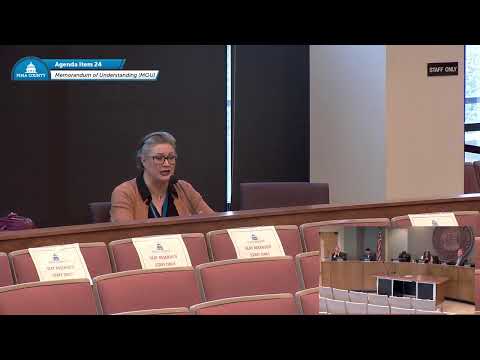
Item 24 creates a regional co‑responder program that builds on the Tucson Police Department’s nationally recognized model to coordinate crisis responses across jurisdictions. The health department will contract with community clinical providers to supply the clinical services while the county serves as an administrative coordinator to reduce duplication and extend services to rural areas and smaller jurisdictions.
Supervisors noted that more funding is needed to meet demand and asked ROSAC and staff to consider next-step distributions for approximately $1.4 million of unallocated funds. Health department leaders said they will report quarterly on metrics and work with ROSAC to align measurement across contracts.
The board approved the opioid-related items (25–30) unanimously after discussion about metrics, community reach and strategies to pilot additional rounds of funding.