
UN coordinator says millions of IDPs have returned but tens of thousands of Yazidis remain in camps
Get AI-powered insights, summaries, and transcripts
Subscribe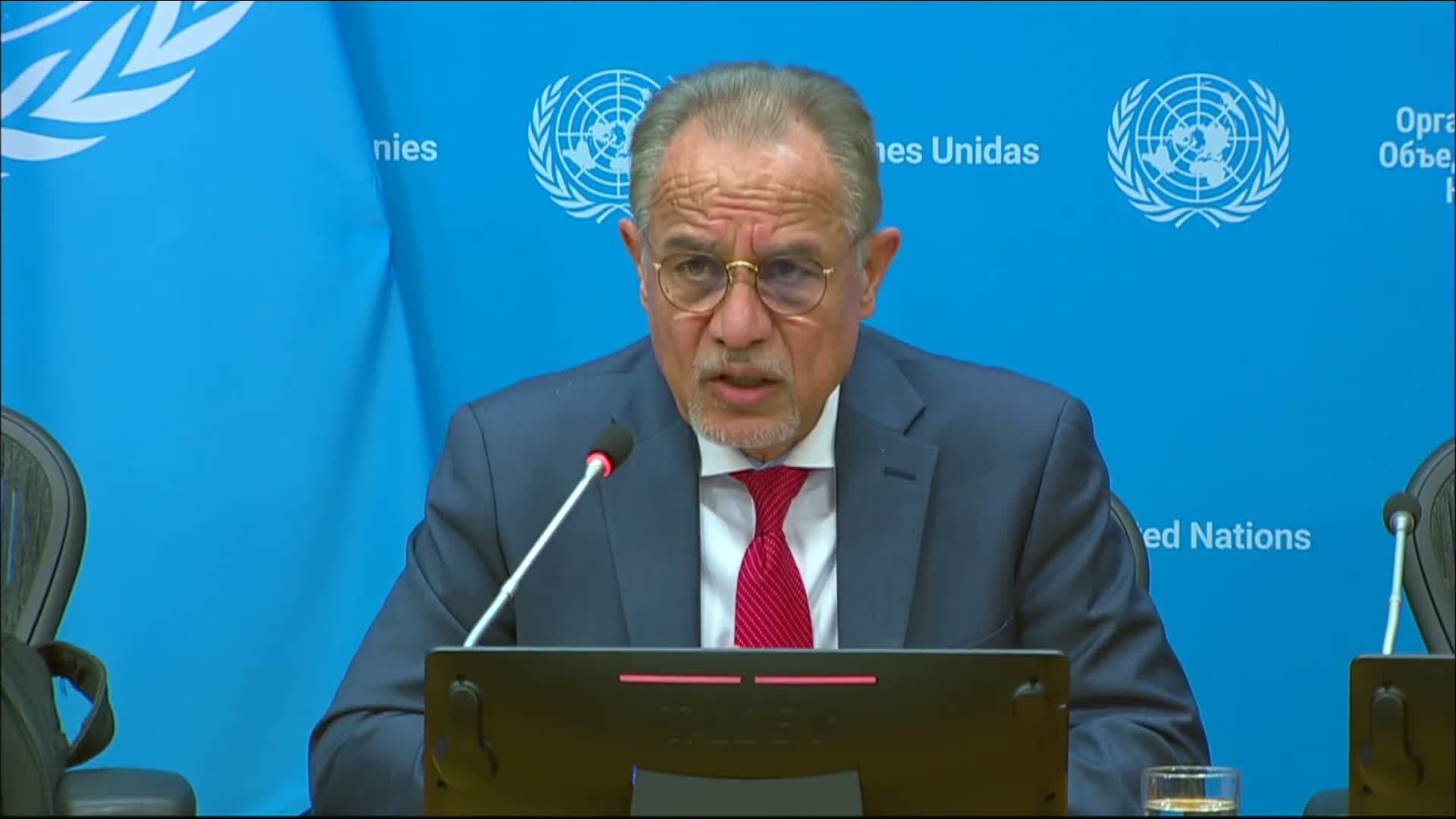
Summary
Gulam Isaac Sai told reporters that about 5,000,000 internally displaced Iraqis have returned, while around 90,000–100,000 IDPs—mostly Yazidi—remain in roughly 21 camps because of housing, documentation and administrative obstacles; the UN is pursuing a durable solutions roadmap and reintegration for those returned from Al Hol and related camps.
Gulam Isaac Sai described large-scale returns of internally displaced people in Iraq and outlined remaining obstacles for those still in camps.
He said improved security has allowed roughly 5,000,000 IDPs to return but that about 100,000 remain displaced, with approximately 90,000 of them Yazidi living in about 21 camps. He attributed the continued displacement primarily to nonsecurity barriers—lack of housing, missing civil identification and administrative hurdles—rather than active insecurity in areas of origin.
Gulam said Iraq has received about 23,000 people returned from northeast Syria (identified in the briefing as Al Hol and Al Roche camps) and that the UN is engaged in reintegration work. He estimated there may be another 2,000–3,000 people who remain in the Syrian camps or who have not decided whether to return.
On the question of whether those returned include families linked to ISIS, Gulam said the group is mixed: many are families not proven to be fighters, while the most difficult cases—suspected fighters—remain in detention and are handled by Iraqi security authorities and partner forces such as the SDF.
Gulam said the UN has been working with the government on a durable solutions roadmap and continuing advocacy to facilitate voluntary return and reintegration, but that implementation depends in part on government action, compensation funds, and administrative steps. He called for greater government support for housing and reintegration measures as Iraq forms a new government.