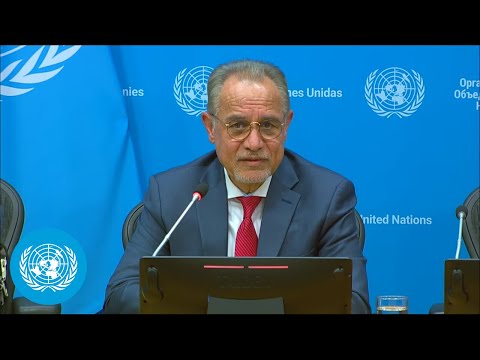
UN official: UNAMI mandate ends; UN will stay in Iraq under development-focused partnership
Loading...
Summary
The UN resident and humanitarian coordinator said the UN political mission (UNAMI) concluded its mandate and the UN will transition to a resident-coordinator development partnership, anchored by a five-year cooperation framework costing about $1 billion and targeting economic reform, services, environment and governance.
Gulam Isaac Sai, the United Nations resident and humanitarian coordinator in Iraq, told reporters that the UN political mission (UNAMI) concluded its mandate on Dec. 31, 2025, but that the UN would remain in Iraq in a new, development-focused posture. He said 25 UN agencies will continue working under a resident-coordinator system to support Iraq's socioeconomic needs.
“The UN is not leaving Iraq. The UN is staying in Iraq,” Gulam said, describing the shift from a mission-led political presence to one focused on institution building, Sustainable Development Goals and service delivery. He said the transition followed a request by the Iraqi government and assessments by Security Council members that conditions had improved.
Gulam highlighted a recently signed five-year UN cooperation framework that he said is costed at about $1,000,000,000 and focuses on four pillars: economic reform; social protection and service delivery; environment and climate action; and governance, human rights and rule of law. He said Iraq has signaled it will contribute to implementation and that the UN intends to establish a partnership fund to support delivery.
He also described UN technical support for recent parliamentary elections and other democratic institutions that, he said, contributed to a reported increase in electoral turnout. Gulam framed the new arrangement as a targeted UN engagement that prioritizes activities aligned with the Iraqi government's national development plan and noted the UN must work within current funding constraints.
The resident coordinator emphasized that mission transitions occur at the request of member states and when mandates are fulfilled, and that UN presence will be more programmatic and focused on sustaining gains from the last two decades. He said the UN will continue advocating for durable solutions to humanitarian issues while working with Iraqi authorities to implement the cooperation framework.
The briefing closes with Gulam saying the UN will remain engaged in Iraq through the resident coordinator system and UN agencies, while development work will be prioritized according to Iraq’s national priorities.