
Arts District business owners urge halt to parking price increases; council pauses north‑side rollout
Get AI-powered insights, summaries, and transcripts
Subscribe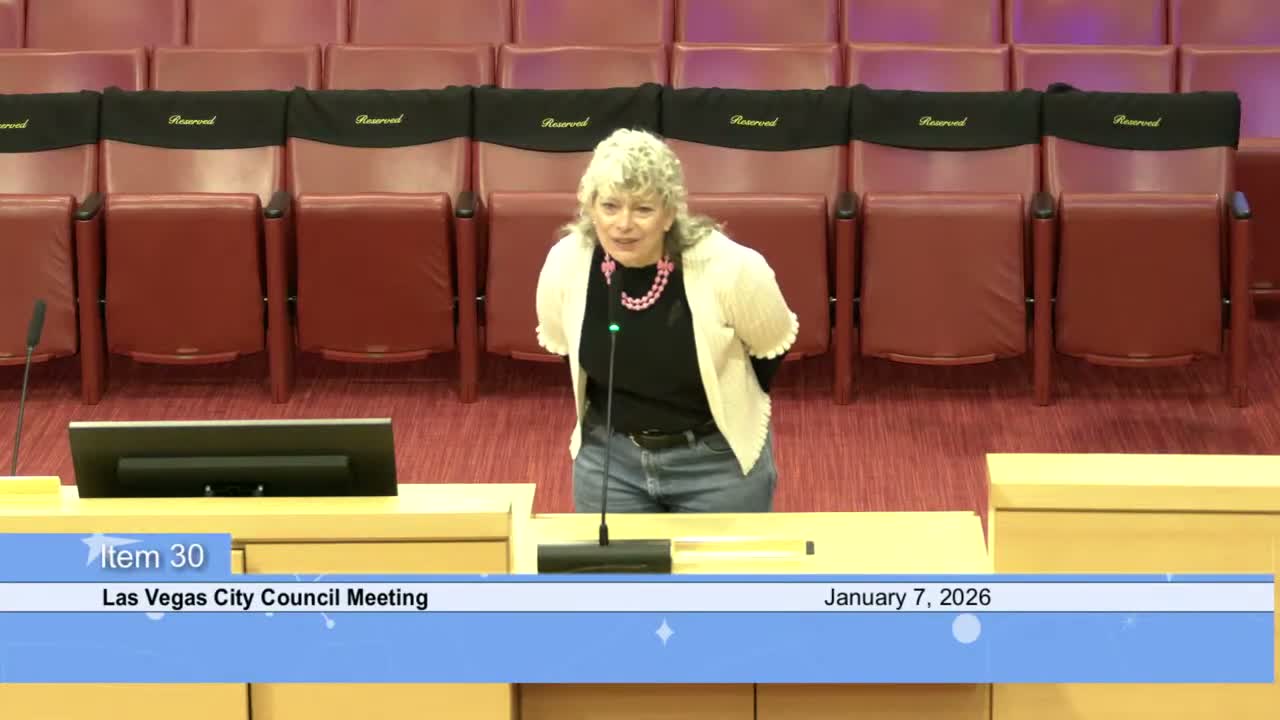
Summary
Dozens of Arts District business owners, artists and residents told the Las Vegas City Council that planned parking price increases are harming foot traffic and small businesses. Councilmember Diaz said the city has paused the north‑side rollout and will seek community input and mitigation measures.
Dozens of business owners, artists and residents told the Las Vegas City Council on Jan. 7 that planned parking rate increases in the Arts District are shrinking foot traffic and threatening small businesses.
Becky Miller of the Las Vegas Arts District told the council that a community meeting should be held in the Arts District itself rather than at City Hall to let more working people attend. Tony Chavez, Elise Saint Pierre and other small-business operators said higher parking costs reduce customers and raise operating expenses; Saint Pierre said proposed four‑hour meter limits would prevent workers who pay weekly rent from using on‑street spaces for long shifts, and that private lot charges could cost some workers more than $100 a week.
Other speakers described drops in customers since meters were first introduced, safety concerns for youth walking from remote free lots and threats to performance venues and artist-run companies. Troy Hird of Majestic Rep said the Arts District is made up of small, locally owned businesses — not the large venues used as comparators in the city's market‑rate analysis — and urged the council not to ‘‘cut off the feet of the runner while they're running the marathon.’'
Councilmember Olivia Diaz (Ward 3), whose ward includes much of the Arts District, responded that the city paused the paid‑parking rollout on the north side of Charleston Boulevard after hearing community concerns. Diaz said the city is exploring options including adding employee/resident parking lots, continuing reduced‑cost parking permits (she said the city has issued more than 700 permits at $10 per month), partnering with private lot owners, and improving transit connections. Diaz also noted that on‑street lunch parking is free Monday through Friday from 11 a.m. to 2 p.m., and invited written suggestions to parkingmanagementteam@lasvegasnevada.gov.
Diaz said any revenue collected should be reinvested in the district for infrastructure, lighting, safety patrols and sanitation, and that officials are working to schedule a community meeting in the Arts District at a venue that can accommodate public comment.
The council did not take an immediate vote; Diaz asked residents to place comments on the official record and signaled follow‑up outreach.