Get Full Government Meeting Transcripts, Videos, & Alerts Forever!
Get email alerts on the Trash Fees topic
No spam. Unsubscribe anytime.
Logansport council advances trash-fee ordinance, delays increase until 2027 and drops proposed 2026 amnesty
Summary
The Logansport Common Council passed an amended first reading of Ordinance 2026‑01 setting residential trash and recycling charges for 2026–2030; it inserted Proposal 4, which removes a one‑month amnesty for 2026 and phases in $1 monthly increases starting in 2027 (from $15 to $19 by 2030).
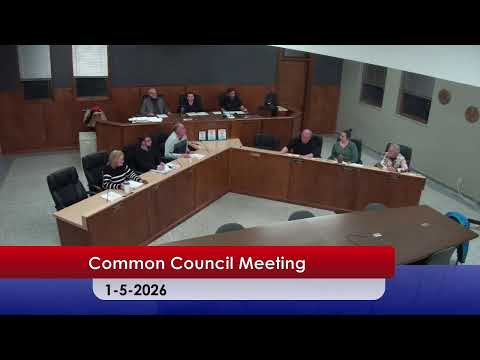
Logansport Common Council on Jan. 5 advanced on first reading an ordinance setting residential trash and recycling charges for 2026 through 2030, inserting the council’s chosen option—labeled ‘Proposal 4’—which delays any customer increase until 2027, removes a proposed free amnesty month for 2026, and raises the monthly customer charge by $1 each year from 2027 through 2030.
Under the amended ordinance the monthly residential rate will remain $15 for 2025 and 2026, rise to $16 in 2027, $17 in 2028, $18 in 2029 and reach $19 in 2030. Council discussion before the vote centered on narrow choices between gradual increases (50¢ per year over five years) and the $1 step plan; the council agreed Proposal 4 offered a predictable path while avoiding a one‑time 2026 amnesty that would reduce revenue in a year when the city anticipates other fiscal pressure.
City staff provided figures showing the trash enterprise fund balance of roughly $225,000 and projected five‑year service costs that approach $1.51 million by 2030. Council discussion cited a projected structural gap between anticipated customer receipts and expected contractor costs if rates are not increased; presenters estimated removing the proposed free month would add about $90,000 in revenue in year one compared with the amnesty scenario.
The ordinance’s text as introduced left a blank to select which pricing proposal the council would adopt. A motion was made and seconded to amend Section 1 to adopt Proposal 4 and to delete language providing a free month for 2026; the amendment passed on a roll‑call vote and the ordinance passed its first reading with the amendment.
Council members also discussed contract logistics after learning that the city’s current trash contractor, GFL, has transferred the collection/delivery portion of operations to Lakeshore Recycling Systems. Staff said contract assignment provisions appear to allow the change but that notification and internal payment routing (who the clerk‑treasurer will pay) should be handled as the company completes its transfer.
City officials noted broader fiscal context: consultant projections cited during the discussion warned that city general fund revenue could decline by several million dollars by 2028 and that the council should be cautious about relying on host‑community subsidies indefinitely. The council’s chosen plan reduces but does not eliminate a projected multi‑year shortfall between service cost and customer receipts; elected officials said they expect to revisit comparables and confirm that Logansport’s rates remain competitive with neighboring jurisdictions.
The ordinance advanced on first reading; council members discussed providing notice or a public hearing before second reading as a courtesy, and staff said a reminder at the February meeting would be practical. The ordinance will return for a second reading and final adoption at a later meeting.