Get Full Government Meeting Transcripts, Videos, & Alerts Forever!
Get email alerts on the Trails And Public Engagement topic
No spam. Unsubscribe anytime.
Ogden mayor keeps Mount Ogden golf‑course trail closed after residents allege survey manipulation
Summary
After weeks of public outreach and a disputed survey, Mayor Benjamin K. Nadalski said the Mount Ogden Golf Course trail will remain closed for now, drawing strong public comment accusing the city of biased outreach and withholding raw data; residents pressed for transparency, a redo or a ballot measure.
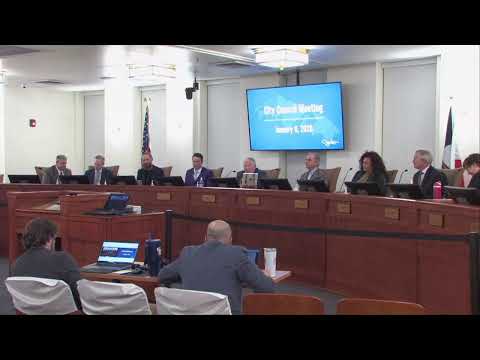
Mayor Benjamin K. Nadalski said Jan. 6 that the Mount Ogden Golf Course trail will remain closed for the moment, after residents filled council chambers and delivered a string of public comments alleging the city’s third‑party survey was biased and that raw data was withheld until a decision had effectively been made.
In a more than hour‑long public‑comment period, trail users and community members including Chloe Reynolds, who identified herself as a lifelong Ogden resident, said an initial grassroots response showed strong support for reopening the trail but that a later influx of responses from golfers flipped the survey to a narrow majority opposing the proposed reroute. “Everyone, including the golfers who submitted their responses, should be upset by this obvious manipulation of data,” Reynolds said, adding she would provide the raw dataset to the council.
The dispute focused on how the survey was distributed and analyzed. Speakers cited two phases of responses: 481 responses collected Sept. 11–29 that Reynolds said showed roughly 80% support for keeping the trail open, and a later surge of about 400 replies that she said arrived Oct. 1–5 and produced a narrow 52% opposition. Residents and several speakers with statistical training said the final total—reported by one caller as 844 responses—did not make a statistically representative sample of Ogden and raised questions about IP/address filtering, the survey’s question design and whether the city’s email blast to golfers created selection bias.
“Presenting that as community will while ignoring the 3,000 petition signatures is deeply disappointing,” said Kim Haslam, one of many who urged a more inclusive process. Speakers proposed remedies that included redoing the outreach, placing the question on the ballot, posting QR codes at trailheads and using door‑to‑door canvassing.
Mayor Nadalski told residents he had intended the third‑party survey to provide a characterization—not a statistically valid sample—and that the city’s outreach included an early email, QR code and social‑media posting. He said staff encouraged sharing of the raw data and that he asked staff to release the material. “I was looking for a characterization as another decision point moving forward,” he said, and acknowledged flaws in execution. He also said the Bureau of Reclamation had urged closure in director correspondence and that other legal and safety considerations played a role.
Asked about surveillance and vehicle‑license‑plate cameras from vendor Flock, multiple speakers pressed for details about data retention, agency access and whether national lookup was enabled. Nadalski said the city deploys cameras based on criminal‑activity trends and traffic patterns, that the city’s policies place limits on use and retention, and that he was willing to have the police chief answer technical questions publicly. “There’s nothing to hide,” he said, while offering to provide records and invite the chief to a follow‑up discussion.
Despite residents’ calls for reopening and further study, Nadalski said the administration would “continue with the closure as it is, without building that trail” for now, while leaving the possibility open for later efforts and additional input. Several council members thanked speakers and said they would continue looking at records and process improvements.
The council did not take a formal vote on the trail during the meeting; the closure decision was described by the mayor as an administrative action. Residents said they will press the council and administration for greater transparency and for clearer public engagement if the city revisits the issue.
The city indicated it is compiling records related to the survey and outreach and that further information will be available in the coming weeks; residents requested the raw dataset be posted and suggested clearer, randomized or in‑person outreach if the issue is reconsidered.