Get AI Briefings, Transcripts & Alerts on Local & National Government Meetings — Forever.
Woodland holds workshop on allowing retail marijuana in C‑2 zone; state setbacks likely to limit sites
Loading...
Summary
Council held a public workshop on Ordinance 15‑84 to consider permitting retail marijuana sales in the Highway Commercial (C‑2) zone. City Attorney Emily Gillan said city code currently contains a prohibition; state licensing setbacks (1,000 feet from parks/schools) will exclude many sites near Horseshoe Lake Park. Council directed staff to draft code language and return with an ordinance for a future meeting.
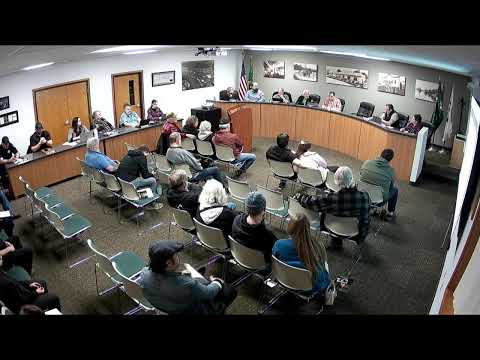
Woodland’s City Council spent the Jan. 5 workshop discussing Ordinance 15‑84, a proposed change to allow retail marijuana sales as a permitted use in the city’s Highway Commercial (C‑2) zone. Mayor opened the discussion by noting a property owner had paid the required $2,500 application fee to ask that the city consider the change.
City Attorney Emily Gillan told the council they currently have a prohibition in code, not a moratorium, and explained the choices before them: keep the prohibition, remove it and permit retail sales in specified zones, or use a temporary moratorium if new issues arise. “A moratorium is a temporary land‑use measure … at this point in your code, you actually have a prohibition on it,” Gillan said, adding that the council can “absolutely take away that prohibition and make it a permitted use within certain zones.”
Several residents told the council they support regulated local access; Eric Hansen described medical benefits he credited to cannabis during cancer treatment and urged residents not to have to travel out of town for care. “Marijuana is really a lot more than puff, puff, pass,” Hansen said, recounting how cannabis helped with nausea and appetite during chemotherapy.
Other speakers supported the change only with detailed local siting and operating standards. Max Bonder, a Woodland resident and civil engineer, praised the planning commission but urged the council to require setbacks, limits on concentration, and operational restrictions to protect parks, schools and family spaces. “I respectfully request that the city council consider adopting more restrictive and clearly defined locations and operational standards to ensure compatibility with surrounding uses,” Bonder said.
Planning Commission Chair David Simpson urged the council to treat the measure as a code change rather than a rezoning. “We’re not rezoning anything. This is a code change and a simple code change,” Simpson said, noting that state law already imposes many of the distance and security requirements the speakers described.
Staff and legal counsel clarified that state licensing rules impose a 1,000‑foot straight‑line setback from parks, schools and similar facilities and that the Liquor and Cannabis Board (state licensing body) measures those distances using GIS. Gillan and staff said an allowed use in C‑2 would still need a city business license and a state cannabis license; applications that fail to meet the state setback requirements would be rejected at the licensing stage.
Police Chief Gibbs said officers had not recorded issues tied to the local storefront that operated previously in Woodland and described marijuana‑related calls as far less frequent and severe than alcohol‑related incidents in his experience.
After extended public comment and staff input, councilmembers signaled they want staff and legal counsel to draft ordinance language and return the proposal to a future council meeting for formal consideration. The mayor directed staff to work with the city attorney on a draft to be placed on the next agenda.
The council did not vote on the ordinance at the workshop; the next step is a formal ordinance or map amendment to be scheduled for a future meeting.