
House advances bill allowing trained optometrists to perform three in‑office laser procedures; bill headed to finance
Get AI-powered insights, summaries, and transcripts
Subscribe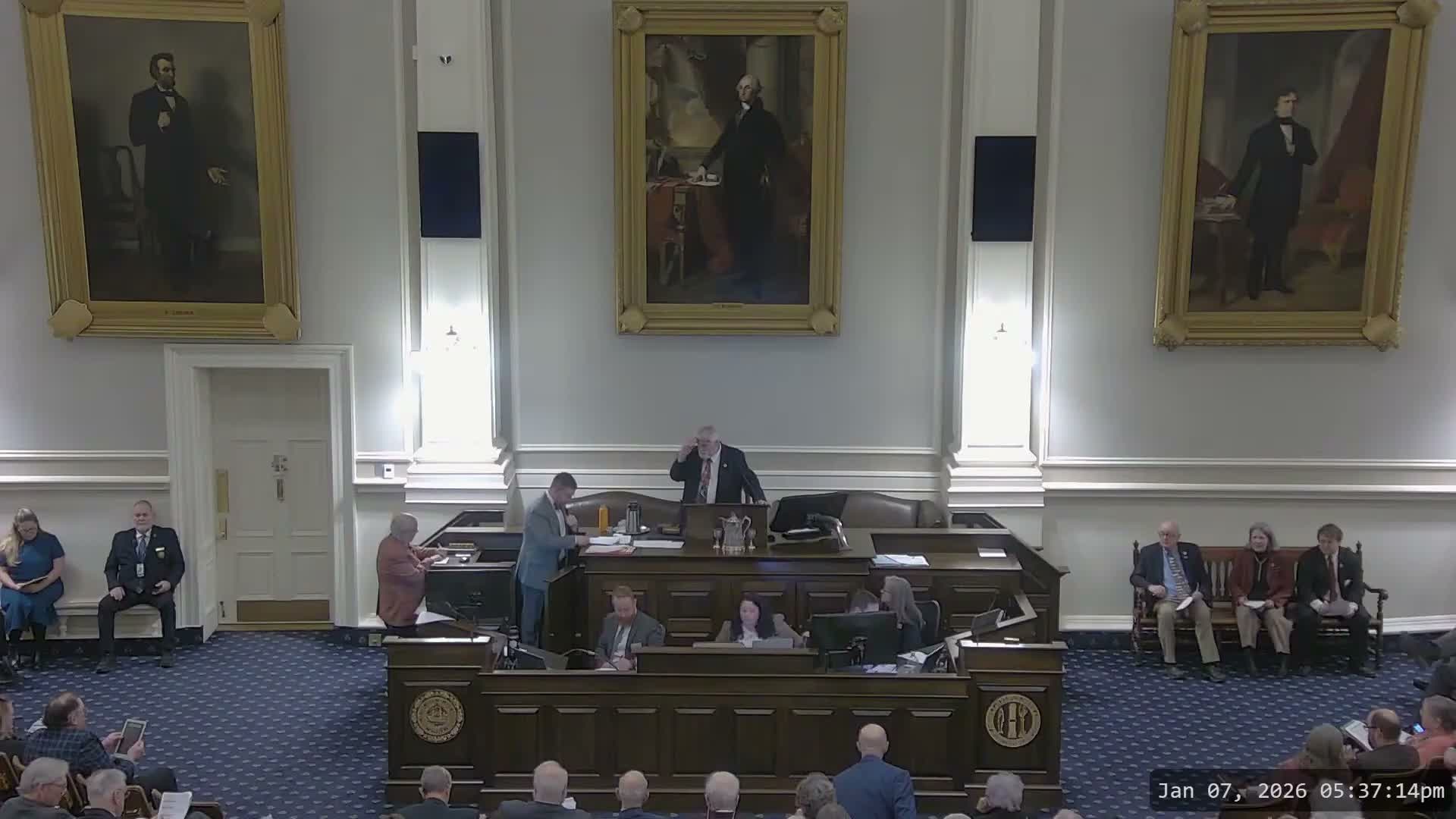
Summary
After extended debate about access and patient safety, the House adopted a committee report as amended on HB 349 to allow credentialed optometrists to perform three specified in‑office laser procedures; proponents cited access benefits, opponents raised training and complication response concerns.
The New Hampshire House on Thursday adopted a committee report as amended on House Bill 349, which would permit credentialed optometrists to perform three specified in‑office laser procedures after meeting training and credentialing requirements.
Supporters said the change will expand access to care, particularly in the state’s North Country and other areas with limited ophthalmologic services. Representative Long and others noted long waits and provider shortages and argued that authorized optometrists could safely perform the procedures after completing required training and case experience.
Opponents — including multiple physicians and several House members — warned that optometrists are not physicians and stressed the difference in surgical training for ophthalmologists. Representative Woods told colleagues that lasers are surgical instruments and said "allowing optometrists perform procedures with lasers poses significant risk to patient safety." Critics argued that complications may require immediate surgical rescue and that the proposed credentials and minimum case counts in the amendment fall short of ophthalmologic surgical training.
The House adopted the committee report as amended by roll‑call vote and the bill was sent to the Finance Committee for budgetary consideration. The adopted floor record includes new informed‑consent language and credential verification requirements added during floor amendment debate.
Why it matters: The bill addresses the tension between access to care in underserved regions and maintaining surgical training and safety standards. Proponents emphasized pragmatic access concerns and training pathways; critics highlighted scope‑of‑practice risks and urged stronger safeguards.
What comes next: HB 349 proceeds to the Finance Committee for fiscal review; sponsors and opponents both signaled further technical and statutory work will be needed in committee and rulemaking to define credentialing and oversight.