Get Full Government Meeting Transcripts, Videos, & Alerts Forever!
Get email alerts on the Open Government topic
No spam. Unsubscribe anytime.
County attorney reviews FOIA and Conflict of Interest Act at Franklin County organizational meeting
Summary
County attorney Jim Gwynn gave the board its annual FOIA and Conflict of Interest Act briefing, stressing that meetings and records are presumptively open, common exemptions, remote‑participation rules, and the importance of specificity when invoking closed‑meeting exemptions.
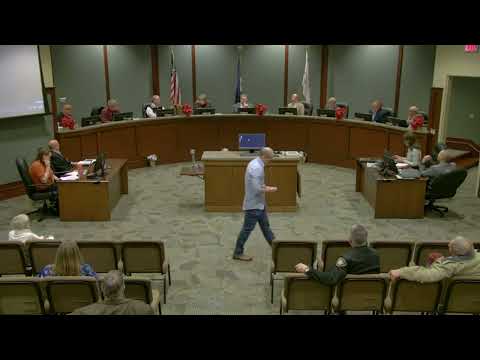
County Attorney Jim Gwynn led the Franklin County Board of Supervisors through the annual Freedom of Information Act (FOIA) and Conflict of Interest Act (COIA) briefing at the organizational meeting.
Gwynn summarized the FOIA principle that public records and meetings are presumptively open and that exemptions must be narrowly construed. He described common exemptions that permit closed meetings, including personnel matters, acquisition or disposition of real property, procurement/proprietary records and attorney‑client consultation. "All public records, all meetings are presumed to be open unless an exemption is properly invoked," Gwynn said.
Gwynn reviewed notice requirements for regular and special meetings, explained the county's remote‑participation policy (medical reasons or principal residence more than 60 miles away), and stressed that remote participation should be identified with specificity (for example, stating if a member is out of the country). He also told supervisors to avoid using personal email for county business and to be cautious about text messages because those records can be subject to disclosure.
On COIA, Gwynn urged supervisors to consult the online training and noted that enforcement can carry criminal penalties in certain cases; he recommended seeking opinions from the Commonwealth's Attorney on difficult questions. He encouraged board members to make closed‑meeting motions specific when invoking statutory exemptions to avoid later legal challenges.
The board thanked Gwynn; he offered to answer follow‑up questions and to provide guidance to staff.