Get Full Government Meeting Transcripts, Videos, & Alerts Forever!
Get email alerts on the Wildfire Preparedness topic
No spam. Unsubscribe anytime.
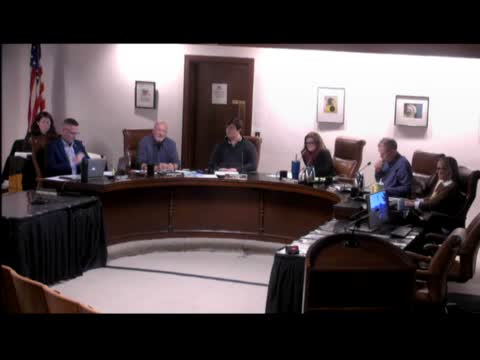
Mill Valley council hears county wildfire plan, LRAD and home-hardening priorities
Summary
Southern Marin Fire and partners briefed Mill Valley Council on fuel-breaks, defensible-space programs, LRAD expansion and the likely timing of state 'Zone 0' rules; speakers urged a mix of grants, inspections and enforcement to speed home hardening and reduce insurance risk.
Southern Marin fire leaders and water district officials told the Mill Valley City Council they are pressing a community-wide approach to wildfire risk reduction that pairs vegetation treatments on Mount Tam and surrounding watershed lands with neighborhood preparation and building hardening.
Fire Chief Chris Tubbs opened the briefing by framing wildfire preparedness as a shared responsibility. "What we do here, the approach we take is it's a community approach," he said, adding the county is coordinating water, evacuation and communication work after recent large wildfires in Southern California.
Fire Marshal Fred Hilliard outlined projects funded and overseen through the Marin Wildfire Prevention Authority (MWPA), saying MWPA generates roughly $20,000,000 annually and supports countywide efforts including vegetation management, detection systems, evacuation planning and grants to residents. Hilliard listed two major shaded-fuel-break projects affecting Mill Valley—the Summit Ralston fuel break (started 2024) and the Mill Valley shaded fuel break (started 2022)—and said the projects together cover more than two miles of edge habitat. He reported 13 acres treated so far with an additional 50 acres proposed for the next cycle and noted 38 acres treated in the Mill Valley shaded fuel break program.
Hilliard described the county’s LRAD (long‑range acoustic device) network and said Mill Valley currently hosts six sites; two additional sites under consideration (West Blythedale Ridge and a Miller Avenue location) would cost about $180,000 each. He emphasized the county’s "Did you hear it?" testing campaign to map coverage and tune site placement.
Marin Municipal Water District President Matt Sampson told the council the district manages about 22,000 acres of watershed adjacent to built areas on Mount Tam and highlighted the limits of water infrastructure in a catastrophic event, saying roughly 48 hours of residential water use could be expected if normal delivery stops and noting the high per‑mile cost of pipe replacement (roughly $2.5 million per mile was cited).
Council members pressed staff and fire officials on enforcement and incentives. Officials pointed to state inspection code 4291 as a tool for inspections but acknowledged the code offers limited enforcement “teeth” and said effective insurance‑industry engagement will likely require enforceable local measures. Hilliard and Tubbs urged a phased approach for home hardening: start with lower‑cost measures (vent covers, gutter guards) and pair those with grant programs and point‑of‑sale inspection rules for properties in very high fire severity zones.
The council asked for ongoing outreach and follow-up presentations (including maps and more detailed grant contacts) and received updates on neighborhood preparedness: Leah Curtis, NRG coordinator, reported about 140 active block captains spread across nine mapped areas within the city and said more training (including CERT sessions) is planned.
The session closed with an acknowledgement of constraints and priorities: life safety and evacuation operations remain the top response priority, officials said, followed by fire suppression and protection of critical infrastructure. Council and staff scheduled follow-up briefings before the fall fire season to discuss ordinance alignment and funding opportunities.