Get Full Government Meeting Transcripts, Videos, & Alerts Forever!
Get email alerts on the Municipal Finance topic
No spam. Unsubscribe anytime.
Finance director outlines $48 million budget amendment; council presses for clarity on encumbrances
Summary
Finance staff presented an Ordinance 3‑26 budget amendment totaling $48,023,980 that includes grants, debt proceeds, transfers, $22.3 million in encumbrances carried forward and other adjustments; council members asked for clearer reporting on purchase orders, fund balance treatment, and ACFR/OpenFin reconciliation.
City financial staff presented an overview of Ordinance 3‑26, a proposed amendment that would increase total revenues and expenditures for Fiscal Year 2026 by $48,023,980.
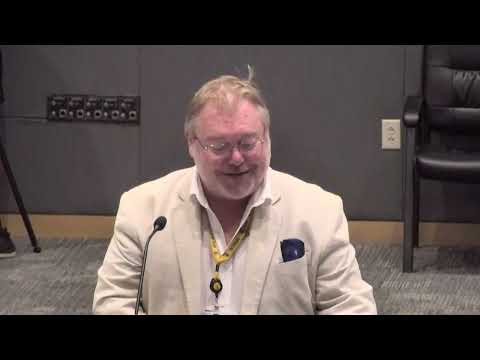
Financial Services Director Crystal Feese explained the amendment packages several categories: $459,975 in new grant revenue to be incorporated with associated program expenditures; debt proceeds tied to two previously approved projects; a $353,000 gas‑tax transfer for construction services; miscellaneous items including Local Community Improvement (LCI) and GO bond interest earnings; $22,300,000 in encumbrances carried forward from prior fiscal commitments; and a personnel reclassification costing about $68,000. Feese said excluding encumbrances, net new spending in the amendment is about $25,600,000 (roughly 53.4% of the amendment total) and that encumbrances represent prior year purchase orders and commitments that are statutorily required to be carried forward.
Councilmembers probed whether encumbrances were from 2025, how open purchase orders are identified, how those amounts relate to OpenFin and ACFR figures, when carry‑forward funds expire, and how fund balance classifications operate. Staff replied that encumbrances are typically associated with open purchase orders and therefore are carried as assigned fund balance and that some expenditures either move forward or fall to reserves depending on contract/performance periods. Councilmembers suggested additional educational briefings and clearer one‑page tables to help the public and council track the differences between adopted budgets, actuals, and carry‑forwards.
No final vote was taken; the ordinance’s public hearing date is set for Jan. 21, 2026.