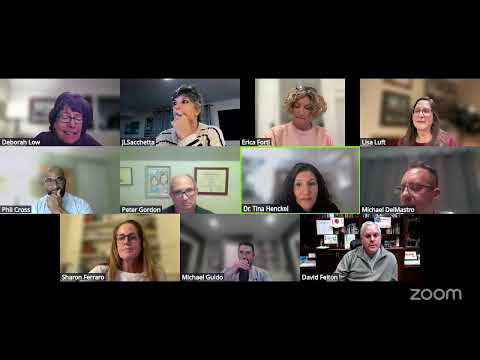
Weston first selectwoman outlines town facility projects that could shape school planning
Loading...
Summary
First Selectwoman Sam Nestor told the Weston School District board the town is reviewing annex relocation, parks and rec moves, PFAS-related water-plant upgrades and a study for electric-bus infrastructure; staff cautioned these municipal projects could affect the district's timing and debt capacity.
First Selectwoman Sam Nestor told the Weston School District board on a facilities-focused night that the town is studying a string of municipal projects that could overlap with school capital planning, from relocating the town annex to a water‑treatment upgrade aimed at PFAS remediation.
Why it matters: Many of the town projects described by Nestor — the annex (about 25 years old), renovating the Parks & Recreation building, a senior‑center planning effort and a booster‑plant redesign for water treatment — either share campus connections with schools or could affect the town’s debt capacity and timing for any school referendum or bonding.
Nestor said the town is working with engineering firms to evaluate options for moving town staff out of the aging annex and to site a new Parks & Rec facility nearer the sports fields. On the water system, she said the town has completed a feasibility study and is in the design phase for a booster‑plant replacement. “We estimate that the water system … maybe around $4,000,000,” she said, adding the project is expected to be financed through the state revolving fund and that a portion of the loan can be forgiven under program rules.
Nestor described long‑standing studies of the xenon (sewage) plant and said septic‑capacity constraints have limited expansion options on parts of the campus; any decision to expand hookups would require town work and could open additional campus options. She also said the town has engaged an engineering firm to examine compliance steps for Connecticut’s 2040 electric‑bus mandate, including siting and depot upgrades.
Board members pressed for a clearer timeline and for cost detail so the district can assess cumulative borrowing and tax impacts. Mike Guido asked when the town would have preliminary cost estimates; Nestor said more design work is needed on several projects but repeated that the water‑system figure was the most concrete estimate she could provide at the meeting. She also said the state revolving fund loan carries a low interest rate and that the forgivable component may be higher when projects address emerging contaminants such as PFAS.
On shared on‑campus facilities, the board asked about the future of a regional forensic lab on campus; Nestor said that facility is a regional police matter and not part of the town engineering scope. The town survey of resident priorities was also highlighted as a near‑term milestone — Nestor said the survey closed Jan. 9 and the town will use responses to set priorities.
What’s next: Nestor and town staff will present engineering options to the board of selectmen; the selectmen will then share outcomes with the school board so the district can integrate municipal timelines into its capital planning.