Get Full Government Meeting Transcripts, Videos, & Alerts Forever!
Get email alerts on the Disaster Recovery topic
No spam. Unsubscribe anytime.
Volusia County details HUD‑funded homeowner recovery program for residents of Hurricanes Ian and Milton
Summary
Volusia County outlined a HUD CDBG‑DR homeowner recovery program offering repair, reconstruction, manufactured‑home replacement, buyouts for floodplain properties, reimbursement, and match assistance. The county said it has been allocated more than $462 million and described application steps, eligibility checks, and post‑award processes.
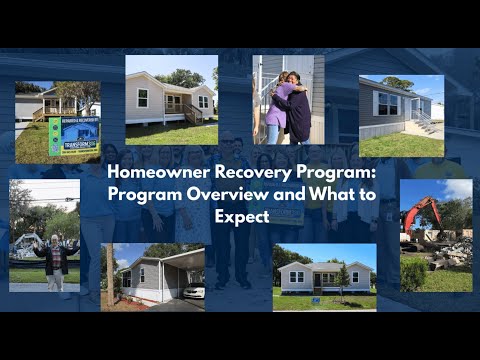
Volusia County presented an overview of a homeowner recovery program funded by the U.S. Department of Housing and Urban Development's Community Development Block Grant for Disaster Recovery (CDBG‑DR), aimed at helping residents recover from Hurricanes Ian and Milton. The presenter said the program is managed by "transform 3 8 6" (as spoken in the transcript) and that Volusia County has been allocated more than $462,000,000 in grant funding.
The presenter said the program offers multiple pathways depending on damage and eligibility: repair, reconstruction, manufactured‑housing replacement, reimbursement for completed repairs, buyouts for properties in floodplains, and match assistance to help cover homeowners’ share of costs. "Volusia County has been allocated more than $462,000,000 in grant funding," the presenter said. The presenter added that staff will guide applicants from application through award determination and implementation.
To apply, homeowners must submit proof of identification, proof of income, proof of storm damage, proof of insurance (if applicable), and proof of ownership. Because the program is funded through HUD CDBG‑DR, those documents are required to meet federal compliance rules; the presenter warned additional documentation may be requested. Applications are typically assigned to a case manager within about two weeks, who begins reviewing the file. The presenter noted an example household income limit for 2025: "For example, if your household has 4 people, the income limit for your household would be $108,480," and advised applicants to check the program website for the most up‑to‑date limits.
After initial review the program performs a site visit to assess property damage and a duplication‑of‑benefits (DOB) review to determine whether applicants received overlapping assistance such as insurance or FEMA aid. The presenter explained that if the program finds applicants received more funds than necessary for the same damage, some money may be deducted from the award or owed back to remain in compliance with federal rules.
Staff determine the appropriate recovery pathway (repair, reconstruction, replacement, reimbursement, or buyout). Applicants who disagree with the chosen pathway may appeal for a case review. Before awards proceed the project must clear an environmental review to ensure compliance with applicable state and federal environmental and safety requirements.
When an award is finalized, the program executes a grant agreement and records a five‑year lien. According to the presenter, "The lien requires no repayment, carries 0% interest, depreciates in value every year, and automatically extinguishes after 5 years." Construction, monitoring, and oversight apply to reconstruction, rehabilitation, or replacement pathways; reimbursement awards follow a simpler process. The presenter said applicants usually pick up their check at the program office within about 45 days after contract signing, while buyout and match pathways involve extra procedural steps.
Upon completion of construction homeowners receive turnover and a one‑year warranty. The presenter closed by summarizing the workflow from application to turnover and emphasizing the program’s goal "to help families return to safe, secure, and sanitary homes." The presenter repeatedly advised viewers to consult the program website for updated income limits and additional guidance.
The overview did not provide a specific application deadline or a contact web address in the transcript; those details were listed as "check our website" by the presenter.