
Wyoming tourism director defends reserve spending, cites 10:1 marketing return
Get AI-powered insights, summaries, and transcripts
Subscribe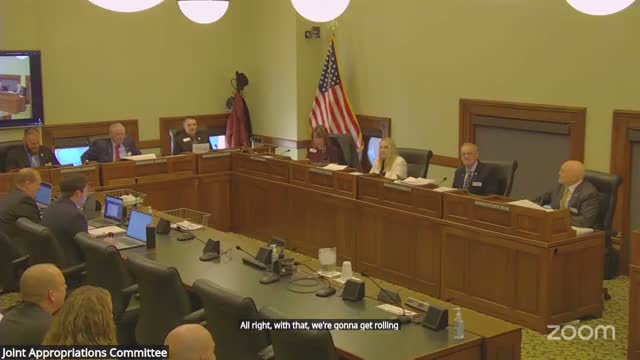
Summary
Newly appointed tourism director Dominic Bravo told the Joint Appropriations Committee that Wyoming’s tourism program supports 33,850 jobs and produced $4.9 billion in direct visitor spending in 2024, and defended one-time reserve uses while citing a roughly 10-to-1 tax-revenue return on paid-media investment.
Dominic Bravo, executive director of the Wyoming Office of Tourism, asked the Joint Appropriations Committee on the morning of the hearing to maintain flexibility to use reserve and operating funds for one-time projects aimed at attracting visitors and supporting communities.
Bravo opened his presentation by outlining tourism’s scale: 8.7 million overnight visitors in 2024, $4.9 billion in direct visitor spending, $277 million in state and local tax revenue and 33,850 jobs supported. He told lawmakers the office’s operating request totals $40,137,000 and that the agency is funded entirely by the statewide lodging tax, not the general fund.
Lawmakers pressed the director about a governor’s proposal to use $12 million from the tourism operations account to support an air-capacity agreement. Bravo said the reserve account would be the semantics-preferred source, but he supported the governor’s one-time use because the funding is available and the measure supports tourism-related airport capacity that benefits conventions, meetings and business travel.
Kari Akins, the agency’s director of strategy and business operations, walked the committee through recent reserve-account expenditures, noting $14,650,000 of reserve spending in the 2023–24 biennium that funded the Outdoor Recreation Trust Fund ($6 million), the Shooting Sports Task Force ($2.5 million), wayfinding and park grants, welcome-center renovations and other destination-development items.
Members asked about the lodging-tax forecast and whether the agency’s revenue estimates are overly optimistic after the pandemic-era surge. Akins said the office uses a conservative model — typically applying a 10% decrease from an initial high year — to avoid appropriating funds that might not materialize. Bravo and Akins also said that the agency is primed to use destination-development dollars in partnership with local DMO’s when the reserve balance reaches policy thresholds.
Committee members asked for follow-up on specifics — examples of projects funded from the reserve, and clearer destination-development plans — and requested regular reporting of how reserve dollars are disbursed.
The committee recessed for other agencies after the tourism discussion; no floor motions or votes were taken on the tourism budget at this hearing.
"A $1,000,000 increase in paid media campaign represents approximately $10,000,000 increase in tax revenues. So it's basically 1 to 10," Bravo told the committee when asked about expected return on incremental marketing investment.