
Haslet board tables vote on proposed Avondale Haslet Road BNSF grade‑separation after residents press funding and access concerns
Get AI-powered insights, summaries, and transcripts
Subscribe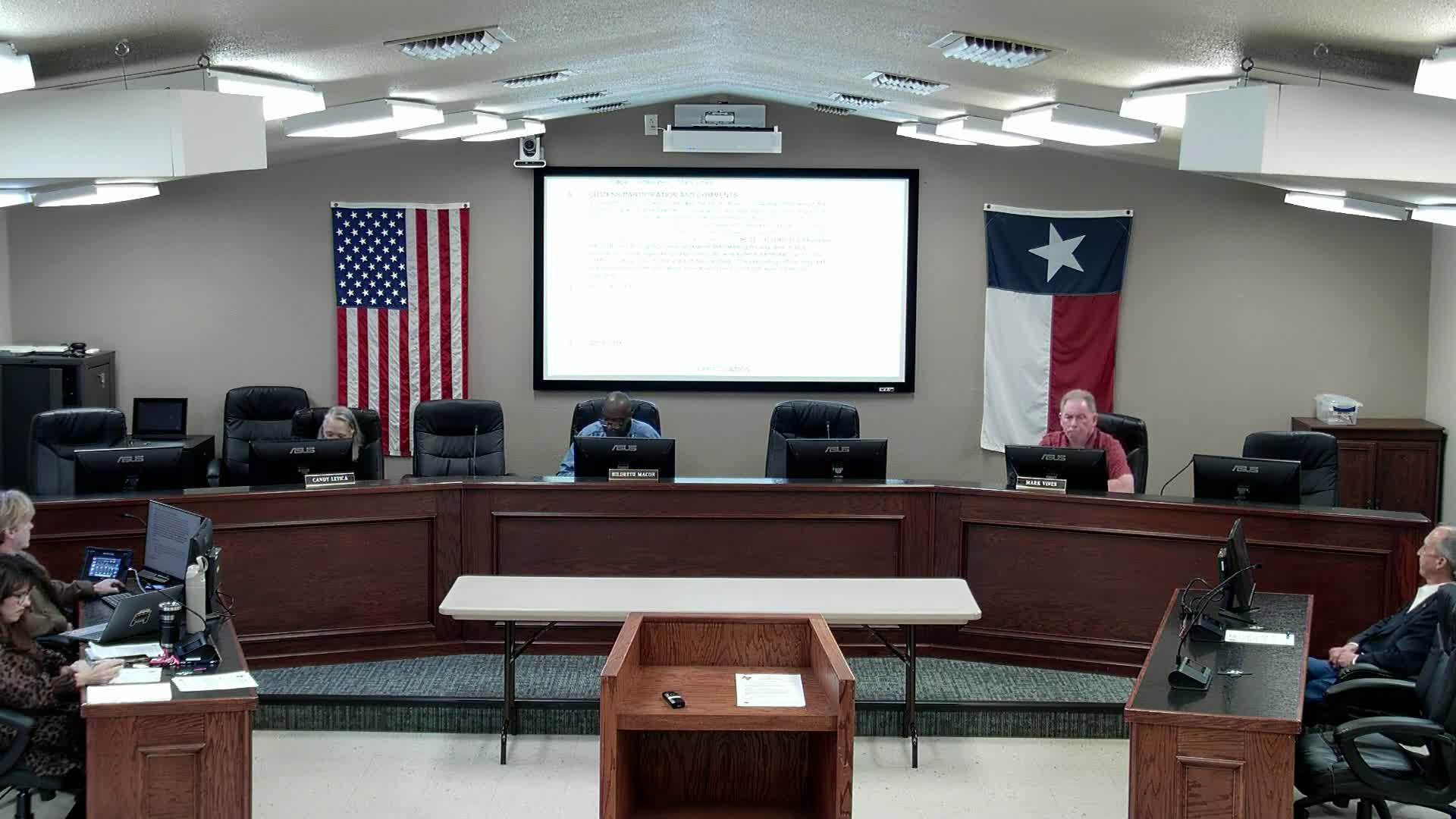
Summary
After residents warned a proposed $79M‑plus grade‑separation bridge could harm downtown access and expose the city to overruns, the Haslet Economic Development Corporation board voted to table a resolution supporting the project for one week to gather more information.
Haslet’s Economic Development Corporation on Thursday deferred action on a resolution backing a proposed BNSF railroad grade‑separation bridge on Avondale Haslet Road after residents and board members raised questions about funding, access to Schoolhouse Road and whether the larger design had been developed with adequate public input.
At the meeting chair Hilda Macon administered the oath to newly sworn board member Mark Bynes, then opened the floor to public comment on agenda item 4.1, a resolution to support the city’s application for state funding for a grade‑separation at the BNSF crossing connecting FM 156 and Schoolhouse Road.
Why it matters: The larger bridge design being discussed would span the BNSF tracks, FM 156 and Schoolhouse Road and include on/off ramps to FM 156. Proponents argue it would create a continuous east‑west regional thoroughfare and improve regional mobility; critics say the scale could cut off local access, harm downtown commerce and saddle Haslet with maintenance obligations and cost overruns.
Residents pressed the board. Kitty Wertz, who said she lives on Thistle Drive, told the board the larger bridge would “cut off the heart of Haslet” and argued the smaller bridge design that is about 60% complete — and estimated at roughly $13 million — would provide relief more quickly and with less financial risk. “The $80,000,000 bridge is extremely expensive and is likely to cost a lot more than this amount once the engineering drawings are developed,” she said.
Another resident pointed to local spending already incurred and urged directors to reject SR 25 5 35, saying, “This pet project of the mayor has already cost us dearly.” Laura Slaughteroff, who identified herself as a Type B board member, urged caution and urged clarity about who would provide the 10% local match required by the state grant. “Let's build a bridge we can afford to maintain. I don't want Haslet to become bridge poor,” she said.
Mayor's response and project details: The mayor (referred to in the public record earlier as Mayor Hulsey and who addressed the board during the item) presented slides and defended the larger design as a solution to technical problems that led Burlington Northern Santa Fe (BNSF) to reject an earlier short‑span design. He said the preliminary application estimated construction at approximately $79 million plus about $30 million earmarked for unforeseen issues and contingencies. He told directors that the grant program would fund roughly 90% of construction and that the city had commitments or strong indications of support for more than the required 10% local match, citing a Regional Transportation Commission allocation of $14.5 million and an expected $1.5 million contribution from BNSF.
The mayor said TxDOT had asked the city not to pursue further work on the smaller design after BNSF rejected it for placing support columns in railroad right‑of‑way. He added that detailed‑design materials must be submitted by Jan. 19 and estimated construction would begin within three years of an award, with about two years of construction time once started.
Outstanding questions and board concern: Board members and citizens pressed for specifics the mayor acknowledged were outstanding. Speakers asked whether BNSF had provided a signed commitment (the mayor said a letter was being drafted), how the city would cover the required local match and possible cost overruns, and whether an off‑ramp to Schoolhouse Road could be added (the mayor said that was not an engineering option in the current design). Several attendees also questioned why the larger design had been advanced without broader board or council input.
Board action: Chair Hilda Macon proposed tabling the item to allow directors time to review the new information. A fellow director seconded and the board recorded two verbal "Aye" votes; the chair announced the motion carried and set the item to be reconsidered in one week. The meeting was then adjourned.
What’s next: The board will revisit the HEDC resolution supporting the BNSF grade‑separation project at a meeting scheduled in one week, per the motion to table. The mayor noted the city has requested letters of support from agencies and businesses to be returned by Jan. 14 and must submit detailed design materials by Jan. 19 for the state program.