Buckeye adopts 2025 Integrated Water Master Plan update to guide long‑range water and wastewater infrastructure
Loading...
Summary
Council unanimously adopted the 2025 update to Buckeye’s Integrated Water Master Plan, endorsing a 'one water' approach, flexible hub‑campus infrastructure strategies, effluent recharge and partnership models with developers to manage long‑term groundwater supplies and growth through 2040.
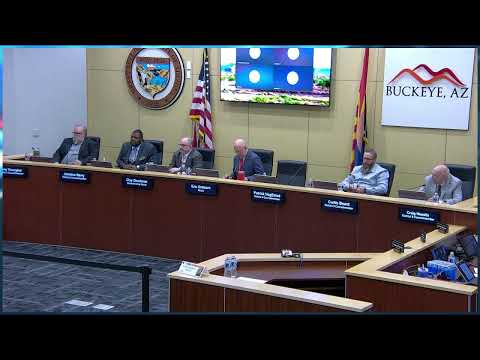
The City of Buckeye on Jan. 6 adopted the 2025 update to its Integrated Water Master Plan (IWMP), endorsing a 'one water' approach to resources and infrastructure as part of the city’s long‑range planning.
Terry Lowe, presenting the update, said the IWMP consolidates water resources, infrastructure, reclaimed water use and wastewater planning with an approximately 15‑year planning horizon. The update reflects legislative changes since the last plan (2017), growth projections, peer review comments from developers (nearly 200 comments addressed), and a focus on flexible delivery options. Lowe described a hub‑and‑spoke approach for trunk lines and a centralized water campus in the Tartesso service area; for wastewater he described two scalable options — a lift station tied to central reclamation or a local reclamation facility if development activity warrants it.
Lowe emphasized effluent recharge facilities that would accept Colorado River water and reclaimed effluent for groundwater recharge and later recovery, improving long‑term supply resilience. He said plan recommendations are not rigid mandates but provide flexible approaches for staged growth and developer coordination. Council discussed the update and praised the flexibility; the council voted to adopt the 2025 updates unanimously.
Adoption authorizes staff to move forward with the plan’s recommended analyses and coordination with developers and regional partners; further project‑level approvals will follow standard infrastructure and permitting processes.