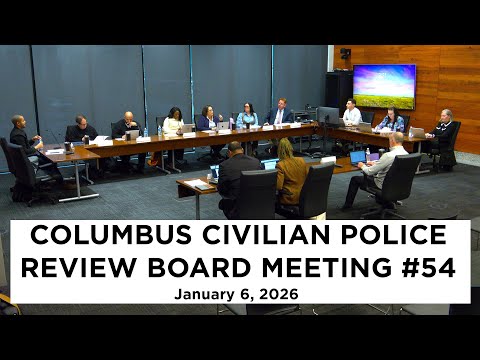
Civilian Police Review Board accepts multiple DIG findings, presses CPD on patterns and seeks more capacity
Loading...
Summary
The board approved DIG findings on multiple cases, accepted a split finding in case 25-0586 (one allegation sustained, one unfounded), debated use of body-worn camera and de-escalation training in a wrong-address incident, and discussed capacity and vacancies including outreach to city officials.
The Civilian Police Review Board voted to accept the Department of the Inspector General's findings in multiple case reviews across three committees and discussed several policy and operational issues, including patterns-and-practices tracking, de-escalation training and imminent vacancies on the board.
Committee chairs moved to accept DIG findings for a cluster of case numbers presented in committee reports; motions were seconded and accepted by voice vote. Committee 1 listed cases such as 25-0714, 25-0853, 25-0855, 25-0873, 25-0891 and 25-0927 and moved to accept the DIG's findings; Committee 2 and Committee 3 also moved to accept their reviewed cases. The chair then presented case 25-0586, a July 2025 matter split into two allegations: the DIG found allegation 1 (officer did take a police report) unfounded, and found allegation 2 (officer told complainant to wait until the next shift to file the report) sustained. "Concerning allegation 1, the I.G. found that the officer completed a police report... However, regarding allegation 2, the I.G. investigation found evidence to sustain this allegation," the chair summarized when presenting the case for acceptance.
Policy and process questions: board members asked how the DIG and CPD track the progress of prior policy recommendations and requested a quarterly or web-accessible repository describing recommendations and current implementation status; staff said quarterly reports and agenda items can be used as a step to improve transparency. Members also raised persistent questions about cases in which officers were not interviewed, whether CAD notes and BWC were sufficient, and how follow-up is handled when callers' identities or call origins are unclear (a scenario the board compared to "swatting").
Training and accountability: the board asked how often CPD officers receive de-escalation training; a staff member (Speaker 9) said in-service training covers de-escalation topics at least annually (or more frequently based on command-level recommendations) and added that special training is sometimes required after sustained misconduct findings. Members urged the DIG and the board to consider commissioning external data support to analyze patterns and reduce volunteer workload, and discussed revising code provisions related to staggered terms and vacancies.
Membership and open-meeting compliance: staff reported three current vacancies and up to four potential vacancies as several terms expire April 30; members discussed outreach and the mayor/city-council role in appointments. The board also reminded committees using virtual meeting procedures that sessions must be noticed and accessible to the public.
Outcome: motions to accept DIG findings across committees and the split findings in case 25-0586 were approved; the board directed staff to add policy-recommendation tracking to future agendas and to explore options for outside analytic capacity and recruitment outreach.