
U.S. Senate hopefuls and local candidates lay out sharply conservative platform at Rockingham County forum
Get AI-powered insights, summaries, and transcripts
Subscribe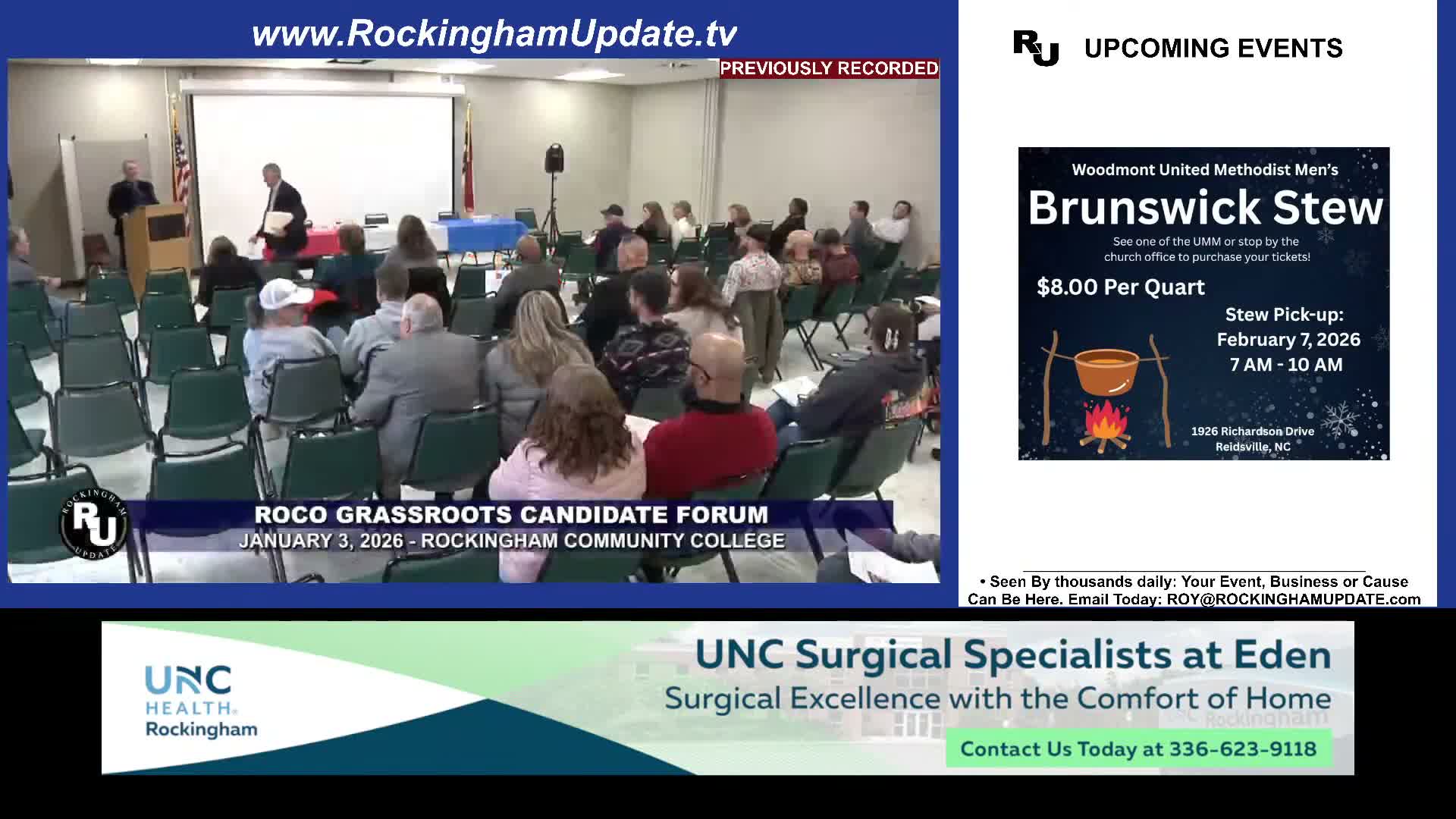
Summary
A Jan. 5 candidate forum in Rockingham County drew multiple U.S. Senate and local candidates who emphasized conservative priorities—pro‑life positions on abortion, term limits, immigration restrictions, election integrity, public‑safety priorities and fiscal restraint—while local races focused on sheriff staffing, jail safety and county transparency.
A candidate forum hosted in Rockingham County on Jan. 5 featured multiple Republican U.S. Senate hopefuls and local candidates for state and county offices. Speakers emphasized conservative themes—protecting unborn life, strengthening border enforcement, limiting federal influence and increasing transparency in government.
Michelle Marrow (speaker identified as Michelle Marra in the transcript) told the audience she was running to "bring God back into every facet of society" and argued Republicans must unify to win state races. Don Brown and Thomas Johnson described commitments to "life begins at conception" and called for term limits and audits of federal institutions. Responses to moderator questions showed broad alignment among participating Republican candidates on abortion and immigration, while proposals for addressing corruption and campaign finance varied from constitutional amendments to blockchain‑style transparency proposals.
Local candidates also addressed community concerns. Sam Page, running for the North Carolina Senate, emphasized law enforcement experience and said he would press for regional mental‑health and inpatient resources and investments in education and public safety. Seth Woodall, a candidate for the state House, stressed teacher pay, infrastructure and broadband as priorities. On the sheriff’s race, contenders Brian Harbour and Darren Wright debated recruitment, pay, jail safety and partnerships with outside agencies; both supported keeping jail chaplaincy and detention ministry programs.
Audience questions ranged from casino proposals for Rockingham County (many candidates opposed the idea and criticized lack of transparency in prior processes) to addiction, mental health, and how candidates would represent the county in Raleigh. Several county commission candidates urged maintaining revenue neutrality for county taxes and prioritizing emergency services and law enforcement pay to improve recruitment and retention.
What happens next: candidates continue their campaigns ahead of local primaries and the March ballot; the forum amplified issues likely to shape the upcoming election—public safety, education funding, religious appeals to voters, and local economic development.