Get Full Government Meeting Transcripts, Videos, & Alerts Forever!
Get email alerts on the Commercial Code Update topic
No spam. Unsubscribe anytime.
Mill Valley planning commissioners debate new administrative permit and size thresholds to speed business openings
Summary
At a July 22 study session, Mill Valley planners outlined a commercial-code overhaul that would introduce a lower-cost Administrative Use Permit, consolidate commercial rules into Chapter 20.40, and shift size thresholds (tentatively 3,000 sq ft downtown, 5,000 elsewhere) to reduce costly conditional-use permits while protecting downtown character.
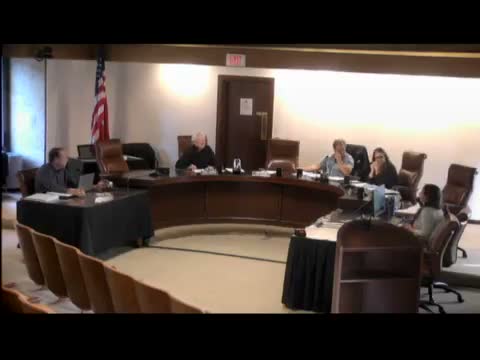
Mill Valley Planning Commission held a study session July 22 to review a draft commercial code update that would consolidate commercial regulations into a revised Chapter 20.40, add modern land-use categories and definitions, and create a lower-level Administrative Use Permit (AUP) intended to shorten timelines and reduce fees for many business changes.
Daisy Allen, senior planner, presented the staff's draft, saying the existing code often forces businesses that exceed a 1,500-square-foot threshold into conditional use permits (CUPs) that cost about $8,000 and take at least two months. Allen said the draft would remove the universal 1,500-square-foot trigger, replace it with use- and district-specific thresholds, codify commonly applied conditions via a "Good Neighbor" performance standard, and centralize commercial rules in Chapter 20.40 while placing new definitions in Chapter 28.
The AUP would be an administrative review by the planning director, with the director's decision appealable to the Planning Commission. Allen and Director Kelly said the AUP is not intended to eliminate CUPs for high-impact uses but to streamline approvals for lower-impact or clearly compatible businesses. "We're introducing an administrative use permit process for certain use types," staff said, and "the director determination would be appealable to the planning commission."
Commissioners focused most of their discussion on size thresholds and downtown character. Staff proposed a range of thresholds in the draft land-use table (examples discussed included 4,000, 5,000 and 15,000 square feet for different uses and districts) and noted Attachment 2 lists tenant sizes (staff flagged Mill Valley Market as 9,300 sq ft in that attachment). Several commissioners said downtown Mill Valley has a distinct, small-footprint character and urged a lower threshold there. After extensive Q&A and examples (including Pete's Coffee and other downtown storefronts), commissioners broadly coalesced around a tentative approach: a 3,000-square-foot downtown threshold and a 5,000-square-foot threshold in other commercial districts, with additional triggers for merged spaces or adaptive reuses that consolidate multiple storefronts.
Commissioner Lewis and others urged caution about allowing large grocers or formula retail to be approved administratively without Commission review. Staff acknowledged some large-format uses (for example, a 15,000-square-foot grocery) may be suitable for an AUP in certain commercial zones but said the draft includes director discretion to call any potentially controversial AUP up to the Commission. "The director has the discretion to call up an item to the planning commission under an AUP that could be controversial," staff said.
Other proposed changes weighed by the Commission included:
- Drive-thru restrictions: the draft would prohibit most drive-thrus (with an exception for car washes) to support walkability and climate goals; staff said design review or CUP-level review would still capture drive-thru impacts when appropriate.
- Hours of operation: the draft keeps the current 8 a.m.-8 p.m. default and would require an AUP for operations outside those hours. Commissioners discussed extending hours (examples such as 6 a.m.-10 p.m. or 10 p.m. closing were suggested) to accommodate coffee shops, fitness uses and dining schedules.
- Food trucks and temporary uses: staff proposed new rules for food trucks (including a placeholder 200-foot spacing from brick-and-mortar restaurants on private property) and an administrative pathway for temporary/pop-up permits; public comment favored flexible pop-up periods (30-90 days) to help activate vacant storefronts.
- Live entertainment, on-site alcohol and indoor recreation: staff proposed retaining CUP triggers and special findings for uses that primarily serve alcohol or include live entertainment, while restaurants that serve alcohol as an incidental use would not automatically trigger the stricter findings. Indoor-recreation uses (bowling alleys, batting cages, pool halls, golf-simulator-type uses) would continue to require a use permit.
- Use-permit findings: staff proposed replacing the existing broad single finding with six more specific findings (consistency with the general plan; compliance with code; compatibility of design/location/size/operation; site physical suitability; no detriment to public health, safety and welfare; and conditions sufficient to ensure compatibility). Staff said the city attorney had reviewed the draft ordinance language.
Public comment: Brian Foster, a Mill Valley commercial real-estate broker, told commissioners the market is changing and warned that long, costly CUP processes deter investment and leave storefronts vacant. "A 5,000-square-foot space in Mill Valley is a big monthly rent," Foster said, and he urged staff to give planning staff discretion to facilitate viable tenants while preserving downtown character.
Outcome and next steps: Commissioners gave staff direction to refine thresholds and downtown protections and expressed support for returning to the Planning Commission for another study session before a City Council study session. Staff indicated it will revise the draft (reflecting discussion on a smaller downtown threshold, merger triggers, temporary-use flexibility and the Good Neighbor standards) and return with amendments; the Commission will later review a formal ordinance and then formally recommend adoption to City Council.
No formal ordinance or binding vote on code changes took place at this study session; the body approved meeting minutes and received a liaison report that City Council accepted parking-study recommendations that will be integrated into the code work.
Key next steps include staff revisions to the draft code and a planned return for further Commission review before a Council study session and subsequent ordinance hearings.