Get Full Government Meeting Transcripts, Videos, & Alerts Forever!
Get email alerts on the Open Meeting Law topic
No spam. Unsubscribe anytime.
Southborough planning board votes to enter executive session over open-meeting complaint
Summary
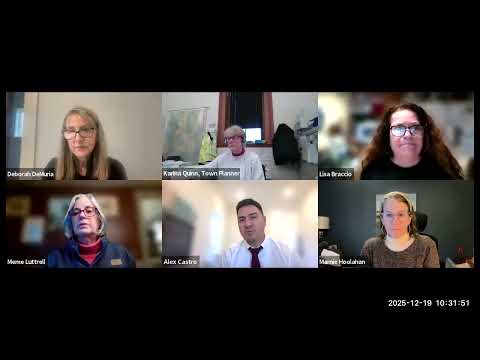
On Dec. 19 the Southborough planning board voted to go into executive session and not return to open session to consider an open meeting law complaint filed Dec. 16, 2025 by Michael Wyshen on behalf of the Southborough Historical Society.
The Southborough planning board voted Friday to enter executive session and not return to an open meeting to consider an open meeting law complaint filed Dec. 16, 2025 by Michael Wyshen on behalf of the Southborough Historical Society.
The motion to move into executive session was introduced by the chair and revised by Alex to specify "purpose 1" for the meeting: to discuss the open meeting law complaint filed by Michael Wyshen, which Alex said was filed on 12/16/2025. Alex asked the board to adopt the revised motion to close the session and not return to open session. "Can we just revise the motion to move into executive session on the purpose 1 to discuss the open meeting law complaint filed by Michael Wyshen, which was filed on 12/16/2025 and to not return, to open session," Alex said.
During the recorded proceeding the chair framed the move to executive session succinctly: "We intend to enter executive session, and if so, voted not to return to open session." The board then completed a roll-call vote. The chair read responses that Luttrell voted yes, Demeria voted yes and Rasheo voted yes; the chair queried for Julian Yaz without a recorded affirmative response. The board’s motion carried and the chair stopped the public recording before the executive session began.
The complaint named in the motion was filed on behalf of the Southborough Historical Society, according to remarks recorded during the meeting. The planning board did not discuss the merits of the complaint in the public portion of the meeting; the board’s action was to close the meeting for a confidential discussion under the stated purpose and to not return to open session.
The next publicly available step will depend on any outcomes from the executive session and any filings or announcements the board chooses to make afterward. No further public deliberations or votes on the substance of the complaint were recorded in the public meeting minutes provided.