Local advocate urges broader treatment, triage and housing-first plus wraparound supports to address homelessness in Reno
Loading...
Summary
Grant Denton of the Climate Box Project described lived experience and outreach work, arguing that homelessness requires a coordinated, recovery-oriented system of care beyond emergency shelter. Board members and residents discussed affordable housing loss, senior homelessness and the limits of current systems.
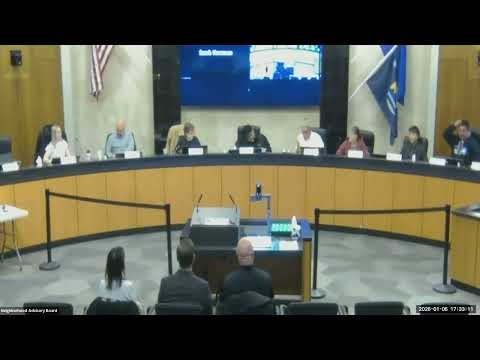
Grant Denton, founder of the Climate Box Project and a person with lived experience of homelessness, told the Ward 3 advisory board about outreach, shelter and programmatic lessons from local and national practice on Jan. 6. Denton described historical drivers, distinctions between situational and behavioral homelessness, and the limits of singular solutions such as housing-first models without guaranteed wraparound services.
Why it matters: Denton emphasized that homelessness is multi-causal (including addiction, mental health, economic dislocation and loss of affordable units) and recommended coordinated triage, recovery-oriented systems and sustained investments in treatment, respite care and affordable housing.
What he said: Denton outlined outreach best practices (building rapport, addressing trash/environmental hazards at camps, and long-term engagement), and said modern battery-of-solutions models require both housing and treatment capacity. He described a need for defensible space, emergency response coordination, and consistent programs that hold participants to standards while providing supports (SEG 2861-2960, SEG 3228-3240).
Community response: Board members and attendees praised the presentation, raised concerns about seniors being priced out, the CARES campus capacity and recidivism in housing transitions, and noted the need for better triage, hospital-to-shelter pathways and legal frameworks for mandating treatment in some severe cases (SEG 3361-3660, SEG 3710-3755).
Next steps and resources: Denton offered tours and outreach contact information to board members and encouraged the board to coordinate with shelter providers and public-health partners to strengthen the continuum of care for people experiencing homelessness (SEG 3846-3856).