
Wyoming Business Council defends selective investments, pitches regulatory-reduction and capacity-building focus
Get AI-powered insights, summaries, and transcripts
Subscribe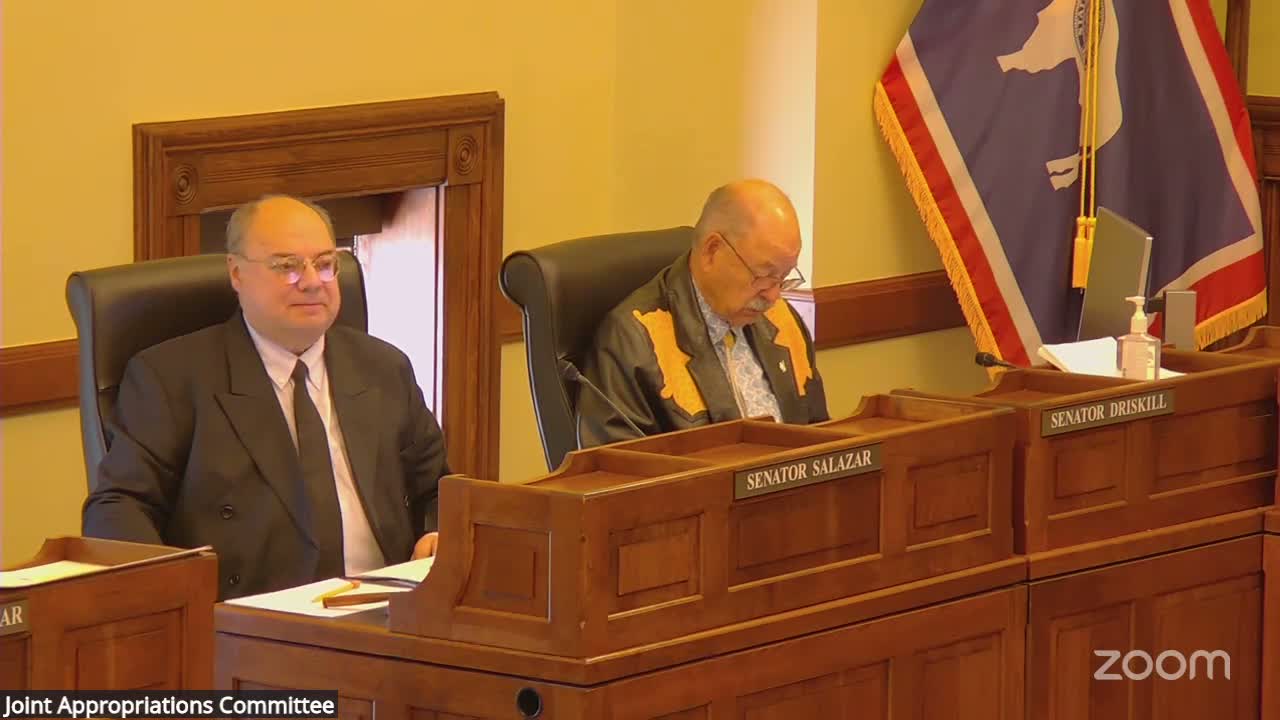
Summary
The Wyoming Business Council told the appropriations subcommittee it is shifting from frequent direct grants to capacity-building and shared infrastructure, citing regulatory-reduction work that it says has helped increase housing permits in Cheyenne; legislators pressed the agency on perceived ‘picking winners’ and asked for statutory review and program audits.
The Wyoming Business Council on Jan. 1 returned to a joint appropriations subcommittee to explain a shift in strategy from broad grantmaking toward local capacity building, regulatory reduction and strategic infrastructure investment.
Josh Dorell, introduced to the committee as the council’s CEO, said the agency has moved away from routine cash awards and toward efforts that remove regulatory barriers, build local capacity, and fund shared infrastructure projects such as water and sewer lines that unlock private investment. Dorell described pilot work in Cheyenne and Albany County and said the council’s facilitation helped produce a large increase in housing permits by addressing lot-size, setback and frontage rules with local elected officials and staff.
Several legislators pushed back on examples of direct assistance the council has provided. Representative Pendergraft and others questioned whether the council had in past years ‘picked winners and losers’ with selective awards (citing instances in Sheridan and Jackson). Dorell acknowledged that the council makes selection decisions but said that since 2020 the council has tightened rules, required more local match and analysis, and focused on programs that aim to create self-reliant local economies rather than recurring subsidization.
Committee members asked for concrete statutory fixes and a performance review. Multiple representatives expressed interest in an interim deep dive into statutes that govern economic development programs and asked the council to collaborate on clearer statutory language and better reporting. Dorell said the council would welcome such collaboration and pointed to programs in the council’s budget (including SBIR matching and business-ready communities) as examples where statute or rule clarifications may help.
On funding and fiscal trade-offs, one member noted competing fiscal priorities—water infrastructure and DD waiver funding for vulnerable populations—and questioned calls for large new investments. Dorell responded that the council seeks to leverage federal innovation funds, match where appropriate, and target scarce state dollars to unlock greater private investment and community readiness.
The hearing concluded with committee members asking the council to return with more detail, and with a general request for the council and staff to work with legislators on statutory changes, performance auditing and clearer public explanations of program selection criteria.