Appropriations subcommittee directs draft for Rural Health Transformation perpetuity fund, approves guardrails and reporting
Summary
The joint appropriations subcommittee backed key design choices for a Rural Health Transformation bill: a perpetuity fund with a 4% baseline payout, authorization of four program categories, flexible percentage goals rather than rigid statutory allocations, quarterly reporting, and language to allow the Department of Health to use rulemaking within legislative guardrails.
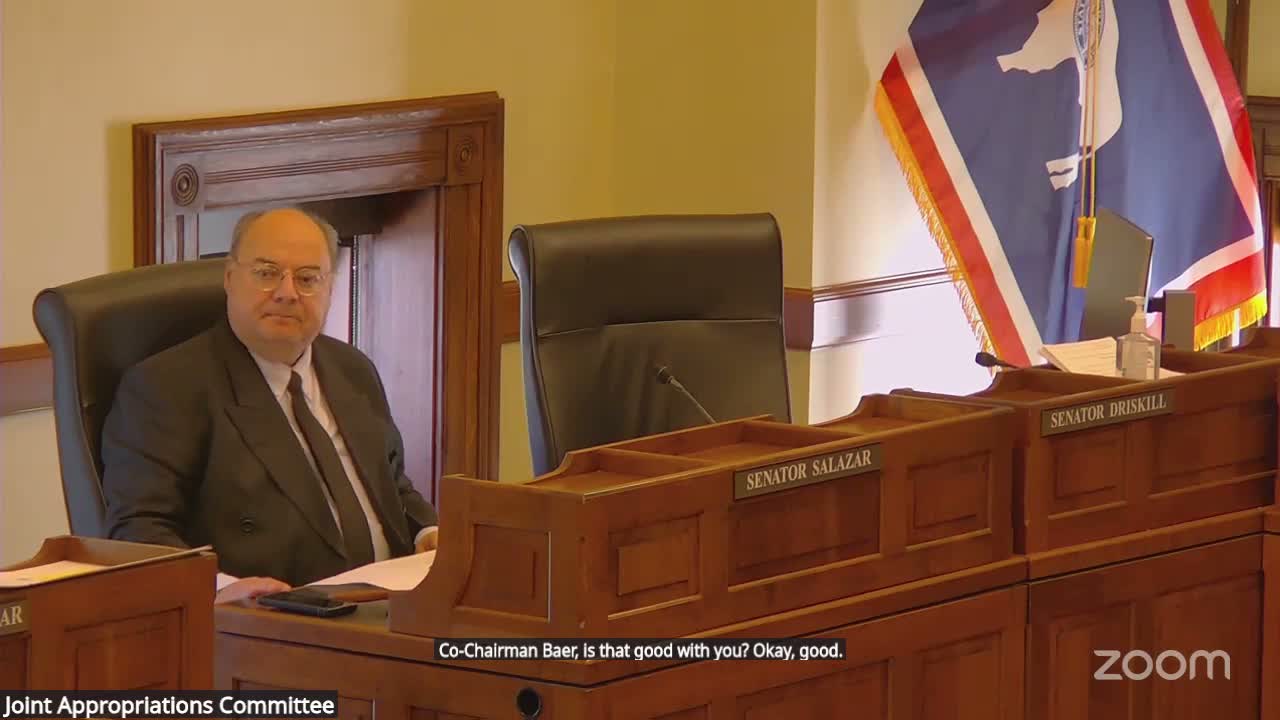
A legislative appropriations subcommittee on rural health transformation on Jan. 1 directed staff to prepare a bill draft that would create a perpetuity fund for federal RHT (Rural Health Transformation) dollars, set a 4% baseline annual payout, and authorize the Department of Health to implement detailed program rules while reserving legislative oversight on large awards.
The committee, led by the chair (Speaker 1), agreed by show of hands to establish the perpetuity fund and to deposit a larger share of the first-allocation-year funds (staff framed 80% for the first year and 69.5% thereafter as an option). LSO staff asked the panel whether payouts should be based on a 4% baseline; the committee supported 4% as a starting point for the draft. Stefan Johansen of the Department of Health, identified himself in the hearing, warned that strict statutory percentages could hamper flexibility during interim years when application volumes are uncertain and suggested combining statutory goals with rulemaking to avoid unintentionally forfeiting federal funds.
The subcommittee authorized four broad program categories proposed in the department’s application—critical access hospital basic services, EMS regionalization, workforce education awards, and physician graduate medical education—while directing staff to reflect minimum statutory descriptions and to let the Department of Health use rulemaking to fill application-level details. Law staff and several members urged that the bill include safeguards to prevent overdelegation of legislative spending authority; one option the committee favored was tiered oversight that allows the department and an advisory board to manage smaller awards while routing large awards (committee discussion suggested $500,000 as an illustrative threshold) to the management council or the legislature for approval.
Members also discussed investment policy. Staff noted that specifying investment in equities and alternatives could raise the required floor-vote threshold on the legislative floor to two-thirds rather than a simple majority; the committee signaled tentative support for language that would permit diversified investments but recognized the higher legislative hurdle.
On time-limited infrastructure and pilot projects (the share of funds the department labeled as time-limited), the committee approved the department’s working list for inclusion in the draft but left open the option for members to remove items after receiving a completed bill draft. Representative Pendergraft urged removing certain health-promotion items (exercise/diet promotion), citing limited evidence of impact; Department staff responded the federal application encouraged such initiatives and suggested tailoring them to Wyoming strengths, such as outdoor recreation.
The panel agreed to include language requiring quarterly reporting that mirrors federal requirements and to retain clawback authority in subrecipient agreements in case funds are misused. Members directed staff to craft bill language that would make the known first-year federal allocation (identified by staff as $205 million) immediately available for deposit and add catch-all language to accept later federal fiscal-year receipts (staff framed options such as funds received in FY2027 and FY2028) so the state would not lose investment time waiting for future legislative sessions.
On prohibited uses, a member proposed and the committee voted by show of hands to prohibit RHT funds for abortion and gender-transition medical treatments; the chair recorded that the committee had taken that vote. Representative Smith’s proposal to include telehealth licensing flexibility—allowing out-of-state licensed medical professionals to provide telehealth without additional Wyoming licensing—also passed on a show-of-hands for inclusion as an amendment or interim topic, with Department staff noting potential interstate licensure and scope-of-practice issues.
The committee’s direction is procedural: staff will draft statutory language reflecting these choices and the committee will have an opportunity to revisit specific provisions, percentages and thresholds when the bill is circulated.
The most recent procedural step is that the committee asked staff to return with a draft incorporating goals (rather than strict statutory percentages) for allocations, a tiered oversight threshold for large awards, quarterly reporting language, clawback authority, and rulemaking authority for the Department of Health to implement program-level details. The committee did not adopt final dollar-by-dollar appropriations for later federal years at this meeting; staff said the draft will propose making the known first-year award immediately available and adding language to accept future federal receipts.