Get Full Government Meeting Transcripts, Videos, & Alerts Forever!
Get email alerts on the Immigration Resolution 399 topic
No spam. Unsubscribe anytime.
Hawaii County Council adopts resolution urging state to protect immigrants after heavy public testimony
Summary
After more than a dozen public speakers urged action, the Hawaii County Council unanimously approved Resolution 399-25 calling on the State to take steps to safeguard due-process rights and limit federal immigration enforcement cooperation.
The Hawaii County Council on Dec. 17 adopted Resolution 399-25, a nonbinding measure urging the State of Hawaii to take steps to safeguard due process and public safety for immigrant residents.
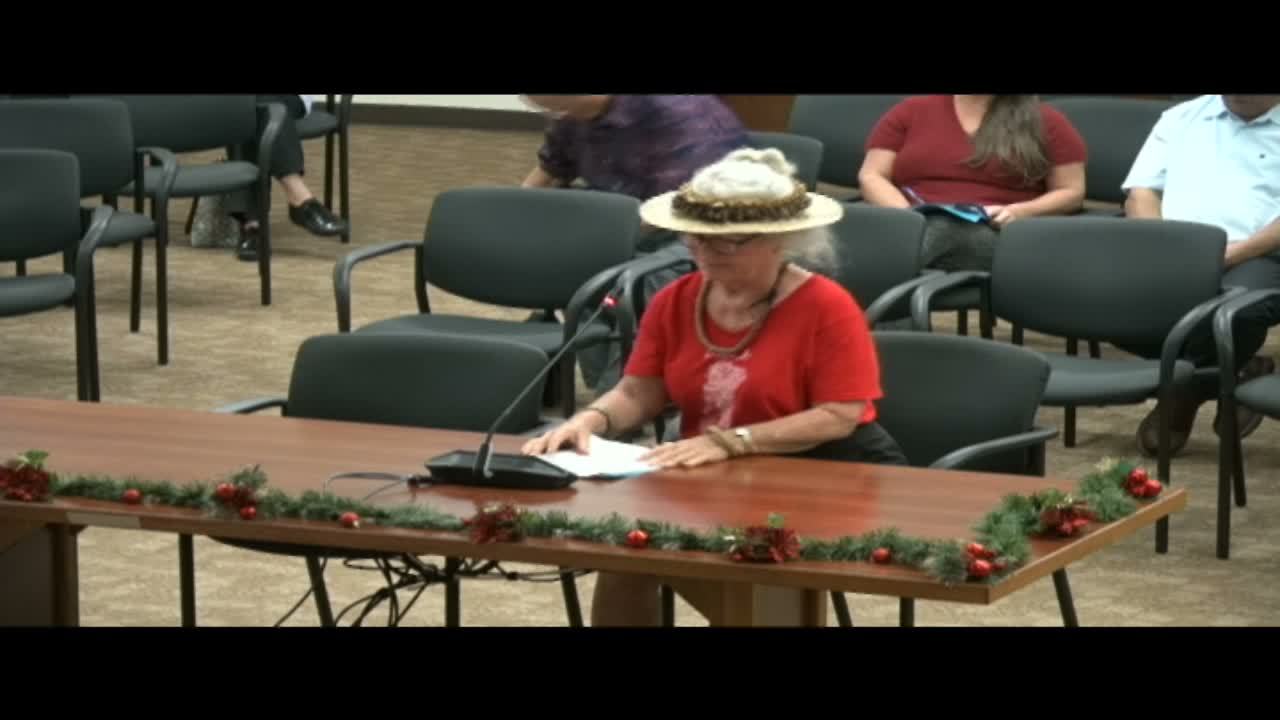
Public testimony before the vote was dominated by supporters of the resolution. Lynn Ryan, a retired registered nurse from Kailua Kona, told the council: "I am in support of Resolution 399-25, which encourages the State of Hawaii to uphold constitutional protections for our immigrant communities." Kencho Gurung described recent raids and their effects on families, saying "ICE is violent and careless, and the mass raid that occurred on May 7 traumatized families and left a scar on our entire community." Deirdre Roni, an immigration and civil-rights activist and former prosecutor, urged the council to consider stronger local ordinances in addition to the nonbinding resolution.
The measure had been amended in committee to replace the word "citizens" with "individuals" in the title and language, a change proponents said clarifies that the resolution covers all people who live on the islands. Councilmember Kaguata, who sponsored the measure, said the change was intended to be inclusive.
Council discussion focused on the legal limits of county authority and the need for state-level action. Several members noted the council cannot bind federal agencies but can send a clear policy signal to state officials and urge the attorney general and governor to act. Councilmember Kimball, while supporting the resolution’s intent, cautioned that it is nonbinding and that state lawmakers face difficult trade-offs because much state funding flows from federal sources.
The council suspended rules for extended discussion and approved the final resolution by unanimous roll call (9 ayes). The resolution asks the State to consider measures including restricting state collaboration with federal immigration enforcement and requiring federal agents to identify themselves during public-facing operations.
The council’s action follows months of public testimony and is intended to encourage the State to pursue legal and administrative remedies; it does not change county law or operations.
The council’s action was procedural and symbolic: next steps are for staff to transmit the resolution to the governor and state officials and for advocates to press for follow-up at the legislative level.