
Socorro ISD trustees workshop evaluation: align superintendent review with board priorities
Get AI-powered insights, summaries, and transcripts
Subscribe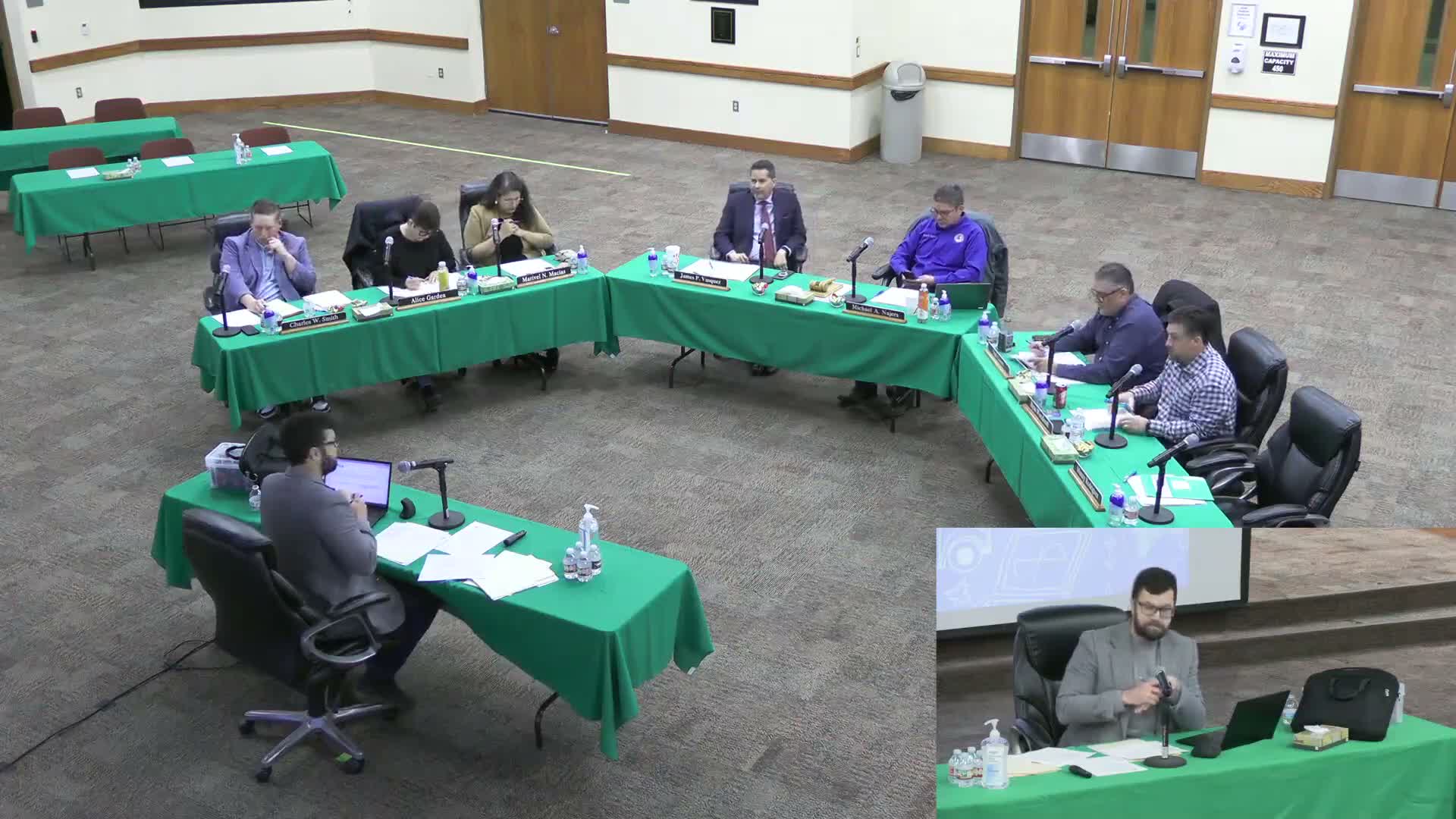
Summary
Trustees discussed linking the superintendent’s annual evaluation to the district’s priorities and progress measures, favoring a mix of quantitative goals and formative check-ins to guide decisions about performance and public reporting.
Socorro Independent School District trustees spent much of a Jan. 7 workshop laying out how the board will evaluate the district’s superintendent against the priorities it adopted last month. Facilitator Ben Mackey told the board that ‘‘if you have priorities, you should judge your superintendent or leader on achieving your priorities’’ and walked trustees through sample metrics and timelines.
Trustees discussed concrete targets included in the district’s five‑year plan — for example, moving third‑grade reading from 58% to 63% over five years, with a near‑term target of 59% this year — and financial constraints such as maintaining a minimum unassigned fund balance of 29 days and eliminating a reported $9.4 million operating deficit. Mackey used those examples to illustrate how the evaluation could be structured around outcomes rather than subjective impressions.
Trustees debated how to weight goals and constraints. Some favored a numeric rubric (points out of 100), while others proposed a hybrid checklist where meeting a number of submeasures yields an overall rating. Trustee Paul cautioned against simple letter grades, saying a public ‘‘C’’ could be misleading; Mackey suggested publishing a short headline sentence each year such as, ‘‘The superintendent met 5 of 7 priorities,’’ supplemented by context about progress on partially achieved items.
Board members also wrestled with how to account for less‑tangible items such as district culture and staff retention. ‘‘I don’t want to get lost in the data,’’ Trustee Woodcraft said, urging the inclusion of qualitative measures that reflect human capital and organizational climate. Mackey countered that culture can be treated as a constraint and asked trustees what specific evidence they would want to review to make those judgments.
The workshop produced a broad, practical timeline for evaluations: periodic formative check‑ins (for example, a midyear review), summer or fall assessments when state data are finalized, and a finalized annual evaluation by December or January. Trustees asked administration to return recommendations on weighting, specific measures, and a calendar so the board could adopt an evaluation process for the upcoming school year.
No formal action or vote was taken at the workshop; trustees agreed to have the superintendent’s office and staff bring a recommended rubric and timelines back to the board for consideration.