
Zoning commission recommends defining freestanding emergency departments in county code
Get AI-powered insights, summaries, and transcripts
Subscribe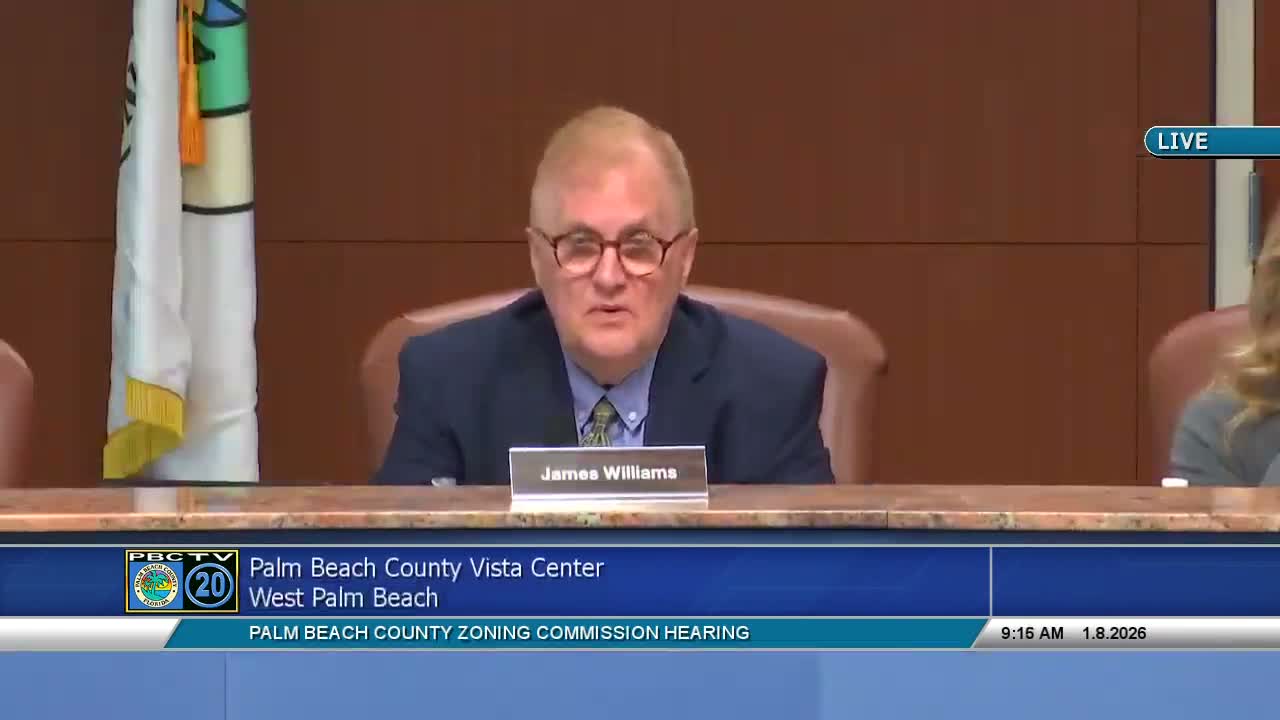
Summary
The Palm Beach County Zoning Commission voted to recommend an amendment to the Unified Land Development Code to create a defined category for freestanding emergency departments (FSEDs), add related parking rules and require hospital association and 24/7 operation; the measure advances after staff and applicant presentations.
The Palm Beach County Zoning Commission recommended approval of a revision to the county's Unified Land Development Code (ULDC) that would create a defined use for freestanding emergency departments, or FSEDs, and add related parking and siting rules.
Brian Terry of Insight Studio, representing the applicant, told the commission the change is intended to "create FSED, freestanding emergency departments, as a use specifically defined within the code" and to move urgent‑care and ambulatory surgical definitions into Article 4 under medical office uses. He said FSEDs would be regulated to ensure they are associated with a hospital and provide the same emergency services as an in‑hospital emergency department.
Staff said the proposed text was developed in coordination with multiple county divisions and outside agencies, including the health department, county attorney, planning, engineering and fire. Staff noted earlier board action authorized advertising for Phase 2 of the proposal. County staff and the applicant told commissioners that, by statute, FSEDs are required to operate 24 hours a day.
Attorney Brian Seymour, speaking for the applicant, described typical ambulance interactions with FSEDs and said hospital data tracked by local HCA hospitals show relatively few ambulance trips to FSEDs: "Statistically, if you do the average, it's a little over 1 per day on average that would come, by ambulance." Seymour said first responders decide destination based on clinical need and that ambulances and fire must retain the option to use lights and sirens.
Commissioners asked about coordination with county services, compatibility with existing conditional approvals and how 24/7 operation would interact with local PUD restrictions. Staff replied applicants would need to seek waivers from the Board of County Commissioners if operating hours conflicted with existing 250‑foot restrictions or PUD conditions.
A motion to recommend approval of the ULDC revision passed by voice vote. The commission, serving as the Land Development Regulation Commission, also recommended the revision be found consistent with the county comprehensive plan. The action advances the proposed code language for further consideration by the Board of County Commissioners and into the public record.
The commission recorded no public comment opposing the amendment during the hearing; next procedural steps include review by the Board of County Commissioners following the public‑advertising phase.