
Palm Beach County outlines lottery priority and six-month hold for homebuyer assistance
Get AI-powered insights, summaries, and transcripts
Sign Up Free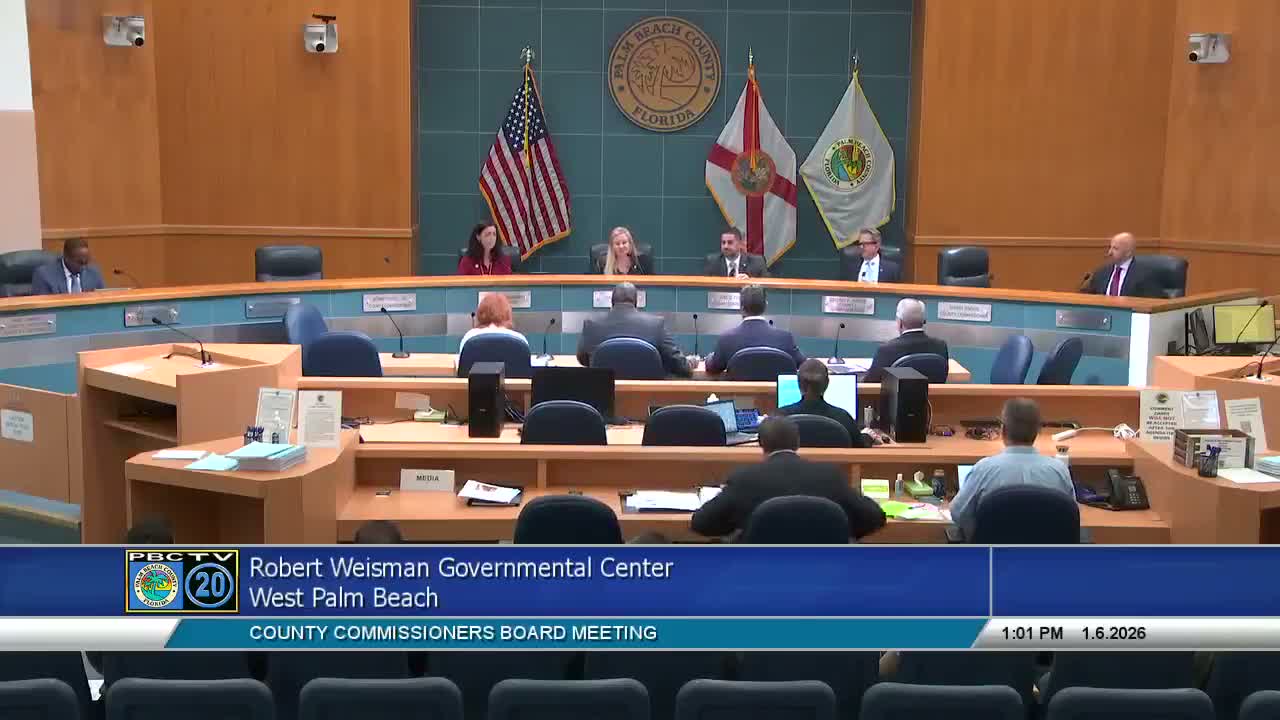
Summary
County staff told commissioners the proposed homeownership assistance program will screen applicants for income eligibility, prioritize applicants with contracts for first-come funding, and reserve up to $50,000 per buyer for approximately six months with up to two 90‑day extensions; remaining slots would be filled by lottery.
County staff and commissioners clarified how a proposed homeownership assistance program would select and hold funds for buyers, balancing priority for applicants ready to close with a lottery for the broader applicant pool.
During a detailed question-and-answer period, Commissioner Flores pressed staff on how the county would ensure applicants were “ready to buy” rather than holding a slot indefinitely. Staff said income eligibility will be the primary screening criterion and that the county can prioritize applicants who come forward with a signed contract for first‑come, first‑served funding while using a lottery for the remaining applicants. Staff described the maximum assistance as up to $50,000 per household and said reserved funding would typically be held for up to six months, with policies to allow up to two 90‑day extensions for documented closing delays.
Commissioner Powell and others sought guidance for prospective applicants about mortgage preapproval and loan documentation. Staff recommended prescreening applicants without a contract so that lottery entrants are verified for employment and income early in the process; if an applicant later presents a contract, they could move into the prioritized pool. Commissioner Flores said she favored the lottery approach for fairness but agreed that applicants with contracts should get priority to ensure funds are spent on transactions that can close quickly.
Commissioner Weiss raised a tax-reporting question about whether a forgivable loan treated as a grant would trigger IRS reporting. Staff said the clerk’s office advised that 1099s would be issued if a loan is satisfied at the end of an affordability period.
Next steps: commissioners indicated support for the program design features discussed and approved related consent items on the agenda. Staff will return with final policy language, including application windows, documentation requirements, and the precise timing of funding tranches.