
Morrison County health officials report 6,721 residents on Medical Assistance; plan changes tied to UCare/Medica merger affect thousands
Get AI-powered insights, summaries, and transcripts
Subscribe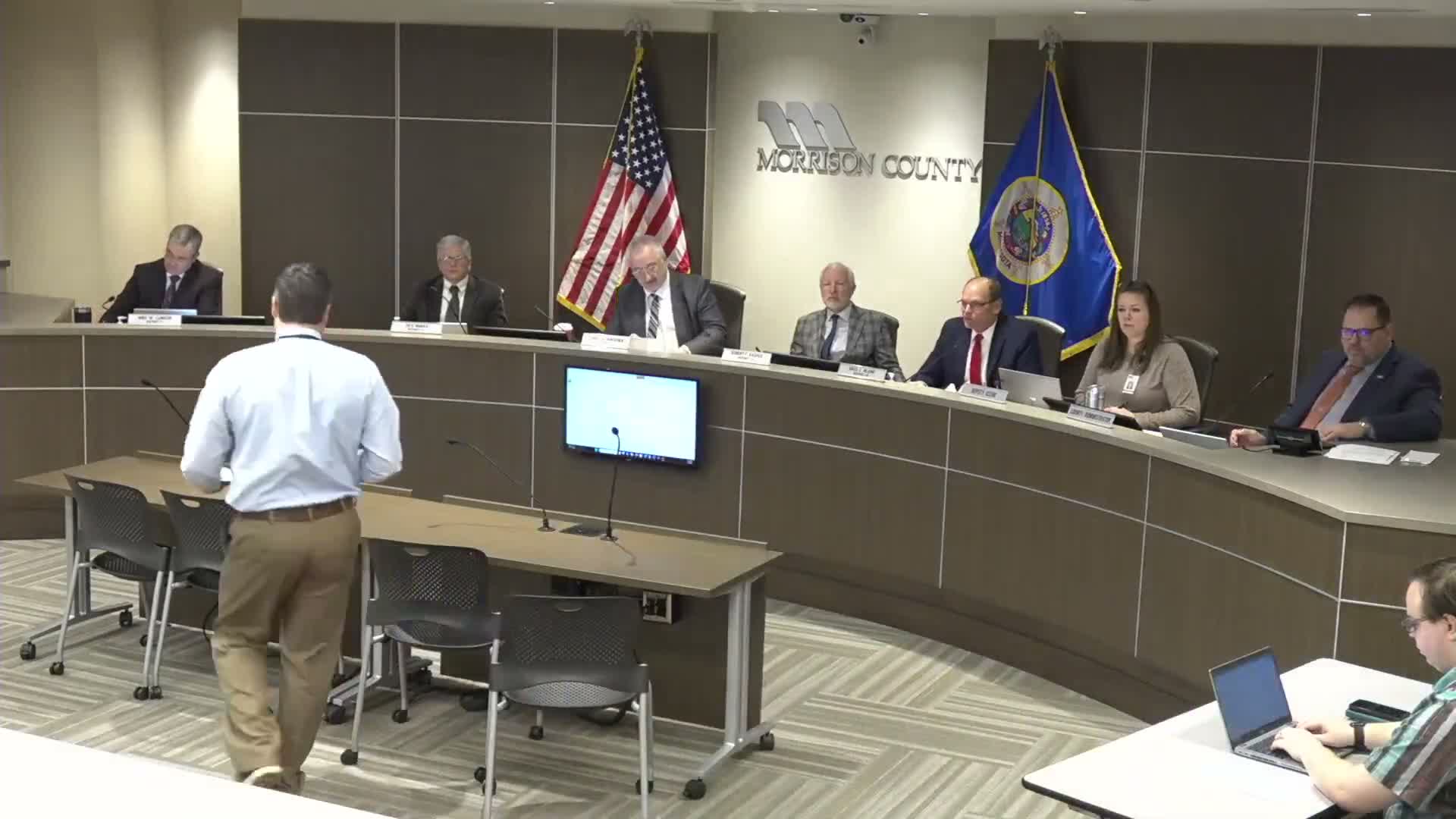
Summary
Health and Human Services officials told the Morrison County Board that 6,721 residents (about 19.4% of the county) are active on Medical Assistance; administrators warned recent insurance changes tied to Medica's acquisition of UCare disrupted integrated plans and affected roughly 3,254 county residents.
Health and Human Services officials told the Morrison County Board on Jan. 6 that 6,721 of the county's 34,527 residents are enrolled in Medical Assistance programs, about 19.4% of the local population.
"Out of the 34,527 residents in Morrison County, 6,721 of them are on medical assistance," said Ashley Effinger, income maintenance supervisor for health care and long-term care. Effinger told the board the county uses two systems for eligibility work: the newer METS system (typically for adults, parents and minors) and MAXIS (used for elderly and disabled cases).
The presentation reviewed recent post-pandemic changes in enrollment and eligibility. Effinger said the state's COVID unwinding and reinstatement of asset tests reduced rolls from 2022's peak figures. On the MET system, she reported county person-counts of 7,093 in 2022; 6,570 in 2023; 5,297 in 2024; and 5,184 in 2025. For elderly and disabled cases she reported 1,569 in 2022; 1,563 in 2023; 1,417 in 2024; and 1,402 in 2025.
Board members pressed for what changed and what the county must do. Effinger described a new county responsibility for handling "mixed cases" in which members of the same household are on both MA and MinnesotaCare; she said roughly 80 additional renewals will be processed locally because of that shift.
The presentation also flagged disruptions resulting from the Medica acquisition of UCare. Effinger said integrated special-needs and senior plans (SNBC/MSHO), which previously wrapped Medicare prescription coverage into the MA plan, largely ceased as of Jan. 2026 in Morrison County. "It does affect 3,254 of our residents here in Morrison County," Nathan Bertram, HHS director, told the board, noting that affected enrollees face changes to prescription coverage and are being auto-enrolled in separate Medicare Part D plans in many cases.
Bertram and Effinger warned of a backlog at the state Department of Human Services for processing re-enrollments and plan selections. Effinger said the county has been referring residents to Minnesota Aging Pathways and that the first notices for plan selection were expected to be sent around Jan. 14.
Commissioners discussed policy trade-offs: several supported targeted exceptions that maintain coverage for young children and pregnant people, while others urged continued verification and fiscal oversight. Effinger reiterated that some exceptions (for example, children under 7 who remain eligible) are intended to avoid churn for vulnerable families and that pregnant individuals receive a higher income standard (275% of federal poverty guideline) that can persist for a year after delivery.
The presentation closed with commissioners thanking staff and acknowledging increased workload as counties take on new state-directed renewals. HHS said it will return to the board with further updates as state processes and vendor backlogs evolve.
The board took no formal action on policy changes at the meeting; the HHS briefing was informational and directed staff to continue monitoring state enrollments and vendor processing.