
SJC hears argument in Robinson v. Marshfield over mixed‑motive instruction and verdict form
Get AI-powered insights, summaries, and transcripts
Subscribe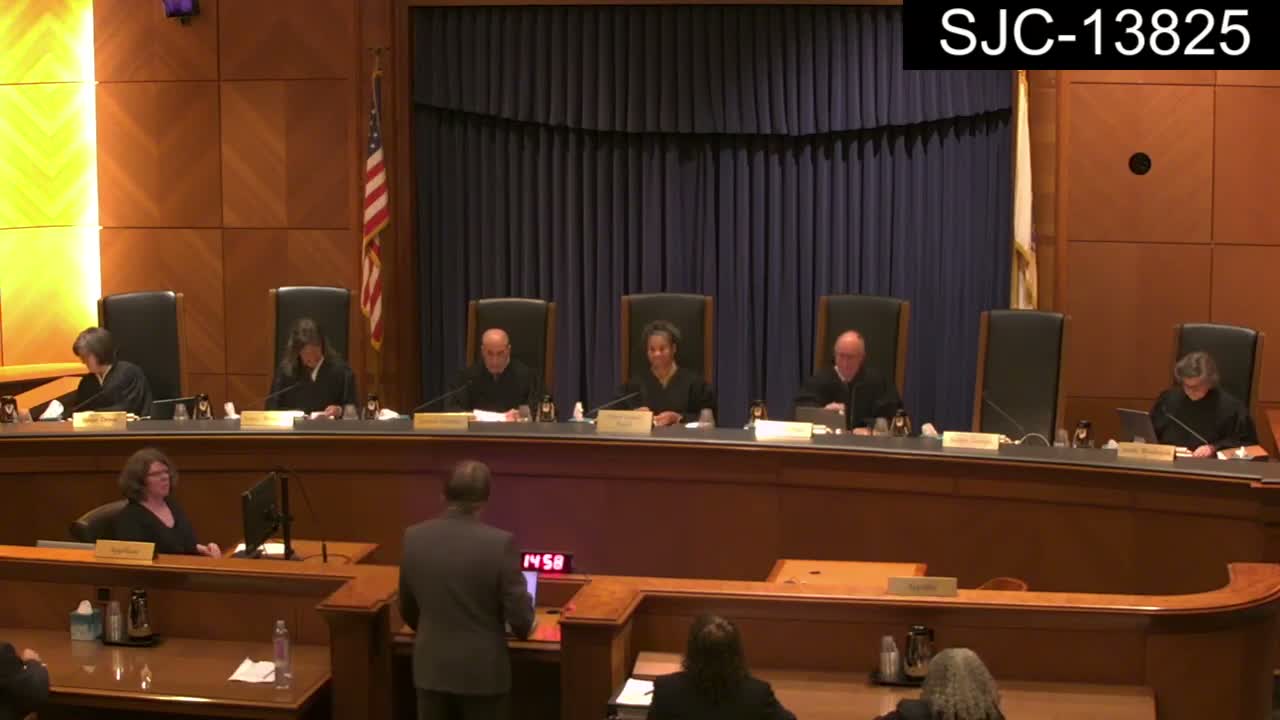
Summary
At oral argument in SJC13825, defense counsel argued the jury received an improper mix of mixed‑motive and pretext instructions and that an internally inconsistent verdict form requires reversal or a new trial; plaintiff's counsel countered that the record shows the town urged burden‑shifting and the jury’s findings on causation and damages support the verdict.
BOSTON — The Supreme Judicial Court heard argument in SJC13825, Kevin C. Robinson v. Town of Marshfield, over whether the trial court erred by submitting jury instructions that blended mixed‑motive and pretext frameworks and by accepting a verdict form the defense calls internally inconsistent.
Jason Croddy, arguing on behalf of the town, told the court the defense believes "the evidence for a verdict for the plaintiffs was insufficient" and that "clear errors of law" in the jury verdict slip and jury instructions required either a defense verdict or a new trial. Croddy said the defense had repeatedly objected to what he described as a blended instruction and that the record included testimony and exhibits—such as the town administrator's contact with the state ethics commission and a contractor's “sham investigation”—that complicated the legal framework presented to lay jurors.
"It's simply not the law," Croddy said, pressing the justices on whether the jury should have been instructed only on pretext rather than on both mixed motive and pretext combined.
Anne Glennon, arguing for plaintiff Kevin Robinson, responded that the town had repeatedly sought both forms of relief during pretrial conferences and trial and that the proposed verdict slip reflected those positions. Glennon directed the court to portions of the trial record and argued the town had asked the court to include a Mount Healthy burden‑shifting defense (a defense in which the employer asserts it would have taken the same action for legitimate reasons) and that the jury instructions, read as a whole, supported the jury's findings.
A substantial portion of argument centered on whether the jury verdict form was internally inconsistent. Defense counsel noted that the jury found causation on the basic element questions but answered a later question (Question 6) in a way that suggested the board would have reached the same decision even absent the protected conduct, a combination the defense says undermines the verdict's coherence. Plaintiff's counsel said the form, when read together with questions on causation, pretext and damages, showed the jury found Robinson met the "but‑for" standard and that damages were the direct result of the town's adverse actions.
The justices probed legal doctrine and precedent, asking about the interplay of Massachusetts precedent and U.S. Supreme Court cases such as Desert Palace and Price Waterhouse. Counsel debated how those precedents should affect whether a mixed‑motive instruction can properly go to a jury in a case without strong direct evidence of discriminatory intent. The parties also discussed Lipschitz and DePrado as Massachusetts authorities bearing on instruction and verdict‑form standards.
During argument the bench asked detailed questions about the structure of the verdict slip, the meaning of specific jury questions (including Questions 5–8 as they were read to the jury), and whether omission or different wording of subsidiary questions would have produced a clearer outcome. The transcript record shows extensive back‑and‑forth between counsel and the bench on how model or non‑model instructions should be applied in the state courts.
Counsel concluded their arguments without an oral decision from the court. The justices asked clarifying questions throughout the exchange; no opinion was announced at the hearing.
Next steps: the court will take the matter under advisement and issue a written opinion at a later date (no decision was announced at argument).