
Supreme Judicial Court hears challenge over overnight detention and inpatient competency evaluation
Get AI-powered insights, summaries, and transcripts
Subscribe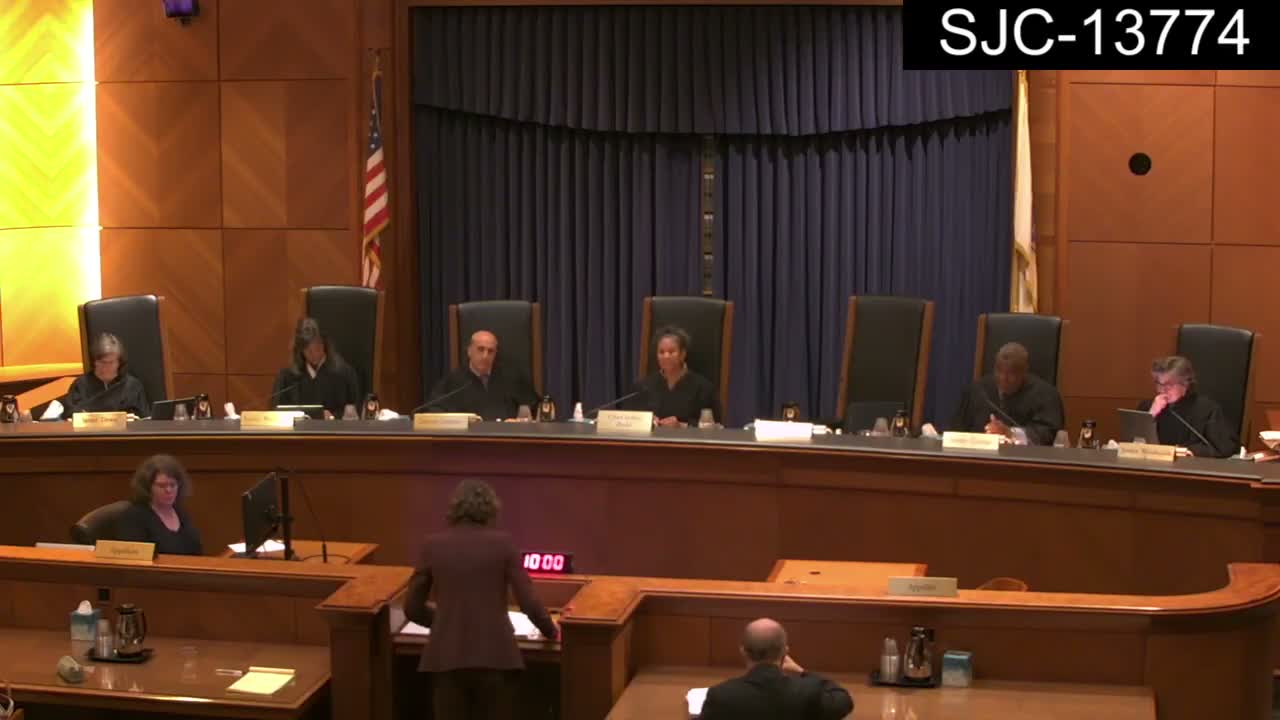
Summary
The Supreme Judicial Court heard arguments April 1 over whether a woman identified as RD was unlawfully detained overnight for a Section 15(a) evaluation and whether the record supported a 20-day inpatient Section 15(b) competency evaluation as the least-restrictive alternative.
Attorney Martin Stroud told the Supreme Judicial Court that RD (also called “Ardie”) was arrested after her partner called 911 for medical help and — with no court clinician available that day — was detained overnight in jail before a subsequent inpatient competency order. “First, whether it was lawful for the court to detain RD overnight for the 15(a) evaluation,” he told the justices, framing the case as a pair of legal questions about detention and the standard for inpatient evaluation.
The case matters because courts use Sections 15(a) and 15(b) to decide when to order competency evaluations, and the defense argued those procedures should not be used as a means to detain or hospitalize people who could be evaluated on an outpatient basis. Stroud pressed that the Commonwealth bore a high clear-and-convincing burden to show no less-restrictive alternative existed and that overnight jail observations — showing RD’s mental health deteriorated while in custody — were not necessarily predictive of whether she could comply with an outpatient evaluation.
During questioning, an unidentified justice asked whether the docket suggested defense counsel initially requested the evaluation and did not object to the temporary hold, and whether that fact should affect the court’s assessment of the detention’s lawfulness. Stroud replied that while the defense had requested a §15(a) evaluation, he did not believe the initial defense attorney intended or requested an overnight detention without bail and that bail and competency inquiries are distinct analyses.
Ken Steinfeld, arguing for the Commonwealth, urged the justices to respect the statutory forum for appeal, arguing the appellate division is the presumptive route for these cases though a single-justice remedy may be available in extraordinary circumstances. He defended the 20-day inpatient evaluation order, saying the trial judge had ample evidence — including recent hospitalizations, erratic conduct in court, failure to engage with evaluators, and deterioration overnight — to conclude an inpatient evaluation was necessary to determine competence.
The court also debated whether observations obtained while RD was in custody (and arguably in custody improperly) should be discounted. Steinfeld acknowledged the concern but argued that other evidence, including the court clinician’s and treating providers’ reports, could independently support an inpatient evaluation. Justices queried whether the judge’s remand opinion had sufficiently explained why an outpatient evaluation would not be viable and whether there are required or preferred formulations a judge must make when ordering a §15(b) evaluation.
The arguments also explored statutory mechanics: whether a judge can use §15(a) to order further outpatient evaluation rather than proceeding directly to §15(b), and how the statutes’ language shapes the practical choices a judge may make. Counsel agreed judges retain discretion and that §15(a)’s broader language can accommodate outpatient follow-up where appropriate.
The justices concluded their questioning with no further inquiries; the Commonwealth rested on its brief and oral argument concluded. The court did not announce a decision at the hearing. The case will be resolved in a written opinion or order to follow.