Get Full Government Meeting Transcripts, Videos, & Alerts Forever!
Get email alerts on the Historic Preservation topic
No spam. Unsubscribe anytime.
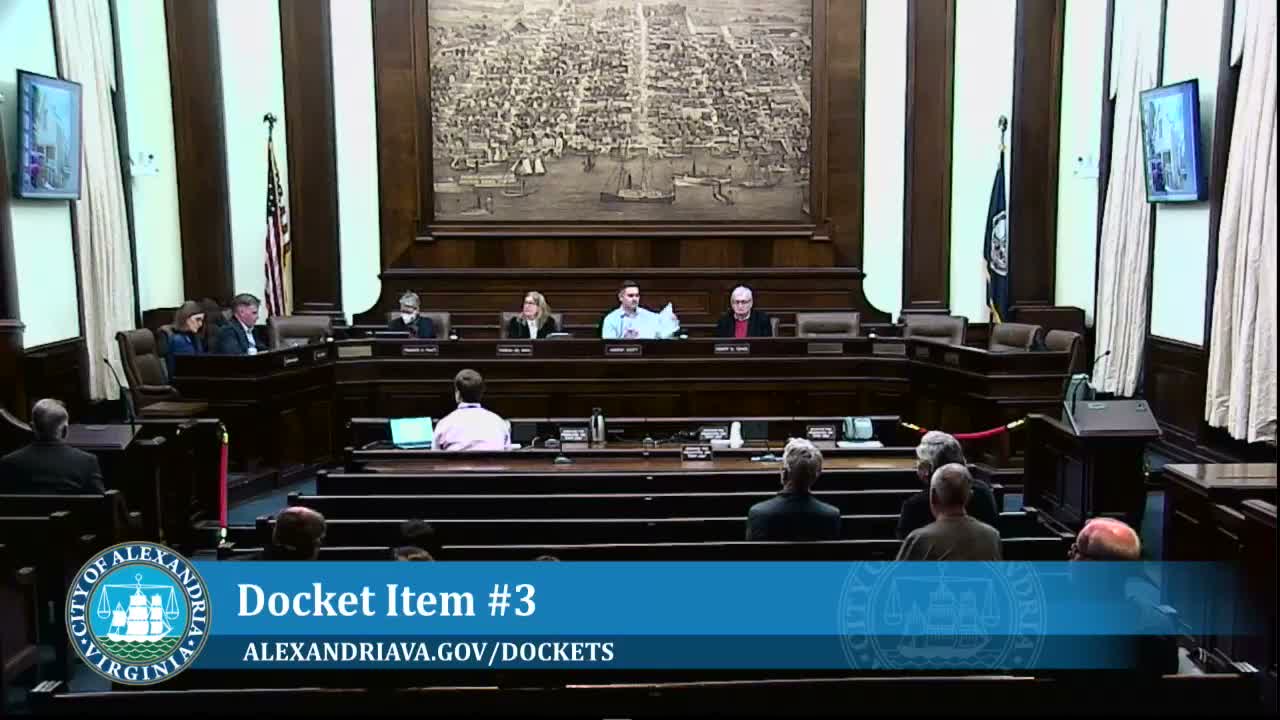
Board approves after-the-fact heat-pump placement at 311 North Alfred despite neighbor objections
Summary
The Alexandria Board of Architectural Review approved an after-the-fact certificate of appropriateness for a replacement heat-pump condenser at 311 N. Alfred St., overruling neighbor complaints about notification and visual impact after the applicant said the 25-year-old unit failed and needed emergency replacement.
The Alexandria Board of Architectural Review on the evening approved an after-the-fact certificate of appropriateness for a replacement heat-pump condenser at 311 North Alfred Street after brief public comment and discussion.
Brad Fleetwood, whose townhouse at 312 North Columbus Street sits behind the property, told the board he and some neighbors received no notice and said the condenser—visible from the alley—was placed in a way that made it “not attractive.” He said alternatives such as mounting the condenser on the west or south elevations would have kept it out of public view and questioned why the applicant had not sought approval beforehand.
Applicant Al Cox said the original 25-year-old unit had failed and a deep freeze was imminent, calling the installation an "emergency replacement." He told the board the new unit had to be located where the electrical meter and disconnect are located and that a similar unit on the building across the alley had previously been approved. Cox said the replacement unit is quieter and occupies a small footprint compared with the old equipment.
Staff confirmed the case was noticed according to standard procedures and reminded the board that after-the-fact applications are reviewed to the same standard as routine applications. Board members pressed on alternatives and suggested screening options, while staff and the applicant noted that prior board practice has prohibited certain types of lattice screening and that zoning limitations and property-line constraints limited placement options.
A board member moved to approve the application as submitted; another seconded the motion. The motion carried on a voice vote and the certificate of appropriateness was granted.
The board did not add additional conditions to require relocation or new screening; staff and members noted the record that after-the-fact cases are given the same substantive review as pre-approved installations.