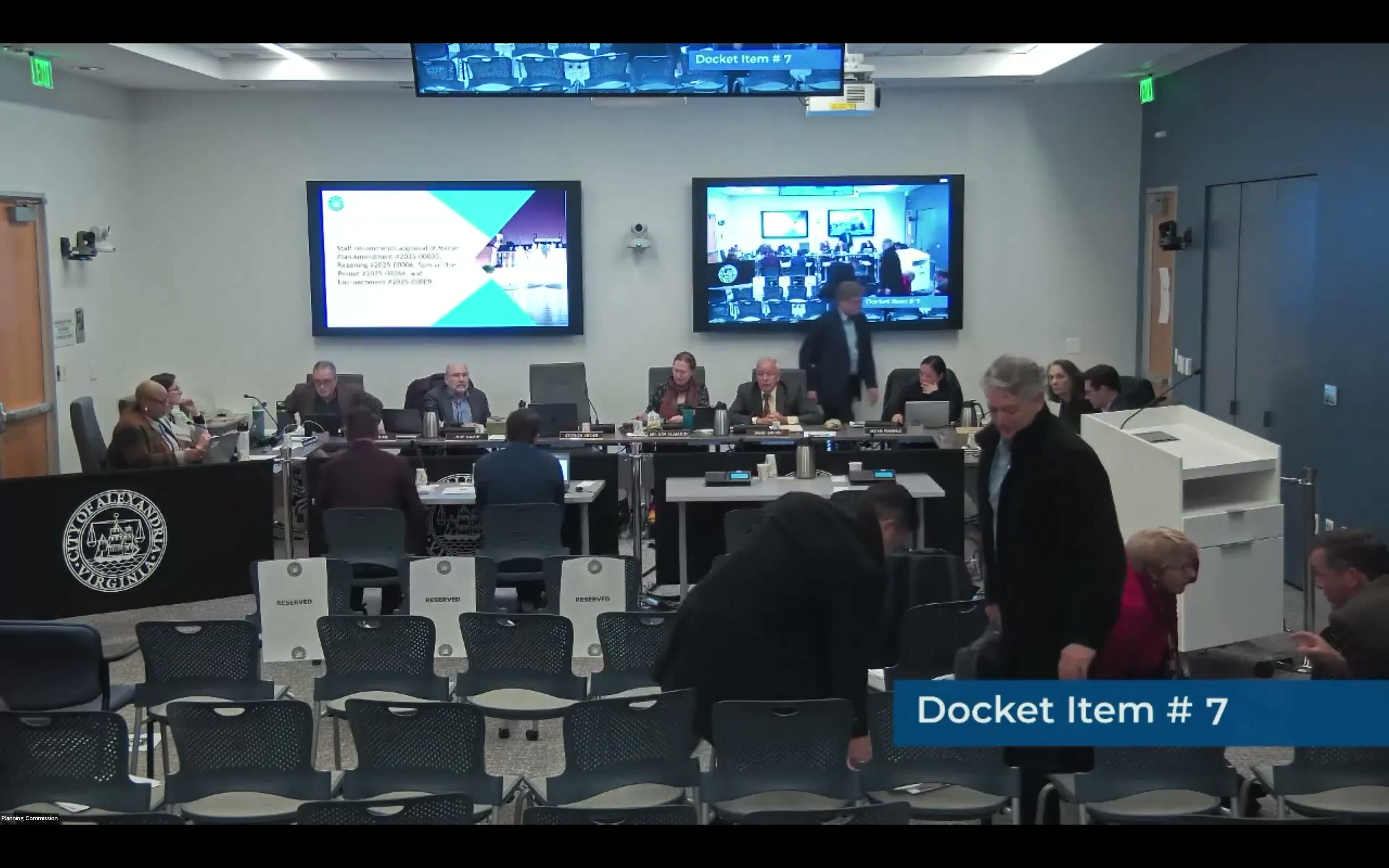
Alexandria Planning Commission initiates and recommends approval of zoning text amendment to ease office‑to‑residential conversions
Loading...
Summary
The commission voted 7–0 to initiate and recommend a zoning text amendment to create a special use permit pathway for converting existing non‑residential buildings to residential use when they cannot meet residential zoning standards, citing high office vacancy and a need for clearer process.
The Alexandria Planning Commission on Jan. 6 initiated and recommended approval of a zoning text amendment that would create a streamlined special use permit (SUP) pathway for converting non‑residential buildings to residential where existing zoning makes direct conversion difficult.
Sam Shelby (Planning and Zoning) explained that the ordinance historically allows higher non‑residential FAR and exempts many commercial buildings from residential lot standards, leaving some buildings effectively “frozen” and difficult to convert. Staff said the new SUP would allow applicants to request reductions to setbacks, open space and off‑street parking where on‑site compliance is infeasible, with council authority to require mitigation or retain commercial uses where small area plans prescribe them. Shelby cited an office vacancy rate of 21.1% in Alexandria in 2025 as a driver of the proposal.
Public testimony included residents urging protections for neighborhood character and mixed‑use streets, and industry groups such as NAEP Northern Virginia endorsing the technical fix to enable conversions of otherwise vacant office buildings. Commissioners said the approach brings consistency and predictability to conversions while preserving council’s ability to weigh neighborhood impacts; initiation and recommendation votes carried 7–0.
The amendment would tie conversion approvals to existing SUP considerations (health, safety, compatibility and mitigation) and maintain the city’s voluntary residential conversion contribution policy where applicable. If adopted by council, the new process aims to shorten the approval timeline for conversions and reduce procedural uncertainty for applicants.